


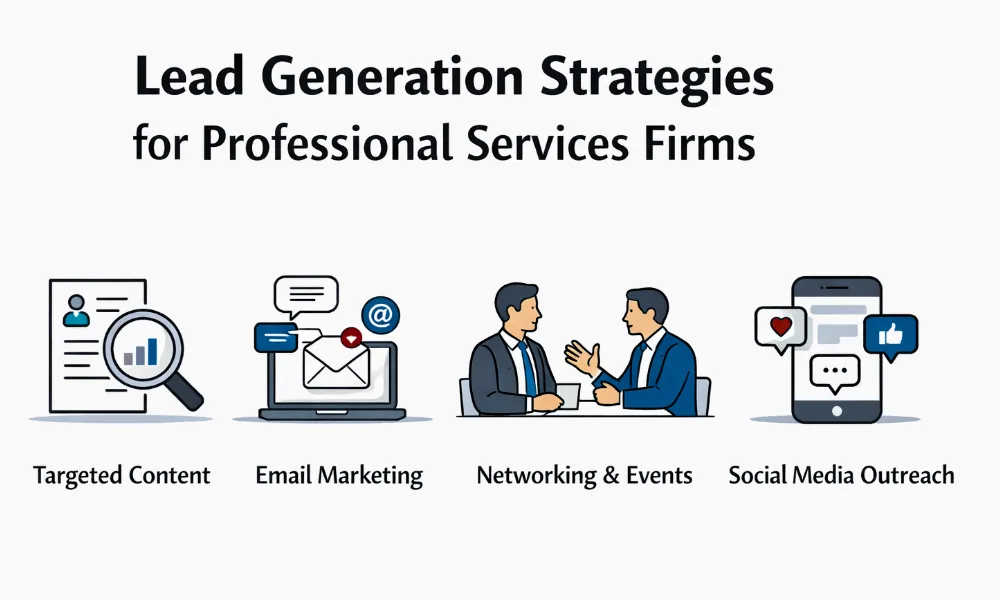
Professional services firms depend heavily on trust, expertise, and long-term relationships to acquire new clients. Unlike product-based businesses, services cannot be evaluated instantly. Prospects usually conduct extensive research before deciding which firm to work with.
Because of this, lead generation must go beyond simple advertising or visibility. Firms must build systems that attract the right audience, nurture relationships, and convert interest into meaningful consultations.
Modern digital tools such as lead generation automation, CRM-based lead generation, and AI-based lead generation enable firms to build structured pipelines that continuously attract qualified prospects. At Your Cloud Hub, we help professional services firms implement systems that generate consistent opportunities rather than rely on unpredictable outreach.
The Importance of Strategic Lead Generation
Professional services often involve high-value engagements and longer decision cycles. Prospects rarely make immediate decisions because they want to ensure that the firm they choose understands their challenges and has the expertise to deliver results.
This makes lead generation more complex than simply collecting contact information. Firms must guide potential clients through a journey of awareness, education, and trust-building.
Technology-driven approaches, such as marketing automation leads systems, help firms stay connected with prospects throughout this journey. Instead of manual follow-ups, automated systems deliver consistent communication that builds credibility over time.
Building Authority Through Expertise
One of the most effective ways to attract qualified leads is by demonstrating expertise. Professional services firms must position themselves as trusted advisors rather than simple service providers.
Thought leadership content plays an important role in this process. Articles, research reports, case studies, and industry insights allow firms to share valuable knowledge with potential clients. When firms consistently publish informative content, they attract audiences who are already interested in solving specific problems. This approach also supports AI lead generation, as modern search systems and AI tools often prioritize authoritative content when recommending solutions.
Creating a Structured Lead Generation Funnel
A successful lead generation system typically follows a structured funnel that guides prospects through different stages.
Awareness Stage
At this stage, prospects are identifying challenges and researching possible solutions. Content such as blog articles, industry reports, and educational resources helps introduce the firm’s expertise.
Consideration Stage
Prospects begin evaluating potential service providers. Detailed guides, webinars, and case studies help demonstrate how the firm approaches specific problems.
Decision Stage
Prospects are ready to engage directly. Consultation offers, service pages, and personalized communication encourage them to take the next step. Automation tools help manage these stages efficiently. With lead generation automation, firms can guide prospects through each stage without requiring manual intervention.
Using CRM Systems to Manage Leads
Managing leads effectively requires organization and visibility. This is where CRM lead generation systems become essential. Customer relationship management platforms allow firms to track every interaction with prospects. Information such as email engagement, content downloads, and consultation requests can be stored and analyzed within the CRM. By centralizing this data, firms gain a complete view of the customer journey. Sales teams can quickly identify which prospects are most engaged and ready for direct conversations. When integrated with automation platforms, CRM systems also ensure that marketing and sales teams work together efficiently.
Leveraging GHL Lead Generation Tools
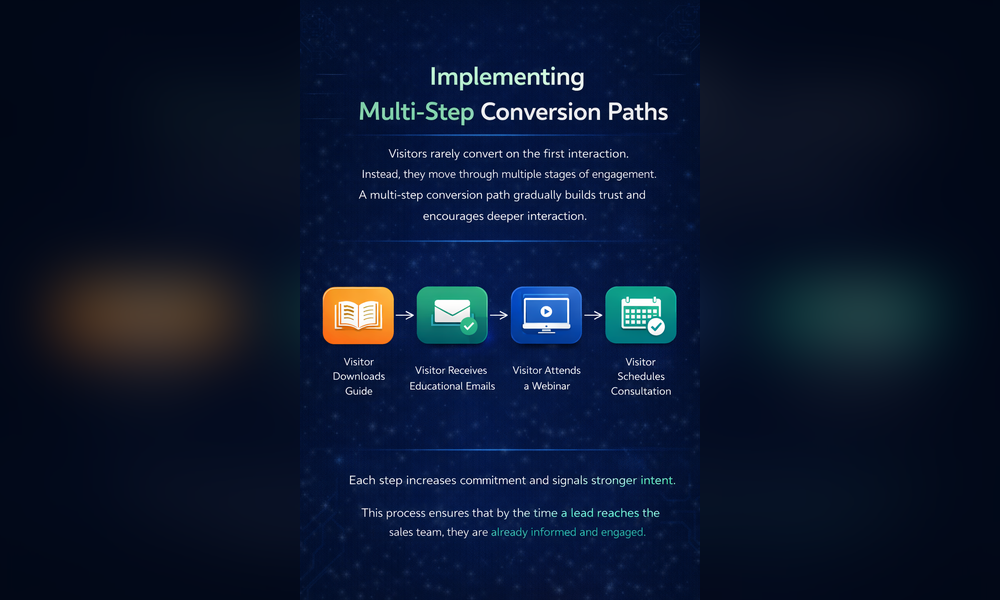
Automation platforms simplify the process of capturing and nurturing leads. One widely used platform for this purpose is Go High Level. Through GHL lead generation, firms can create landing pages, automate follow-up messages, schedule consultations, and track engagement from a single platform. For example, a visitor who downloads an industry guide may automatically receive a sequence of follow-up emails that provide additional insights. These messages can eventually invite the prospect to schedule a consultation. This automated process ensures that every lead receives consistent attention while reducing manual workload.
Integrating AI Into Lead Generation
Artificial intelligence is transforming the way firms identify and engage prospects. AI lead-generation systems analyze user behavior and search patterns to identify individuals most likely to need specific services.
AI tools can assist with tasks such as:
Identifying high-intent keywords
Predicting which prospects are most likely to convert
Analyzing engagement patterns
Optimizing content strategies
These insights allow firms to focus their efforts on audiences that are more likely to become clients. By combining AI insights with automation platforms, professional services firms can build highly efficient lead generation systems.
Capturing Leads Through Landing Pages
Landing pages are one of the most effective tools for capturing leads. Unlike general website pages, landing pages focus on a single objective: converting visitors into prospects. High-performing landing pages typically include:
A clear value proposition explaining the firm’s expertise
Concise messaging that highlights benefits
A simple form for collecting contact information
A strong call to action, encouraging consultation or resource downloads
Optimizing landing pages is a key component of lead generation automation, as automation tools often direct traffic to them.
Using Educational Resources as Lead Magnets
Lead magnets are valuable resources offered in exchange for contact information. For professional services firms, effective lead magnets often include:
Strategic frameworks
Industry research reports
Practical guides
Webinar registrations
These resources provide immediate value while allowing the firm to capture contact details. Once prospects enter the system, marketing automation leads workflows can nurture them through personalized communication.
Nurturing Prospects With Marketing Automation
Not every lead is ready to become a client immediately. Many prospects need time to evaluate their options and understand how a firm can help them. Marketing automation allows firms to maintain communication during this period. Automated campaigns may include:
Educational email sequences explaining industry challenges
Case studies highlighting successful projects
Invitations to webinars or events
Updates about new insights or strategies
These messages keep the firm visible and continue building trust. Over time, prospects become more comfortable initiating direct conversations.
Aligning Marketing and Sales Teams
Successful lead generation requires collaboration between marketing and sales teams. Marketing teams attract and nurture prospects, while sales teams engage with leads who are ready for deeper discussions. CRM systems ensure that both teams have access to the same information. This alignment prevents miscommunication and ensures prospects receive a consistent experience. When marketing and sales operate as a unified system, conversion rates increase significantly.
Measuring Lead Generation Performance
To improve lead generation results, firms must track performance metrics. Important metrics include:
Lead conversion rate
Cost per lead
Sales-qualified lead rate
Client acquisition cost
These indicators reveal which strategies produce the most valuable opportunities. Automation platforms provide dashboards that allow firms to monitor these metrics and adjust strategies accordingly. Continuous improvement is essential for maintaining strong lead pipelines.
Scaling Lead Generation Systems
Once a lead generation system proves effective, firms can scale their efforts. Scaling may involve expanding content production, increasing webinar frequency, or using AI tools to identify new audiences.
Platforms supporting GHL lead generation make scaling easier by automating repetitive tasks and maintaining consistent communication with prospects. With automation managing engagement, firms can reach larger audiences without significantly increasing their workload.
Building Long-Term Client Relationships
Lead generation should not end once a client signs a contract. Maintaining strong relationships encourages repeat business and referrals.
Automation tools can support ongoing engagement through:
Industry updates
Exclusive insights
Client appreciation messages
Invitations to special events
These interactions strengthen relationships and position the firm as a trusted long-term partner. Lead generation for professional services firms requires more than visibility. It requires structured systems that attract the right prospects, nurture relationships, and guide them toward engagement.
By combining lead generation automation, intelligent CRM lead generation, powerful GHL lead generation tools, and advanced AI lead generation, firms can build scalable pipelines of qualified opportunities. At Your Cloud Hub, we help professional services firms implement these systems so they can focus on delivering expertise while technology handles attracting and nurturing potential clients.
Advanced Lead Qualification Strategies
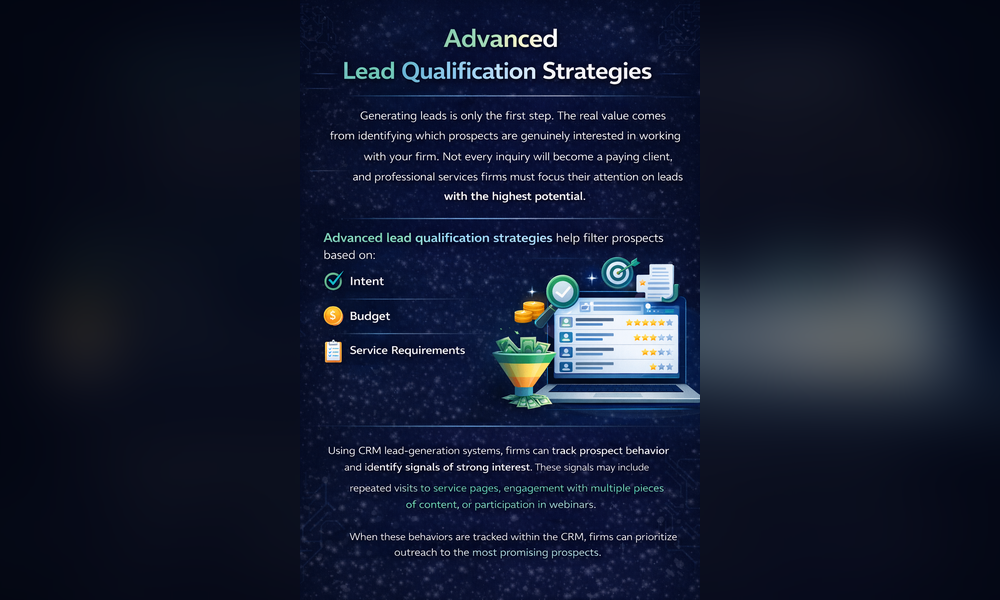
Generating leads is only the first step. The real value comes from identifying which prospects are genuinely interested in working with your firm. Not every inquiry will become a paying client, and professional services firms must focus their attention on leads with the highest potential.
Advanced lead qualification strategies help filter prospects based on intent, budget, and service requirements. This ensures that sales teams invest their time in conversations that are more likely to result in successful engagements. Using CRM lead-generation systems, firms can track prospect behavior and identify signals of strong interest. These signals may include repeated visits to service pages, engagement with multiple pieces of content, or participation in webinars. When these behaviors are tracked within the CRM, firms can prioritize outreach to the most promising prospects.
Implementing Lead Scoring Systems
Lead scoring assigns numerical values to specific actions taken by prospects. These scores help determine how ready a lead is for direct engagement. For example, downloading a guide might receive a lower score than requesting a consultation. Similarly, attending a webinar may indicate stronger intent than simply reading a blog article. Automation tools can automatically calculate these scores, allowing firms to categorize prospects into different segments. When a prospect reaches a predefined score threshold, the system can notify the sales team that the lead is ready for follow-up. This integration between scoring and lead-generation automation ensures potential clients are contacted at the right moment.
Using Behavioral Data to Understand Prospect Intent
Modern marketing platforms allow firms to track how prospects interact with their digital assets. Behavioral data provides insights into what potential clients are looking for and how they evaluate solutions. For example, a prospect who repeatedly reads articles about a specific service may be actively considering it. Similarly, a visitor who spends time reviewing case studies may be evaluating the firm’s credibility. By analyzing this behavior, firms can tailor communication to match the prospect’s interests. When combined with AI lead generation, behavioral analysis becomes even more powerful. AI tools can identify patterns that may not be immediately visible, helping firms predict which prospects are most likely to convert.
Creating Personalized Communication Paths
Personalization plays a significant role in converting leads into clients. Prospects respond more positively when communication feels relevant to their specific challenges. Automation systems allow firms to create personalized communication paths based on prospect behavior. For example, a prospect who downloads a digital transformation guide may receive additional resources focused on technology adoption strategies. Meanwhile, a prospect who registers for a marketing webinar may receive follow-up messages discussing marketing optimization techniques. These personalized pathways improve engagement and strengthen relationships.
Expanding Reach Through Content Clusters
Content clusters help professional services firms build authority around key subjects. Instead of publishing isolated articles, firms can create groups of related content that explore a topic in depth.
For example, a consulting firm might develop a cluster of content covering:
Business process automation
Operational efficiency strategies
AI implementation in organizations
Technology-driven workflow improvements
Each article supports the others, creating a comprehensive resource for prospects researching these topics. This approach not only improves search visibility but also enhances AI lead generation, as AI-driven search systems tend to recommend content that demonstrates deep topical expertise.
Leveraging Webinars and Events
Webinars and virtual events provide opportunities for direct engagement with potential clients. These formats allow firms to showcase expertise while interacting with audiences in real time. Webinar topics may focus on industry trends, emerging technologies, or strategic frameworks. Participants who attend these sessions often demonstrate a strong interest in the subject matter. Through GHL lead generation, firms can automate the entire webinar process, including registration, reminders, and follow-up communication.
After the event, participants can receive additional resources or invitations to schedule consultations. This structured process increases the likelihood that attendees become qualified leads.
Integrating Retargeting Campaigns
Not every visitor converts during their first interaction with a website. Retargeting campaigns allow firms to reconnect with those visitors later. For example, a visitor who reads an article about automation strategies may later see an advertisement promoting a related webinar or downloadable guide. Retargeting keeps the firm visible during the prospect’s research process. When combined with marketing automation leads workflows, retargeting can guide visitors back to the website and encourage deeper engagement.
Enhancing Client Trust Through Case Studies
Case studies play a powerful role in professional services marketing. Prospects want to see evidence that a firm has successfully solved problems similar to their own. A well-structured case study typically includes:
A description of the client’s challenge
The strategic approach used to address the issue
The measurable outcomes achieved
Including case studies throughout the website strengthens credibility and demonstrates real-world expertise. Prospects who see proven results are more likely to trust the firm’s capabilities.
Automating Follow-Up for Long Sales Cycles
Professional services often involve extended decision-making processes. Prospects may take weeks or months to evaluate their options before committing to a service provider.
Automation ensures that firms maintain communication during this period. Through lead generation automation, firms can deliver consistent follow-up messages that keep prospects engaged. These messages may include new insights, additional case studies, or invitations to upcoming events. By maintaining visibility, firms increase the likelihood that prospects will choose them when they are ready to move forward.