


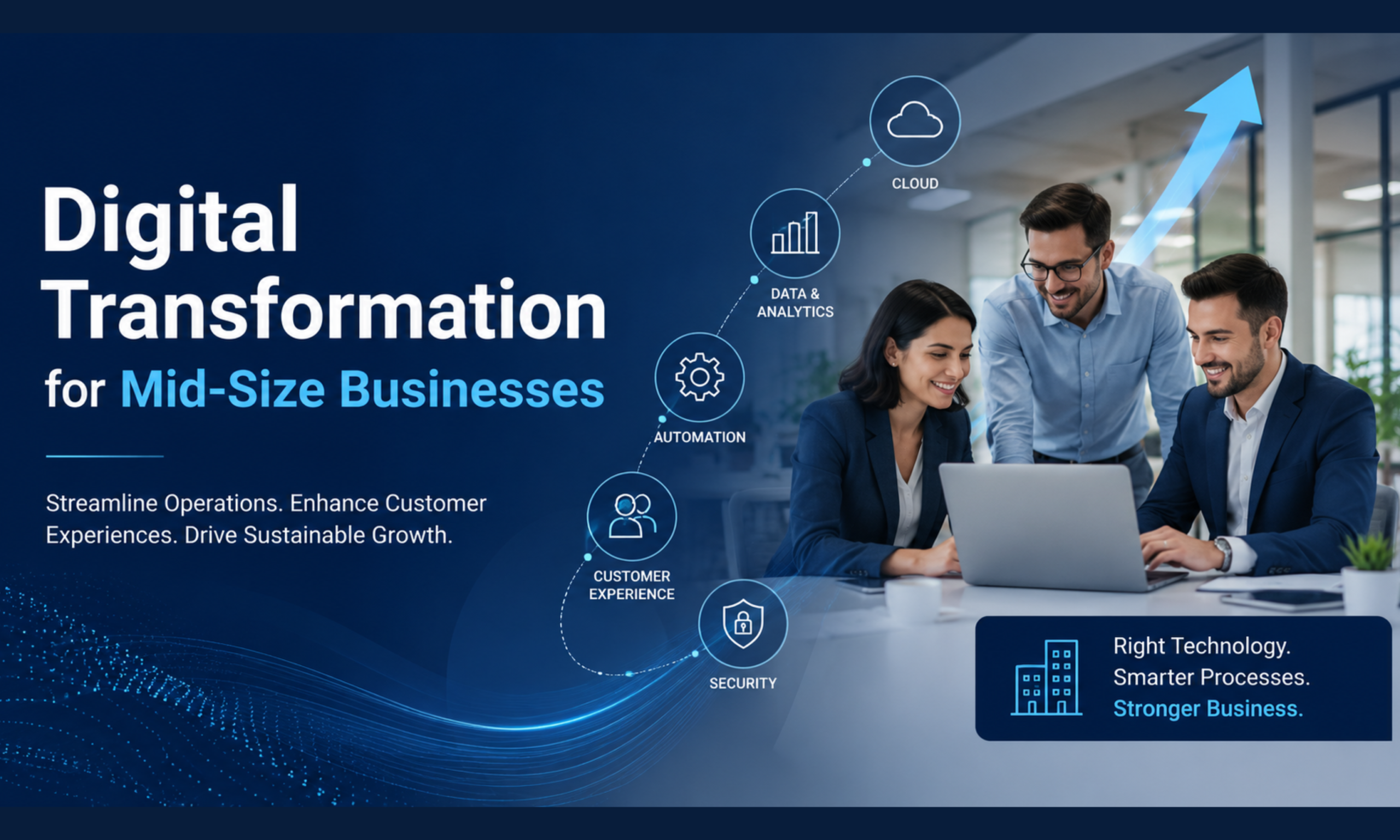
Digital transformation is no longer a strategy reserved for large enterprises with massive technology budgets. Today, mid-size businesses are embracing digital transformation to improve efficiency, enhance customer experiences, streamline operations, and remain competitive in rapidly evolving markets. As customer expectations continue to rise and technology advances at an unprecedented pace, businesses that delay modernization often struggle to keep up with competitors that have already adopted digital-first strategies.
For many growing organizations, digital transformation is not about replacing everything they already use. Instead, it is about improving existing processes, integrating modern technologies, and building systems that support long-term business growth. From cloud computing and business automation to custom software development and data-driven decision-making, every investment should contribute toward creating a more agile and scalable organization.
At Your Cloud Hub, we help businesses understand that digital transformation is a continuous journey, not a one-time technology project. Companies that Hire Software developers, choose to hire cloud developers, work with experienced hire cloud application developers, or collaborate with a skilled cloud computing developer are building the technological foundation needed to compete in an increasingly digital economy.
Why Mid-Size Businesses Cannot Afford to Delay Digital Transformation
Many mid-size businesses assume that digital transformation can wait until the company grows larger. Unfortunately, this approach often creates long-term challenges that become increasingly expensive to solve. Outdated systems, manual workflows, disconnected software, and inefficient communication processes slow down operations and reduce the organization’s ability to respond to changing market conditions.
Digital transformation enables businesses to operate with greater speed, accuracy, and flexibility. Employees spend less time performing repetitive tasks, managers gain access to real-time business insights, and customers receive faster, more consistent service. Businesses that Hire Software developers often begin by identifying operational bottlenecks before building custom solutions that improve efficiency across multiple departments.
Rather than viewing technology as an expense, successful organizations recognize it as a long-term investment that supports productivity, innovation, and sustainable growth. Companies that embrace digital transformation early are generally better prepared to adapt to future technological and market changes.
Modern Software Creates More Efficient Business Operations
Many mid-size businesses rely on multiple disconnected systems to manage sales, accounting, customer support, inventory, marketing, and internal communication. As organizations expand, these disconnected platforms often create duplicate work, inconsistent data, and operational inefficiencies.
Custom software helps eliminate these problems by unifying business processes into a single integrated ecosystem. Organizations that Hire Software developers can create applications specifically designed around their workflows rather than forcing employees to adapt to generic software solutions.
Instead of switching between multiple platforms throughout the day, employees gain access to centralized information that improves collaboration and decision-making. This streamlined approach reduces administrative work, minimizes human error, and enables teams to focus on activities that contribute directly to business growth.
Digital transformation is not simply about adopting new technology—it is about building smarter ways of working.
Cloud Technology Is Transforming How Businesses Operate
Cloud computing has become one of the most significant drivers of digital transformation. Instead of relying on expensive on-premise infrastructure, businesses can now access powerful computing resources through scalable cloud platforms.
Organizations that hire cloud developers gain the ability to build flexible systems that support remote work, real-time collaboration, secure data storage, and seamless application access from virtually anywhere.
Cloud technology also improves business continuity by reducing dependence on physical infrastructure. Employees can continue working securely regardless of location, while businesses benefit from automatic updates, scalable resources, and improved disaster recovery capabilities.
At Your Cloud Hub, we have seen how cloud adoption helps mid-size businesses become more agile while reducing long-term infrastructure costs.
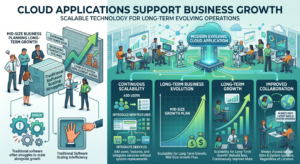
Cloud Applications Support Business Growth
As businesses expand, their technology requirements become more sophisticated. Traditional software often struggles to scale alongside growing customer bases, increasing transaction volumes, and expanding operational complexity.
This is why many organizations choose to hire cloud application developers to build modern applications that can evolve with the business.
Cloud-based applications allow organizations to add users, introduce new features, integrate additional services, and support larger workloads without requiring complete system replacements.
This scalability makes cloud applications particularly valuable for mid-size businesses planning long-term growth. Rather than rebuilding technology every few years, businesses can continuously improve and expand existing platforms.
Well-designed cloud applications also improve collaboration by ensuring employees always have access to the latest data and system updates, regardless of location.
Automation Frees Teams to Focus on High-Value Work
One of the most valuable outcomes of digital transformation is automation.
Many businesses still spend countless hours performing repetitive administrative tasks such as manual data entry, report generation, invoice processing, customer follow-ups, and workflow approvals.
Automation allows these routine activities to be completed automatically, freeing employees to focus on strategic initiatives, customer relationships, and innovation.
Businesses working with a skilled cloud computing developer frequently integrate automation into cloud-based systems to improve operational efficiency across multiple departments.
Rather than replacing employees, automation enables teams to contribute more value by reducing repetitive workloads and improving productivity.
The businesses that embrace automation often discover they can scale operations without proportionally increasing staffing costs.
Data Becomes a Strategic Business Asset
Modern businesses generate enormous amounts of data every day. Customer interactions, sales performance, marketing campaigns, financial transactions, and operational activities all create valuable information.
Without proper systems, much of this data remains underutilized.
Digital transformation allows businesses to collect, organize, analyze, and act upon business intelligence more effectively.
Organizations that Hire Software developers frequently implement reporting dashboards and analytics platforms that provide decision-makers with real-time insights into business performance.
Instead of relying on assumptions, leaders can make informed decisions supported by accurate data.
Better visibility often leads to improved forecasting, stronger customer experiences, and more effective resource allocation.
Customer Experience Improves Through Digital Innovation
Modern customers expect fast responses, personalized communication, convenient digital services, and seamless interactions across multiple channels.
Businesses that fail to meet these expectations risk losing customers to more technologically advanced competitors.
Digital transformation helps organizations improve every stage of the customer journey.
Companies that hire cloud developers often implement customer portals, automated support systems, mobile applications, online service platforms, and integrated communication tools that create better experiences for clients.
Improved customer experiences contribute directly to higher satisfaction, stronger retention, and increased customer lifetime value.
Technology becomes a competitive advantage when it helps businesses serve customers more efficiently and consistently.
Digital Transformation Supports Future Innovation
One of the greatest advantages of digital transformation is that it prepares businesses for future technological advancements.
Organizations operating on modern cloud-based infrastructure can adopt artificial intelligence, machine learning, advanced analytics, automation, and emerging technologies much more easily than businesses relying on outdated systems.
Companies that hire cloud application developers are not simply solving today’s challenges. They are building flexible technology platforms capable of supporting tomorrow’s innovations.
This forward-looking approach reduces future implementation costs while improving long-term business agility.
Rather than reacting to technological change, digitally transformed businesses are positioned to take advantage of new opportunities as they emerge.
Digital Transformation Is More About People Than Technology
One of the biggest misconceptions about digital transformation is that it is purely a technology initiative. While modern software, cloud platforms, and automation tools are important, successful transformation begins with people. Businesses often invest in new systems but fail to prepare their teams for the changes those systems introduce. As a result, even the most advanced technology can remain underutilized because employees continue relying on old processes and manual workflows.
Mid-size businesses that experience the greatest success treat digital transformation as both a technological and cultural shift. Leaders encourage collaboration, provide training, and involve employees throughout the implementation process. This approach reduces resistance to change while helping teams understand how new technologies will improve their daily work.
At Your Cloud Hub, we have seen that organizations achieve stronger results when technology is introduced alongside clear communication and practical support. Companies that Hire Software developers to build custom business applications should also invest time in ensuring employees understand how those applications contribute to greater efficiency and improved customer service. Technology delivers its greatest value when people feel confident using it.
Cloud Infrastructure Creates a Strong Foundation for Future Growth
As businesses expand, their technology requirements become increasingly complex. New employees, larger customer databases, growing transaction volumes, and additional software integrations place greater demands on existing infrastructure. Traditional systems often struggle to keep pace with this growth, resulting in performance issues, maintenance challenges, and rising operational costs.
This is why many organizations choose to hire cloud developers who can design flexible cloud environments capable of supporting long-term business expansion. Cloud infrastructure allows companies to scale resources based on demand without making significant investments in physical servers or hardware upgrades.
A cloud-first approach also improves reliability and accessibility. Employees can securely access business systems from multiple locations, while leadership gains greater visibility into operations through centralized cloud platforms. As businesses continue growing, this flexibility becomes one of the most valuable advantages of cloud adoption.
Custom Cloud Applications Solve Unique Business Challenges
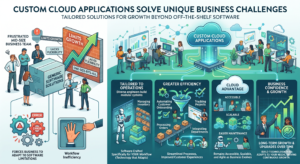
Every business operates differently. While off-the-shelf software can address general needs, it often lacks the flexibility required to support specialized workflows, industry requirements, or unique customer experiences.
Mid-size businesses frequently reach a stage where standard software begins limiting growth rather than supporting it. This is where custom cloud applications provide significant value.
Organizations that hire cloud application developers can create software tailored specifically to their operations. Whether managing inventory, automating customer onboarding, tracking projects, processing orders, or integrating multiple departments, custom cloud applications provide greater efficiency than generic solutions.
Because these applications are cloud-based, they remain accessible, scalable, and easier to maintain as business requirements evolve. Rather than forcing operations to adapt to software limitations, businesses gain technology that adapts to their needs.
Cybersecurity Must Be Part of Every Digital Transformation Strategy
As organizations become more digitally connected, protecting business data becomes increasingly important. Customer information, financial records, operational systems, and intellectual property all represent valuable assets that require strong security measures.
Digital transformation should never prioritize innovation at the expense of security. Businesses must ensure that every new platform, application, and cloud service includes appropriate safeguards against cyber threats.
An experienced cloud computing developer understands that cybersecurity is not simply an additional feature—it is an essential component of every modern technology solution. Secure cloud architecture, user authentication, encrypted communication, regular updates, and access controls all contribute to protecting business operations.
By incorporating security from the beginning rather than adding it later, organizations reduce risk while building greater confidence among customers and stakeholders.
Digital Transformation Creates Better Customer Experiences
Technology investments should ultimately improve the experience customers have with a business. Faster response times, personalized communication, self-service options, simplified purchasing processes, and consistent service delivery all contribute to stronger customer satisfaction.
Businesses that Hire Software developers often prioritize customer-facing improvements during digital transformation initiatives. Mobile applications, customer portals, online scheduling systems, automated notifications, and integrated support platforms help create smoother interactions throughout the customer journey.
Modern customers expect convenience, speed, and accessibility. Organizations that successfully meet these expectations are more likely to build long-term loyalty and generate positive referrals.
Digital transformation is therefore not just an internal operational improvement. It is also a customer experience strategy that directly influences business growth.
Long-Term Success Depends on Continuous Innovation
Digital transformation is not a project with a fixed completion date. Technology continues evolving, customer expectations change, and competitive markets constantly introduce new challenges and opportunities.
Businesses that achieve lasting success treat digital transformation as an ongoing process of continuous improvement rather than a one-time implementation.
At Your Cloud Hub, we encourage organizations to regularly evaluate existing systems, identify opportunities for optimization, and embrace innovations that create measurable business value. Companies that hire cloud developers, collaborate with experienced hire cloud application developers, and work alongside skilled cloud computing developer professionals are better positioned to adapt as technology continues advancing.
The businesses that lead tomorrow will not simply be those with the newest technology. They will be the organizations that continually improve, remain adaptable, and use digital innovation strategically to create better experiences for employees, customers, and stakeholders alike.
Digital Transformation Is an Ongoing Competitive Advantage
Many businesses think of digital transformation as a project with a clear beginning and end. In reality, the most successful organizations treat it as an ongoing business strategy. Technology evolves continuously, customer expectations continue to rise, and competitors constantly introduce new innovations. Businesses that remain committed to continuous improvement are better equipped to adapt and remain competitive.
Working with an experienced cloud computing developer allows organizations to continuously optimize their cloud infrastructure, improve system performance, strengthen security, and introduce new capabilities as business requirements change. Rather than reacting to technological change, digitally mature organizations actively embrace innovation to improve operations and create better customer experiences.
At Your Cloud Hub, we encourage businesses to view digital transformation as a long-term investment rather than a one-time implementation. Organizations that continue modernizing their systems, investing in skilled developers, and leveraging cloud technologies position themselves for sustained growth, greater operational resilience, and stronger market competitiveness. In today’s digital economy, the businesses that continuously innovate are the ones most likely to lead their industries tomorrow.