


Choosing a content management system is no longer just a technical decision—it is a business decision that can influence your website’s performance, marketing strategy, customer experience, scalability, and long-term digital success. Whether you are launching a brand-new website, redesigning an existing platform, or planning a complete digital transformation, selecting the right CMS will affect how easily your team manages content, how quickly your website evolves, and how efficiently your business responds to changing market demands.
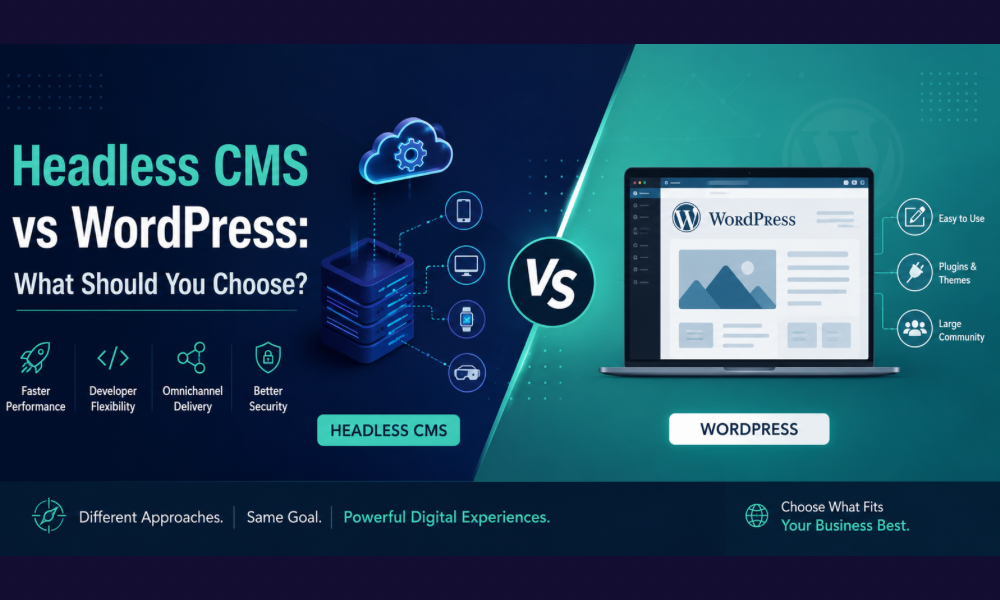
Today, two approaches dominate the conversation: the traditional WordPress CMS and the increasingly popular Headless CMS architecture. While both are capable of building modern websites, they are designed with very different philosophies. WordPress focuses on providing an all-in-one content management experience that combines website management, content publishing, themes, plugins, and frontend presentation within a single platform. A Headless CMS, on the other hand, separates content management from the website itself, allowing developers to distribute the same content across websites, mobile applications, smart devices, digital kiosks, and numerous other platforms through APIs.
As businesses become more digital-first, many assume that newer technology automatically represents a better investment. However, choosing the latest architecture does not always produce the best business outcome. In many cases, the right solution depends on your organization’s goals, internal resources, customer expectations, and future expansion plans rather than industry trends.
At Your Cloud Hub, we help businesses make technology decisions based on long-term value rather than temporary hype. Whether organizations plan to hire a WordPress developer in India, collaborate with a WordPress programmer in India, work alongside experienced WordPress developers in India, leverage offshore WordPress development, or consult a trusted WordPress expert in India, understanding the practical strengths and limitations of both WordPress and Headless CMS is essential before making a strategic investment.
Understanding the Core Difference Between WordPress and Headless CMS
Before deciding which platform is better, it is important to understand that WordPress and Headless CMS are not direct replacements for one another. Although both manage digital content, they solve different business challenges.
WordPress follows a traditional CMS model in which content creation, storage, website design, and frontend presentation are closely integrated. When a content editor publishes an article, updates a product page, or edits a service description, the website immediately displays those changes through its theme. This integrated approach makes WordPress highly accessible for marketing teams, content creators, and business owners because they can manage websites without depending heavily on developers.
A Headless CMS works differently. Instead of controlling how content appears on a website, it focuses solely on storing and organizing information. That content is then delivered through APIs to separate frontend applications developed using modern frameworks. This allows businesses to reuse the same content across multiple platforms simultaneously, including websites, mobile applications, digital displays, customer portals, wearable devices, and other digital experiences.
Neither approach is inherently superior. WordPress excels at delivering complete website management with minimal complexity, while Headless CMS provides greater architectural flexibility for organizations operating across multiple digital channels. The right decision depends entirely on how your business plans to grow over the coming years.
Why WordPress Continues to Power Millions of Business Websites
Despite the rapid growth of newer technologies, WordPress remains the most widely used content management system in the world. This continued popularity is not simply the result of history or familiarity—it reflects WordPress’s ability to solve practical business problems efficiently.
Businesses need websites that are easy to update, affordable to maintain, optimized for search engines, and capable of evolving as marketing strategies change. WordPress delivers these advantages through its mature ecosystem of themes, plugins, integrations, and development tools. Marketing teams can publish blogs, update service pages, optimize SEO, launch landing pages, and manage multimedia content without requiring extensive programming knowledge. This level of independence allows organizations to move quickly while reducing ongoing development costs.
Another major advantage of WordPress is the availability of experienced developers worldwide. Businesses choosing to hire wordpress developer india benefit from a large talent pool capable of delivering high-quality websites across industries. Whether building corporate websites, eCommerce stores, educational platforms, membership portals, or service-based business websites, WordPress provides an excellent balance between flexibility, functionality, and cost efficiency.
For many organizations, these practical advantages matter far more than adopting the latest architectural trend.
Headless CMS Is Built for Businesses Managing Multiple Digital Experiences
While WordPress performs exceptionally well for traditional websites, modern enterprises increasingly operate across far more than a single online platform. Customers interact with businesses through websites, mobile applications, customer portals, digital signage, voice assistants, wearable devices, and connected technologies that extend well beyond the browser.
Managing separate content for every digital channel quickly becomes inefficient.
This is where Headless CMS demonstrates its greatest strength.
Instead of creating duplicate content for each platform, businesses manage information centrally while delivering it through APIs wherever it is needed. A product description, company announcement, or support article can appear simultaneously across websites, mobile applications, smart devices, and customer dashboards without requiring multiple content updates.
This flexibility makes Headless CMS particularly attractive for large enterprises with sophisticated digital ecosystems. However, this additional capability also introduces greater technical complexity. Frontend development, API management, infrastructure planning, and ongoing maintenance require specialized expertise, making Headless CMS a larger investment than many businesses initially expect.
For organizations whose primary objective is operating a marketing website or corporate online presence, these advanced capabilities may provide little additional business value compared to a well-optimized WordPress solution.
Your Business Goals Should Determine Your Technology Choice
One of the biggest mistakes companies make is selecting technology based on industry trends rather than business objectives. It is easy to assume that because large technology companies adopt Headless CMS architecture, every organization should follow the same path. In reality, technology decisions should always support measurable business goals.
If your company depends heavily on content marketing, search engine optimization, blogging, lead generation, and website management, WordPress often provides everything needed without introducing unnecessary complexity. Marketing teams can publish content quickly, optimize pages independently, and manage website growth without requiring continuous developer involvement.
On the other hand, businesses planning highly customized digital products, omnichannel customer experiences, or applications serving multiple platforms simultaneously may benefit significantly from Headless architecture. In these situations, the flexibility of separating content from presentation creates long-term advantages despite the higher implementation costs.
Organizations working with experienced hire wordpress programmer India professionals frequently discover that many perceived limitations of WordPress can be overcome through thoughtful architecture, custom development, and strategic planning. Rather than assuming a completely different platform is necessary, businesses often achieve their goals by optimizing the technology they already understand.
Website Performance Depends More on Architecture Than the CMS Itself
One of the most common misconceptions surrounding WordPress and Headless CMS is that one platform is automatically faster than the other. Many businesses assume that choosing a Headless CMS will instantly improve website speed and search engine rankings, while others believe WordPress has become too heavy for modern websites. The truth is much more balanced. Website performance is influenced far more by how the platform is built, optimized, and maintained than by the content management system itself.
A poorly developed Headless CMS project can easily perform worse than a professionally optimized WordPress website. Likewise, a WordPress site overloaded with unnecessary plugins, outdated themes, unoptimized images, and poor hosting can become slow regardless of how powerful the CMS may be. The technology itself is only one piece of the performance equation.
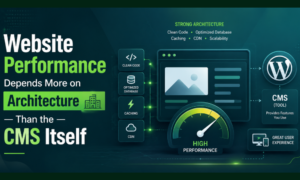
Businesses should evaluate the complete technical architecture, including hosting infrastructure, caching strategies, image optimization, content delivery networks, database performance, code quality, and frontend optimization. When these components are designed correctly, WordPress is capable of delivering exceptional loading speeds while remaining easy to manage for marketing teams.
Organizations that choose to hire wordpress developer india often gain access to experienced professionals who understand these optimization techniques. Instead of assuming that replacing the CMS will solve performance issues, skilled developers focus on improving the existing architecture, reducing unnecessary code, optimizing database queries, implementing caching mechanisms, and enhancing overall user experience. In many cases, businesses achieve dramatic performance improvements without abandoning WordPress altogether.
Content Teams Need Flexibility Without Depending on Developers
One of the most overlooked factors when selecting a CMS is the daily experience of the people who will actually use it. Business owners often focus heavily on technical specifications while forgetting that content creators, marketing teams, SEO specialists, and editors interact with the platform every single day.
WordPress has remained successful largely because it empowers non-technical users. Marketing teams can publish blog posts, update landing pages, optimize metadata, upload multimedia, create service pages, and schedule content independently. They rarely need to wait for developers to make simple updates, allowing businesses to respond quickly to marketing opportunities and changing customer demands.
A Headless CMS offers tremendous flexibility from a development perspective, but content updates often require greater collaboration between technical and marketing teams because frontend presentation is managed separately. While modern Headless solutions continue improving their editorial experience, they generally involve more technical planning than traditional CMS platforms.
For businesses publishing regular blogs, SEO content, service pages, case studies, product updates, and educational resources, this operational efficiency becomes extremely valuable. Companies working with a hire WordPress programmer India frequently discover that WordPress allows their internal marketing departments to become more productive because everyday content management remains straightforward even as websites continue growing.
The ability to move quickly often provides greater competitive advantage than adopting the newest technology architecture.
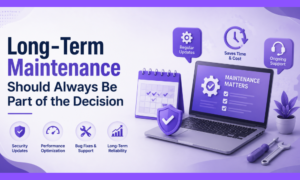
Long-Term Maintenance Should Always Be Part of the Decision
Launching a website is only the beginning of its lifecycle. Every successful website continues evolving through new content, feature improvements, design enhancements, security updates, SEO optimization, and performance improvements. Businesses that focus exclusively on initial development costs often underestimate the long-term effort required to maintain modern digital platforms.
WordPress has one of the largest global communities of developers, security experts, plugin providers, and support resources. This mature ecosystem makes long-term maintenance relatively straightforward because updates, troubleshooting, and feature enhancements are well documented and widely supported. Finding experienced developers is also considerably easier due to WordPress’s widespread adoption across industries.
Headless CMS platforms often require more specialized technical knowledge. Businesses may need frontend developers familiar with JavaScript frameworks, backend engineers managing APIs, DevOps specialists overseeing infrastructure, and developers capable of maintaining multiple independent systems simultaneously. While this architecture offers outstanding flexibility, it also increases operational complexity over time.
Organizations partnering with experienced India WordPress developers often appreciate the predictability of WordPress maintenance. Security updates, plugin improvements, performance optimization, and new functionality can typically be implemented efficiently without rebuilding large portions of the website. This makes long-term budgeting more predictable while reducing technical risk.
Cost Should Be Evaluated Over the Entire Website Lifecycle
Technology decisions should never be based solely on initial development costs. A website represents a long-term investment that continues generating value over many years, making lifecycle costs significantly more important than the initial project budget.
Headless CMS implementations frequently require larger upfront investments because separate frontend applications, API integrations, hosting environments, and deployment pipelines must all be developed. Future feature additions may also involve multiple development teams working across different technologies.
WordPress generally provides lower implementation costs while maintaining excellent flexibility for most commercial websites. Businesses can launch professional websites faster, introduce new functionality through established plugins, and continue expanding features without rebuilding the entire platform.
Companies leveraging offshore WordPress development often maximize these financial advantages by combining experienced technical expertise with cost-effective development resources. Rather than allocating substantial budgets toward unnecessary architectural complexity, organizations can invest more heavily in digital marketing, content strategy, conversion optimization, user experience improvements, and customer acquisition.
From a business perspective, the objective is not simply building an impressive website—it is achieving the strongest possible return on investment.
Future Scalability Is About Planning, Not Guesswork
Scalability is frequently mentioned during CMS comparisons, yet many businesses misunderstand what it actually means. Scalability is not simply the ability to handle more website traffic. It also involves supporting new business models, additional services, expanding content libraries, increasing customer interactions, multilingual websites, third-party integrations, and evolving digital strategies.
WordPress has demonstrated remarkable scalability over many years. Large publishers, educational institutions, enterprise organizations, government agencies, and global businesses continue using WordPress because it can grow alongside changing business requirements when properly architected.
Likewise, Headless CMS platforms offer exceptional scalability for organizations requiring highly customized frontend experiences across multiple digital channels.
The important question is not whether a platform can scale.
The question is whether your business genuinely requires that level of architectural flexibility today.
Many organizations overestimate their future technical needs while underestimating the importance of operational simplicity. Working with an experienced WordPress expert india allows businesses to evaluate realistic growth projections before investing in technology that may introduce unnecessary complexity without delivering proportional business value.
At Your Cloud Hub, we encourage organizations to build for their actual growth strategy rather than hypothetical future scenarios. The best technology decision is the one that supports both today’s objectives and tomorrow’s opportunities without creating avoidable maintenance challenges.