


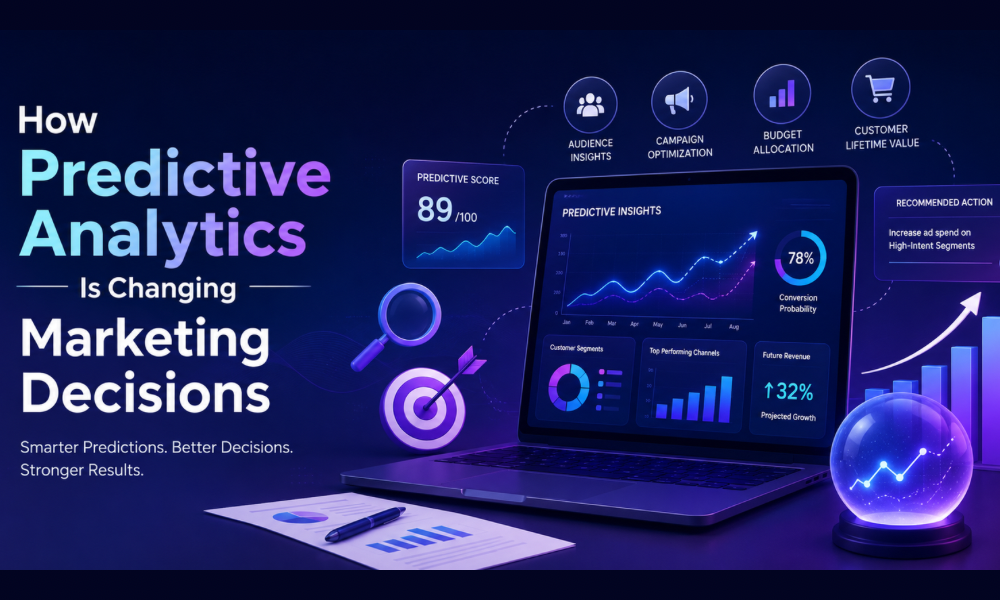
Predictive analytics combines artificial intelligence, machine learning, statistical modeling, and customer data to identify patterns that help businesses anticipate future outcomes. Instead of reacting after campaigns succeed or fail, companies can forecast customer behavior, identify buying intent, optimize advertising budgets, personalize customer experiences, and make smarter marketing investments before launching campaigns.
For businesses competing in increasingly crowded digital markets, this ability to make proactive decisions creates a significant competitive advantage. Marketing teams can focus resources where they are most likely to deliver results, reducing wasted advertising spend and improving overall return on investment.
However, predictive analytics is not simply about collecting more data. Success depends on having the right technology, clean data, accurate measurement systems, and experienced professionals capable of transforming raw information into actionable business insights. Whether businesses choose to hire AI developers, collaborate with machine learning experts, hire Google Analytics experts, work with a certified Google Analytics expert, or hire SEO consulting services to strengthen their digital strategy, predictive analytics is becoming an essential component of modern marketing success.
Marketing Is Moving From Reactive Decisions to Predictive Intelligence
Traditional marketing has always relied heavily on historical reporting. Businesses launch campaigns, collect performance data, analyze results, and then make adjustments for future campaigns. While this approach has delivered value for many years, it also means marketers are constantly reacting to events that have already happened.
Predictive analytics changes this entire process.
Instead of asking why a campaign performed well last month, businesses begin asking which customers are most likely to convert next month.
Rather than identifying declining engagement after it occurs, predictive models detect early warning signs before customer behavior changes significantly.
Instead of increasing advertising budgets across every campaign equally, businesses allocate resources toward audiences with the highest probability of generating revenue.
This proactive approach allows marketing teams to make smarter decisions before opportunities are lost.
Organizations that hire AI developers increasingly integrate predictive models into their marketing systems because forecasting customer behavior creates far greater strategic value than simply reviewing historical reports.
Customer Data Has Become One of the Most Valuable Business Assets
Every interaction customers have with a business generates valuable information.
Website visits.
Search queries.
Product views.
Email engagement.
Purchase history.
Customer support conversations.
Social media interactions.
Advertising clicks.
Form submissions.
Appointment bookings.
Individually, these activities may appear insignificant.
Together, they reveal patterns that help businesses understand customer intent, buying behavior, and future purchasing decisions.
Predictive analytics transforms this raw data into meaningful business intelligence.
Instead of storing information without purpose, organizations use machine learning models to identify trends that influence future marketing strategies.
Businesses choosing to hire machine learning experts often discover opportunities hidden within existing customer data that were previously impossible to identify using traditional reporting methods.
This allows organizations to build more personalized marketing campaigns while improving customer experiences at every stage of the buying journey.
Personalization Is Becoming More Intelligent
Modern customers expect businesses to understand their needs.
Generic email campaigns.
Broad advertising messages.
One-size-fits-all recommendations.
These approaches are becoming less effective as customer expectations continue evolving.
Predictive analytics enables businesses to deliver highly personalized experiences based on likely future behavior rather than past interactions alone.
AI can estimate which products customers may purchase next.
Which services they are most interested in.
When they are most likely to engage.
Which communication channels produce the highest response rates.
This level of personalization increases engagement because customers receive content that aligns more closely with their interests instead of generic promotional messages.
Organizations investing to hire Google Analytics expert professionals frequently combine predictive insights with website analytics to create customer journeys that adapt continuously as user behavior changes.
Rather than treating every visitor the same, businesses begin delivering experiences tailored to individual preferences and intentions.
Marketing Budgets Become More Efficient
One of the biggest challenges facing marketing leaders is deciding where to invest limited budgets.
Should additional resources support paid advertising?
SEO?
Email campaigns?
Social media?
Content marketing?
Remarketing?
Predictive analytics provides clearer answers by estimating which investments are most likely to generate measurable business outcomes.
Instead of distributing budgets evenly, organizations prioritize channels, audiences, and campaigns with the highest expected return.
Businesses working alongside a certified Google Analytics expert frequently combine predictive modeling with detailed performance measurement, allowing marketing teams to identify high-value traffic sources while eliminating underperforming investments.
This approach reduces wasted spending while improving overall marketing efficiency.
Instead of guessing where future growth will come from, businesses rely on data-supported predictions to guide strategic decisions.
Predictive Analytics Strengthens SEO Strategy
Search engine optimization has traditionally focused on improving rankings, increasing website traffic, and generating organic visibility.
While these objectives remain important, predictive analytics introduces an entirely new perspective.
Businesses can analyze historical search behavior alongside customer conversion data to identify which keywords are most likely to generate revenue rather than simply attracting visitors.
Predictive models also help forecast seasonal demand, identify emerging search trends, estimate future content opportunities, and prioritize optimization efforts before competitors respond.
Organizations choosing to hire seo consultant professionals increasingly integrate predictive analytics into SEO planning because long-term search visibility depends on anticipating market changes rather than reacting after they occur.
Instead of publishing content solely based on current search volumes, businesses create strategies aligned with future customer demand.
This proactive approach strengthens organic growth while supporting sustainable digital marketing performance.
Predictive Analytics Helps Businesses Understand Customer Intent Before Competitors Do
One of the greatest advantages of predictive analytics is its ability to identify customer intent before customers make their final purchasing decision. Traditional marketing reports often explain what has already happened. They can show which pages customers visited, which advertisements received clicks, or how many conversions occurred during a campaign. While this information is useful, it is entirely historical. Businesses still need to decide what actions to take next.
Predictive analytics shifts the focus toward future behavior. By analyzing browsing patterns, search activity, previous purchases, engagement history, and demographic data, machine learning models can estimate which prospects are most likely to convert, which customers may require additional nurturing, and which existing clients may be considering another purchase. This insight allows marketing teams to act before opportunities disappear rather than responding after valuable leads have already been lost.
For example, a visitor who repeatedly views pricing pages, downloads product guides, returns to the website several times within a week, and engages with email campaigns demonstrates significantly different buying intent than someone who visits only once. Predictive analytics recognizes these behavioral signals and helps businesses prioritize follow-up efforts accordingly.
Organizations that choose to hire AI developers often integrate predictive models into their CRM and marketing platforms so sales and marketing teams receive actionable recommendations instead of static reports. This enables faster decision-making while improving lead quality and conversion rates. Rather than treating every visitor equally, businesses begin investing more attention in the prospects with the highest probability of becoming long-term customers.
Artificial Intelligence Is Making Marketing More Personalized Than Ever
Consumers interact with hundreds of brands every day. Emails, advertisements, search results, social media updates, and website recommendations constantly compete for attention. In this environment, generic marketing messages rarely produce meaningful engagement because customers increasingly expect businesses to understand their preferences and deliver relevant experiences.
Predictive analytics helps make personalization far more intelligent. Instead of grouping customers into broad audience segments, businesses can predict individual preferences based on behavioral data, purchase history, browsing habits, geographic information, and previous interactions.
A returning visitor may receive different content than a first-time visitor.
A loyal customer may see personalized recommendations instead of introductory offers.
A prospect showing strong buying intent may receive an invitation to schedule a consultation rather than another educational email.
These personalized experiences improve customer satisfaction because communication becomes more relevant at every stage of the buying journey.
Businesses working alongside hire machine learning experts frequently build recommendation engines and customer segmentation models that continuously improve as more data becomes available. Rather than relying on assumptions about customer behavior, organizations use predictive intelligence to create experiences that feel more helpful and less promotional.
This shift benefits both businesses and customers. Companies improve engagement while customers receive information that genuinely matches their interests and current needs.
Better Measurement Creates Better Marketing Decisions
One of the biggest challenges in digital marketing is determining which activities actually contribute to business growth. Businesses invest in SEO, paid advertising, email marketing, content creation, social media, video campaigns, and numerous other channels simultaneously. Understanding how these channels influence one another can be extremely difficult without accurate measurement.
Predictive analytics becomes even more valuable when combined with advanced analytics platforms capable of tracking user behavior across multiple touchpoints.
Professionals who hire Google Analytics expert services often build detailed measurement frameworks that go beyond simple traffic reports. Instead of reporting only website visits or page views, they analyze customer journeys, attribution paths, engagement quality, conversion probabilities, and long-term customer value.
These insights help businesses answer important strategic questions.
Which marketing channels consistently attract high-value customers?
Which campaigns generate leads that convert into repeat buyers?
Where do customers abandon the buying process?
Which user behaviors indicate future purchasing intent?
Rather than making budget decisions based on isolated metrics, organizations evaluate marketing performance from a broader business perspective. This leads to more confident investment decisions and stronger long-term returns.
Predictive Analytics Supports Smarter SEO and Content Planning
Search engine optimization has traditionally relied on historical keyword data and existing search trends. While these remain important, predictive analytics allows businesses to look beyond current rankings and begin preparing for future demand.
Instead of waiting until competitors dominate emerging search topics, businesses can identify developing trends earlier by analyzing search behavior, seasonal changes, customer interests, and industry patterns.
An experienced hire seo consultant increasingly works alongside data specialists to combine predictive insights with traditional SEO strategies. Rather than creating content only for today’s highest-volume keywords, businesses begin developing resources around topics that are expected to become more valuable over the coming months.
Predictive analytics also helps prioritize content updates by identifying pages likely to lose visibility if they remain outdated. Marketing teams can refresh important content before rankings decline instead of reacting after traffic has already been lost.
This proactive approach allows businesses to maintain stronger search visibility while improving the relevance of their content library.
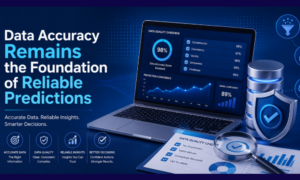
Data Accuracy Remains the Foundation of Reliable Predictions
Predictive analytics is only as valuable as the data supporting it. Artificial intelligence can identify patterns and generate accurate forecasts only when businesses collect consistent, reliable, and meaningful information.
Incomplete customer records, duplicate data, inaccurate tracking, or inconsistent analytics implementation reduce the quality of predictive models regardless of how advanced the technology may be.
This is why many organizations invest in a certified Google Analytics expert before expanding predictive analytics initiatives. Proper analytics implementation ensures businesses collect trustworthy information across websites, advertising campaigns, customer interactions, and conversion events.
Once accurate measurement systems are established, predictive models become significantly more reliable because they learn from high-quality behavioral data rather than fragmented information.
Businesses often discover that improving data quality creates immediate improvements in forecasting accuracy while strengthening every aspect of their digital marketing strategy.
The Future of Marketing Will Belong to Businesses That Predict Rather Than React
Marketing is becoming increasingly competitive across every industry. Customer expectations continue rising while advertising costs increase and organic competition becomes more intense. Businesses that rely solely on historical reporting will find it increasingly difficult to stay ahead because they are constantly responding to changes after competitors have already adapted.
Predictive analytics represents a different way of thinking.
Instead of asking what happened yesterday, businesses begin asking what is most likely to happen tomorrow.
Instead of reacting to customer behavior, they anticipate it.
Instead of optimizing campaigns after performance declines, they identify opportunities before market conditions change.
Organizations that choose to hire AI developers, collaborate with hire machine learning experts, work with a Hire Google Analytics expert, consult a certified Google Analytics expert, and partner with an experienced hire seo consultant position themselves to make faster, smarter, and more confident marketing decisions.
At the same time, predictive analytics should never replace human judgment. Marketing remains a creative discipline built on understanding people, building trust, and delivering meaningful customer experiences. Artificial intelligence provides valuable insights, but successful businesses combine those insights with strategic thinking, industry expertise, and continuous experimentation.
The organizations that achieve the greatest success over the coming years will not necessarily be those with the largest marketing budgets. They will be the businesses that use predictive analytics to understand customers more deeply, allocate resources more intelligently, personalize experiences more effectively, and make decisions based on future opportunities rather than past performance. That combination of human expertise and data-driven intelligence is reshaping modern marketing and creating a new competitive advantage for businesses willing to embrace it.