


Search Has Changed — Visibility Now Depends on AI Understanding
Search is no longer just about ranking blue links on Google. Today, users increasingly rely on AI-powered answers from tools like ChatGPT and Gemini to research businesses, compare solutions, and make decisions — often without ever clicking traditional search results.
This transition has presented a new challenge for companies. How do you ensure your website is understood, trusted, and referenced by AI systems — not just indexed by search engines?
At Your Cloud Hub, this question is not theoretical. It’s practical, strategic, and urgent. Optimizing for AI search results requires a different mindset — one focused on clarity, structure, authority, and intent, not just keywords and backlinks.
This guide explains how SMEs can optimize their websites for ChatGPT, Gemini, and AI-driven search engines while building long-term digital authority.
The Mechanics of AI Search Engines (And the Reasons Many Websites Struggle)
Conventional search engines assess and rank webpages.
AI systems interpret, summarize, and recommend information.
That difference matters.
AI models:
• Extract meaning, not just keywords
• Prioritize authoritative, well-structured content
• Cross-reference multiple sources
• Favor clarity over cleverness
If your website is confusing, shallow, or sales-heavy without substance, AI tools are far less likely to surface it as a trusted source.
This is why numerous companies with effective SEO often struggle to show up in AI-generated responses.
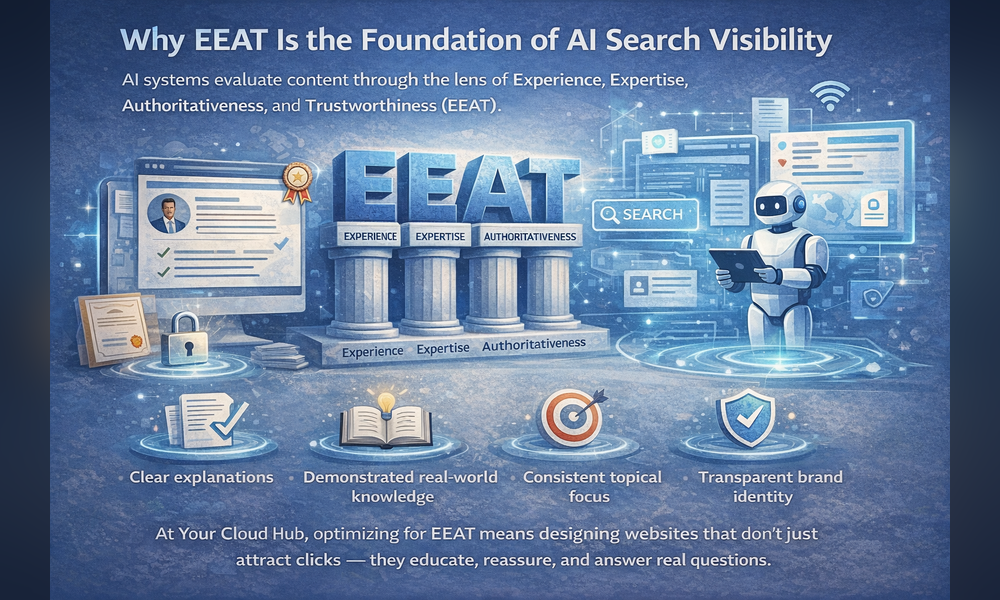
Why EEAT Is the Foundation of AI Search Visibility
AI systems evaluate content through the lens of Experience, Expertise, Authoritativeness, and Trustworthiness (EEAT).
To AI models, trust is inferred from:
• Clear explanations
• Demonstrated real-world knowledge
• Consistent topical focus
• Transparent brand identity
At Your Cloud Hub, optimizing for EEAT means designing websites that don’t just attract clicks — they educate, reassure, and answer real questions.
Step 1: Simplify Your Website for AI Comprehension
AI systems do not navigate websites in the same way that humans do. They parse structure, patterns, and semantic clarity.
To optimize your site:
• Use clear headings (not vague marketing slogans)
• Answer questions directly
• Avoid burying meaning in visuals alone
• Structure content logically from general → specific
When Your Cloud Hub structures content this way, AI systems can easily identify:
• What the business does
• The target audience it serves
• The issues it addresses
Clarity beats creativity in AI search.
Step 2: Focus on Questions Instead of Just Keywords
AI search is primarily driven by questions.
People ask:
• “Who is the best provider for X?”
• “What criteria should I consider when evaluating X?”
• “What should I look for in X?”
Your website must explicitly answer these questions.
Instead of generic copy, create content that:
• Explains processes step-by-step
• Compares options objectively
• Clarifies outcomes and expectations
This approach positions Your Cloud Hub as a helpful authority — not just a vendor.
Step 3: Demonstrate Real Experience, Not Generic Claims
AI systems are trained to detect fluff.
Statements like:
• “We are industry leaders.”
• “We deliver the best solutions.”
carry little weight without evidence.
Instead, AI favors:
• Practical explanations
• Scenario-based insights
• Clear methodologies
For example, explaining how Your Cloud Hub approaches Website Development in real-world scenarios demonstrates experience — not just capability.
Step 4: Create Topical Depth, Not Scattered Content
One of the often-neglected principles of AI optimization is the concept of topical authority.
AI systems prefer websites that:
• Cover a subject comprehensively
• Show consistent focus
• Connect related topics logically
Instead of publishing unrelated blogs, Your Cloud Hub benefits from:
• Content clusters
• In-depth guides
• Interconnected explanations
This indicates to AI that your site serves as a trusted knowledge hub rather than just a random source of content.
Step 5: Optimize for Semantic Understanding, Not Keyword Density
AI search algorithms do not favor keyword stuffing.
It understands:
• Context
• Synonyms
• Relationships between concepts
This means your content should:
• Use natural language
• Explain concepts thoroughly
• Reinforce meaning across sections
Mentioning Your Cloud Hub in context — rather than forcing keywords — helps AI associate your brand with specific expertise areas.
Step 6: Structure Content for AI Summarization
AI tools often summarize content before presenting it.
To improve visibility:
• Use concise paragraphs
• Include lists and structured explanations
• Clearly define key concepts
• Avoid unnecessary jargon
Well-structured content increases the likelihood that AI systems will accurately quote or reference your website.
Step 7: Build Trust Signals Across Your Website
AI systems infer trust from consistency and transparency.
Key trust signals include:
• Clear “About” information
• Consistent messaging
• Detailed service explanations
• Educational content that isn’t overly promotional
For example, explaining how Your Cloud Hub approaches Digital Marketing strategy — including the challenges — builds far more trust than surface-level claims.
Step 8: Align Content With User Intent, Not Just Search Intent
AI systems care deeply about intent alignment.
Content should match:
• Informational intent (learning)
• Commercial intent (evaluation)
• Transactional intent (decision-making)
Your Cloud Hub benefits by creating content that supports the entire decision journey, not just lead capture.
Step 9: Optimize Technical Foundations Without Overengineering
While AI optimization is content-centric, technical basics still matter:
• Fast load times
• Mobile responsiveness
• Clean HTML structure
• Accessible design
These foundations support both AI readability and user experience.
Step 10: Establish Your Brand as a Source of Knowledge, Rather Than Merely a Service Provider
The biggest shift required for AI optimization is philosophical.
AI favors educators over advertisers.
When Your Cloud Hub publishes content that:
• Explains complex topics clearly
• Helps users make informed decisions
• Demonstrates strategic thinking
AI systems begin to treat your site as a reference, not just a destination.
Why AI Optimization Is a Long-Term Strategy, Not a One-Time Fix
Unlike traditional SEO tactics, AI optimization compounds over time.
Each high-quality page:
• Reinforces topical authority
• Improves contextual relevance
• Strengthens trust signals
This is especially powerful when your Cloud Hub consistently publishes content aligned with real user needs.
How AI Search Impacts Service-Based Businesses the Most
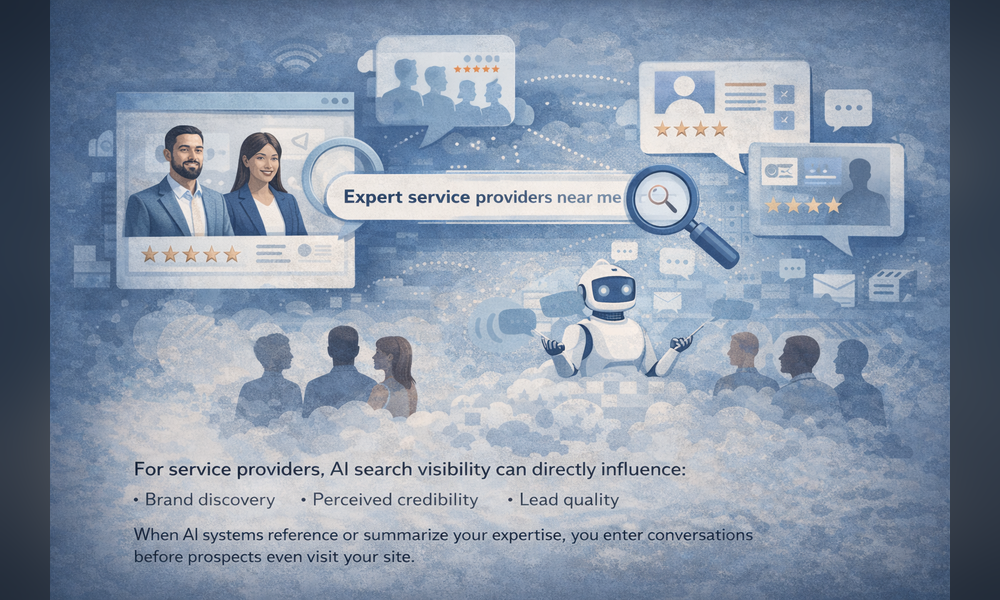
For service providers, AI search visibility can directly influence:
• Brand discovery
• Perceived credibility
• Lead quality
When AI systems reference or summarize your expertise, you enter conversations before prospects even visit your site.
This is the reason AI search optimization has become essential.
The Role of Software-Driven Expertise in AI Visibility
AI models favor websites that demonstrate technical and strategic competence.
Explaining processes behind Software Development — even at a conceptual level — signals depth and seriousness.
Your Cloud Hub benefits by translating complexity into clarity.
Measuring Success in an AI-First Search Landscape
Achieving success today goes beyond merely obtaining top rankings.
New indicators include:
• Brand mentions in AI tools
• Increased qualified traffic
• Better-informed leads
• Higher trust at first contact
These are signs your website is being understood, not just indexed.
AI Search Rewards Clarity, Authority, and Helpfulness
Optimizing for ChatGPT, Gemini, and AI-powered search results is not about gaming algorithms.
It’s about:
• Communicating clearly
• Demonstrating real expertise
• Structuring knowledge intelligently
• Building trust at scale
When Your Cloud Hub embraces this approach, AI systems naturally surface your content as a credible source.
The future of search belongs to businesses that teach before they sell — and design websites for understanding, not just traffic.
Building AI-First Authority — How Your Cloud Hub Can Become a Trusted Source for ChatGPT & Gemini
Why AI Visibility Is About Authority, Not Tricks
One of the biggest misconceptions businesses have about AI search optimization is that it’s another “SEO hack” to master — a checklist of tactics that can be executed once and forgotten.
That approach fails quickly.
AI systems like ChatGPT and Gemini do not reward manipulation. They reward consistency, clarity, depth, and authority over time. The goal is not to “rank,” but to become referencable — a source AI models trust when synthesizing answers.
For Your Cloud Hub, this means shifting from a traffic-first mindset to an authority-first digital presence.
How AI Decides Which Websites to Trust
AI models don’t rank websites the way search engines do.
Instead, they evaluate signals such as:
• Depth of explanation
• Consistency across topics
• Brand clarity
• Demonstrated understanding of real-world problems
• Alignment with user intentWhen AI generates an answer, it implicitly asks:“Which sources sound like they actually know what they’re talking about?”
Websites that rely on thin content, vague language, or recycled marketing copy rarely pass this test.
Your Cloud Hub must sound like an expert advisor, not a brochure.
Why Brand Identity Matters More in AI Search Than Traditional SEO
In traditional SEO, anonymous content can rank.
In AI search, identity matters.AI systems pay attention to:
• Who is speaking
• What they consistently talk about
• Whether their messaging is coherent
When Your Cloud Hub clearly positions itself as a knowledgeable, focused brand with a defined area of expertise, AI systems are far more likely to associate your name with specific problem spaces.
This is how brands become answers, not just options.
Creating “Answer-Worthy” Content for AI Systems
AI tools excel at summarizing, synthesizing, and explaining. To be part of that process, your content needs to provide valuable answers.
Answer-worthy content:
• Directly addresses a real question
• Explains why something works, not just what it is
• Provides context, not just steps
• Avoids fluff and filler
For example, instead of vague claims, Your Cloud Hub should publish content that:
• Explains tradeoffs
• Clarifies misconceptions
• Walks through decision logic
This ensures that your content is easily referenced and accurately by AI.
The Importance of Explicit Context in AI Optimization
Humans infer context easily. AI systems need it spelled out.
This means Your Cloud Hub should:
• Clearly state whose content it is for
• Define problems before offering solutions
• Avoid assuming prior knowledge
• Use explicit transitions and summaries
When context is explicit, AI models can safely extract and reuse your information without distortion.
Structuring Pages for AI “Reading,” Not Human Skimming Alone
Most websites are designed only for human skimming. AI systems, however, “read” structurally.
Best practices include:
• One clear topic per page
• Logical heading hierarchy
• Clear definitions early in the content
• Progressive depth (basic → advanced)
When Your Cloud Hub structures pages this way, AI tools can:
• Identify main concepts quickly
• Understand relationships between sections
• Summarize content correctly
The Importance of Consistency Across Pages
AI systems cross-reference information.
Trust Indicator AI systems verify information through cross-referencing.
Consistency should exist in:
• Terminology
• Tone
• Strategic positioning
• Problem framing
This doesn’t imply duplicating the same wording; rather, it involves strengthening the same conceptual framework throughout your website.
Consistency tells AI:
“This brand has a coherent point of view.”
Building Topical Authority Through Content Clusters
One of the strongest AI optimization strategies is topical clustering.
Instead of publishing isolated posts, Your Cloud Hub should:
• Choose core topics
• Create multiple in-depth pieces around each
• Interlink them logically
This shows AI systems that:
• You understand the topic holistically
• You are not guessing or surface-level
• You have established credibility to address the subject.
Depth beats breadth in AI search.
Avoiding the “Generic Content” Trap
AI models are trained on vast amounts of everyday content. They can easily recognize it.
Generic content usually:
• Repeats obvious advice
• Avoids specifics
• Lacks original framing
• Sounds interchangeable with competitors
To stand out, Your Cloud Hub must:
• Add nuance
• Explain consequences
• Share reasoning
• Address edge cases
Original thinking is far more valuable to AI than polished but empty prose.
Why Educational Content Outperforms Promotional Content in AI Search
AI systems are designed to help users understand — not to sell to them.
Content that is overly promotional:
• Gets ignored
• Gets summarized poorly
• Gets deprioritized
Educational content, on the other hand:
• Gets referenced
• Gets paraphrased
• Gets trusted
Your Cloud Hub should aim to teach first, allowing credibility to drive conversions naturally.
The Importance of FAQs in Optimizing AI Search.
Well-written FAQs are gold for AI systems.
They:
• Mirror natural language questions
• Provide direct answers
• Clarify common confusion points
Strategic FAQ sections help Your Cloud Hub:
• Match conversational queries
• Increase AI answer inclusion
• Reduce ambiguity
The key is depth — not one-line answers.
Optimizing for Conversational Queries Without Sounding Artificial
AI-driven search is conversational by nature.
However, forcing unnatural phrasing damages readability.
The balance lies in:
• Writing naturally
• Answering real questions
• Using clear, direct language
• Avoiding keyword-stuffed sentences
Your Cloud Hub should sound like a knowledgeable human explaining something clearly — because that’s exactly what AI models try to emulate.
Why Long-Form Content Performs Better in AI Contexts
AI systems prefer sources that:
• Explore topics thoroughly
• Address multiple angles
• Anticipate follow-up questions
Long-form content gives AI:
• More context
• More confidence
• More accurate summaries
This doesn’t mean being verbose — it means being complete.
Internal Linking as an AI Understanding Tool
Internal links serve a purpose beyond mere navigation. They help AI models
understand:
• Topic relationships
• Content hierarchy
• Authority flow Your Cloud Hub should link:
• Concept explanations to deeper guides
• High-level pages to detailed breakdowns
• FAQs to supporting resources
This reinforces topical structure and strengthens AI comprehension.
Optimize for Understanding, Not Algorithms
AI search is not a game to beat.
It is a system designed to surface understanding.
Websites that:
• Explain clearly
• Teach honestly
• Demonstrate real expertise
will always win — regardless of platform changes.
By focusing on structure, clarity, and authority, Your Cloud Hub doesn’t just optimize for ChatGPT or Gemini — it builds a digital presence that remains relevant as AI continues to reshape how people find and trust information.