


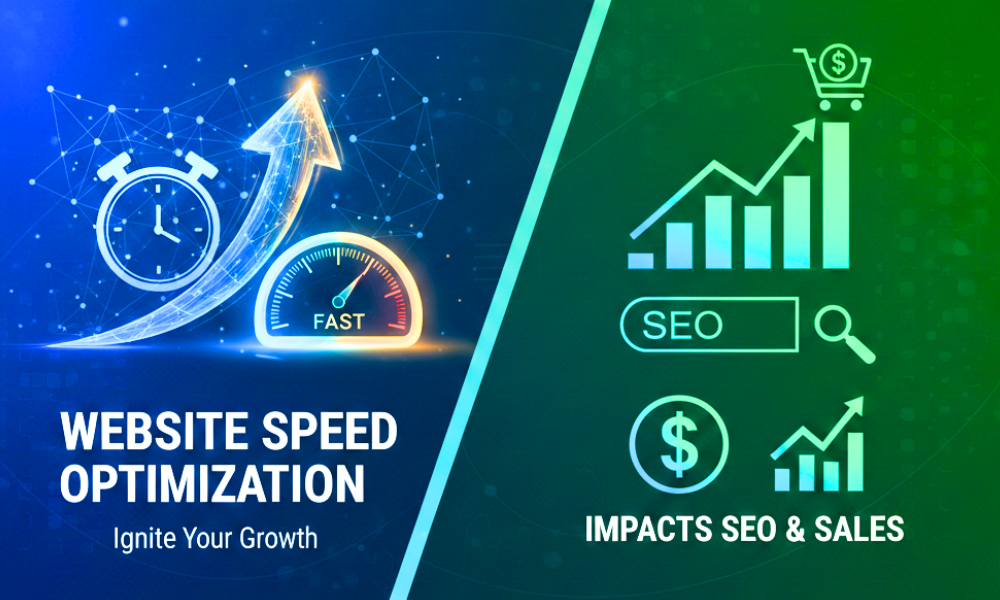
Speed Is No Longer a Technical Detail — It’s a Business Signal
For years, website speed was treated as a backend concern.
Something for developers to “fix later.”
Something measured in milliseconds, not money.
That mindset no longer works.
In today’s search and buying environment, website speed directly affects:
• How Google evaluates your site
• How AI systems interpret quality
• How users perceive trust
• How quickly prospects decide to stay or leave
At Yourcloudhub, we see businesses invest heavily in content, SEO, and ads, only to lose conversions because the site itself creates friction before the message is even delivered.
Website speed is no longer a technical optimization.
It is a revenue optimization.
Why Website Speed Matters More Than Ever in 2026
Search behavior has changed dramatically.
Users today:
• Expect instant feedback
• Compare options quickly
• Abandon slow experiences without hesitation
• Associate speed with professionalism
Google’s systems reflect this behavior.
A slow website signals:
• Poor user experience
• Lower quality standards
• Higher bounce risk
Speed has become a proxy for reliability.
Website Speed and SEO: The Direct Connection
Google has been clear for years that speed matters, but the reason it matters has evolved.
Speed is no longer just a ranking factor.
It is a quality filter.
Google uses speed-related signals to evaluate:
• Whether users are likely to stay
• Whether content will be consumed
• Whether a page satisfies intent
If users leave before engaging, rankings follow.
At Yourcloudhub, we see speed optimization amplify existing SEO results and quietly undermine those that do not address it.
Core Web Vitals Changed the Rules
Core Web Vitals introduced a shift from abstract performance to measurable user experience.
They evaluate:
• How fast content appears
• How stable the layout is
• How responsive interactions feel
These metrics directly correlate with how real users experience your site.
Improving them improves:
• Crawl efficiency
• Indexing confidence
• Ranking stability
Ignoring them creates invisible drag on all SEO efforts.
Why Speed Affects AI-Driven Search Visibility
As AI systems increasingly influence search, speed plays a subtler role.
AI-driven ranking and summarization systems favor sites that:
• Load consistently
• Deliver content predictably
• Do not frustrate users
Speed reinforces trust signals.
At Yourcloudhub, we view speed optimization as part of AI-readiness, not just SEO compliance.
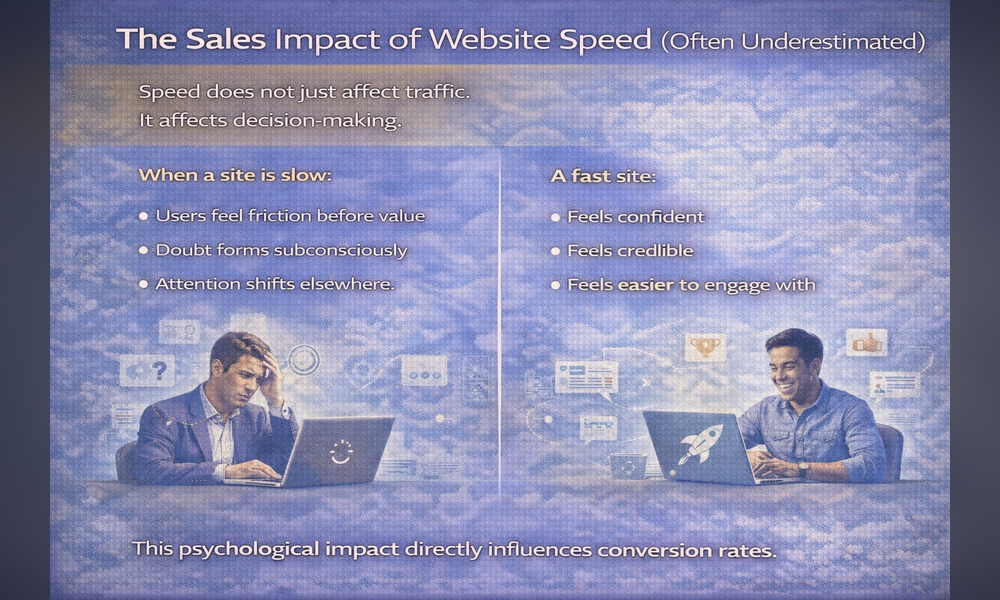
The Sales Impact of Website Speed (Often Underestimated)
Speed does not just affect traffic.
It affects decision-making.
When a site is slow:
• Users feel friction before value
• Doubt forms subconsciously
• Attention shifts elsewhere
A fast site:
• Feels confident
• Feels credible
• Feels easier to engage with
This psychological impact directly influences conversion rates.
Speed and First Impressions Are the Same Thing
Most visitors decide within seconds whether to continue.
If a page:
• Loads slowly
• Jumps during load
• Feels unresponsive
The first impression is already damaged.
No amount of great copy fixes a poor first interaction.
Yourcloudhub consistently sees faster sites outperform slower competitors, even with similar offers and messaging.
Why Speed Optimization Improves Funnel Performance
Funnels magnify speed issues.
Each additional step:
• Adds load time
• Increases friction
• Multiplies abandonment risk
Optimized speed across landing pages, forms, and booking flows results in:
• Higher completion rates
• Lower drop-offs
• Better lead quality
Speed is a compounding factor in funnel success.
Mobile Speed Is the Real Battlefield
Most traffic today is mobile-first.
Mobile users:
• Have less patience
• Face inconsistent networks
• Expect lightweight experiences
A site that performs well on desktop but poorly on mobile is fundamentally broken.
At Yourcloudhub, we prioritize mobile speed because that is where conversion losses are usually hiding.
How Speed Influences Trust and Brand Perception
Speed is interpreted emotionally.
Users associate fast experiences with:
• Competence
• Stability
• Professionalism
Slow experiences suggest:
• Neglect
• Technical debt
• Lack of attention to detail
This perception affects whether users:
• Fill out forms
• Book calls
• Share information
Speed silently shapes brand trust.
Why Speed Issues Persist in Growing Businesses
Many companies struggle with speed because:
• Features are added without optimization
• Plugins and scripts accumulate
• Tracking tools stack up
• No one owns performance
Speed degrades gradually, not suddenly.
Without intentional review, performance decays unnoticed.
Common Website Speed Killers
Some of the most common issues we identify at Yourcloudhub include:
• Unoptimized images
• Excessive third-party scripts
• Bloated page builders
• Poor hosting configurations
• Lack of caching strategy
None of these is rare.
All of them are fixable.
Speed Optimization Is Not a One-Time Task
One of the biggest misconceptions is that speed optimization is a project with an end date.
In reality, speed requires:
• Ongoing monitoring
• Regular audits
• Intentional restraint
Every new feature, plugin, or integration must be evaluated for performance impact.
Speed is maintained through discipline, not one-time fixes.
How Website Speed Impacts Conversion Rate Optimization
Conversion rate optimization focuses on messaging, layout, and flow.
Speed is the foundation of it all.
If pages load slowly:
• A/B tests produce unreliable results
• Drop-offs increase before messaging is seen
• Optimization efforts lose effectiveness
Speed ensures that optimization efforts actually get a chance to work.
The Cost of Ignoring Speed
Ignoring speed does not usually cause immediate failure.
It causes:
• Gradual ranking decline
• Lower engagement over time
• Rising ad costs
• Decreasing ROI
By the time businesses notice, recovery is more expensive.
Yourcloudhub treats speed issues as early warning signals, not cosmetic concerns.
Speed Optimization as a Competitive Advantage
Many competitors neglect speed because it isn’t visible in dashboards the same way ads or content are.
This creates opportunity.
A faster site can:
• Rank more consistently
• Convert more efficiently
• Require less traffic to achieve the same results
Speed creates leverage.
The Strategic Role of Speed in Modern Web Projects
Whether working on Website Development, Software Development, or Digital Marketing, speed must be considered at the architectural level.
Decisions made early:
• Tech stack
• Hosting
• Design approach
• Script usage
have long-term performance consequences.
Speed cannot be bolted on at the end without trade-offs.
How Yourcloudhub Approaches Website Speed Optimization
At Yourcloudhub, we do not treat speed as a checklist.
We treat it as:
• A user experience metric
• A trust signal
• A sales performance factor
Our approach focuses on:
• Real user behavior
• Mobile-first performance
• Sustainable optimization
• Alignment with business goals
This ensures speed improvements translate into measurable outcomes, not just better scores.
Measuring What Actually Matters
Speed metrics are only useful when tied to outcomes.
Important questions include:
• Are users staying longer
• Are conversion rates improving
• Are bounce rates decreasing
• Are sales cycles shortening
Performance should be evaluated in context, not in isolation.
Why Speed Matters Even More With AI and Zero-Click Search
As AI summaries reduce clicks, the clicks you do receive are more valuable.
Those users arrive with:
• Higher intent
• Clearer expectations
• Less patience for friction
Speed becomes even more critical in these moments.
A slow site wastes high-quality attention.
Long-Term Benefits of Speed Optimization
Businesses that invest in speed consistently experience:
• More stable rankings
• Higher conversion efficiency
• Better mobile performance
• Stronger trust signals
These benefits compound quietly over time.
Speed Is Part of the Sales Conversation
Website speed is no longer just about SEO.
It is part of:
• Brand perception
• User trust
• Conversion psychology
• Competitive positioning
In a world where users decide quickly and AI filters attention, speed determines whether your message is even heard.
At Yourcloudhub, we help businesses see speed for what it truly is:
a growth lever hiding in plain sight.
Turning Website Speed Optimization Into a Sustainable Growth Advantage
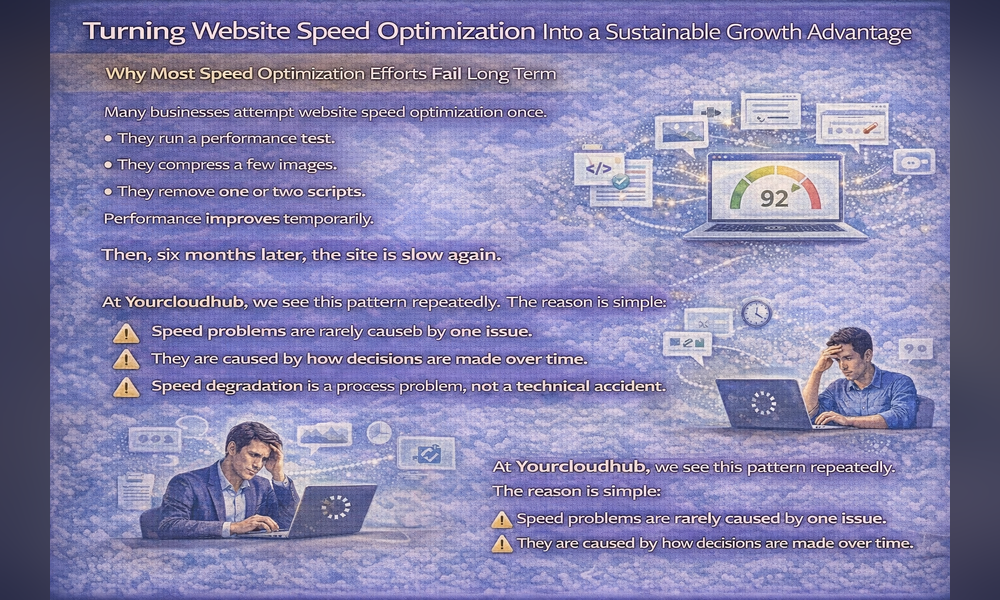
Why Most Speed Optimization Efforts Fail Long Term
Many businesses attempt website speed optimization once.
They run a performance test.
They compress a few images.
They remove one or two scripts.
Performance improves temporarily.
Then, six months later, the site is slow again.
At Yourcloudhub, we see this pattern repeatedly. The reason is simple:
Speed problems are rarely caused by one issue.
They are caused by how decisions are made over time.
Speed degradation is a process problem, not a technical accident.
Speed Optimization Is a Cross-Functional Responsibility
One of the biggest mistakes businesses make is assigning speed to a single role.
In reality, speed is influenced by:
• Design decisions
• Content structure
• Tracking requirements
• Marketing tools
• Hosting and infrastructure
• Feature expansion
When these teams operate in silos, performance always suffers.
High-performing organizations treat speed as a shared responsibility, not a developer-only task.
How Design Choices Quietly Impact Speed
Design teams often prioritize aesthetics and flexibility.
But certain design decisions have long-term performance consequences:
• Heavy animations
• Large background videos
• Overuse of custom fonts
• Complex layout structures
These choices may look impressive initially, but they add cumulative load over time.
At Yourcloudhub, we encourage design systems that balance visual clarity with performance discipline.
Good design supports speed. It does not compete with it.
Why Content Strategy Affects Page Load Time
Content is not neutral to performance.
Pages slow down when:
• Images are uploaded without optimization
• Videos are embedded unnecessarily
• Third-party widgets accumulate
• Long pages load all assets at once
A content strategy that ignores performance creates hidden friction.
Speed-aware content strategies:
• Use intentional media placement
• Optimize assets before publishing
• Load secondary content conditionally
This keeps pages fast without sacrificing value.
The Hidden Cost of Third-Party Tools
Analytics, chat widgets, heatmaps, ad trackers, and personalization tools.
Each one promises insight or conversion gains.
Collectively, they are one of the biggest causes of slow websites.
At Yourcloudhub, we often find sites running dozens of third-party scripts that:
• Load on every page
• Compete for resources
• Block rendering
Speed optimization often begins by asking a hard question:
Which tools actually justify their performance cost?
Why Faster Sites Convert Better Even With the Same Traffic
Conversion rate optimization often focuses on:
• Copy changes
• Button placement
• Layout testing
But speed amplifies or weakens all of these efforts.
When a site is fast:
• Users explore more pages
• Forms feel easier to complete
• Drop-offs decrease naturally
When a site is slow:
• Testing results become unreliable
• User patience disappears
• Conversion gains plateau
Speed improves conversion efficiency before optimization even begins.
Speed as a Trust Signal in High-Intent Moments
Speed matters most at critical decision points:
• Pricing pages
• Contact forms
• Booking pages
• Checkout flows
If these pages load slowly, users hesitate.
Hesitation reduces action.
At Yourcloudhub, we treat high-intent pages as priority performance assets because they directly affect revenue outcomes.
Why Mobile Speed Requires Separate Attention
Many businesses assume desktop optimization is enough.
It is not.
Mobile performance suffers more because:
• Networks are less stable
• Devices are less powerful
• Screen sizes magnify layout issues
Mobile users also abandon faster.
A site that loads in 3 seconds on desktop but 6 seconds on mobile is underperforming where it matters most.
Yourcloudhub prioritizes mobile speed because that is where sales friction usually hides.
How Speed Affects SEO Stability Over Time
Speed does not always cause dramatic ranking drops.
Instead, it causes:
• Inconsistent rankings
• Difficulty holding competitive positions
• Slower recovery after algorithm updates
Fast sites tend to be more resilient.
They maintain performance during:
• Core updates
• Indexing changes
• Shifts in user behavior
Speed acts as a stabilizing force.
The Relationship Between Speed and Crawl Efficiency
Search engines allocate crawl resources strategically.
Slower sites:
• Consume more crawl budget
• Reduce indexing efficiency
• Delay updates and improvements
Faster sites allow:
• More frequent crawling
• Faster reflection of content changes
• Better overall index health
This is especially important for growing websites.
Why Speed Optimization Improves Marketing ROI
Marketing performance is often judged by:
• Cost per click
• Cost per lead
• Conversion rate
Speed influences all three.
A faster site:
• Converts more traffic
• Lowers effective acquisition costs
• Increases return on ad spend
Without speed optimization, marketing budgets work harder than they need to.
Yourcloudhub often sees speed improvements unlock better ROI without increasing spend.
Speed and User Expectations Have Permanently Shifted
User tolerance for slow experiences continues to shrink.
This is driven by:
• Faster devices
• Faster apps
• Faster competitors
A slow site no longer feels average. It feels broken.
Businesses that fail to keep pace appear outdated regardless of how modern their messaging is.
Building Speed Into Decision-Making Processes
Sustainable speed optimization requires process changes.
Examples include:
• Performance review before launching new features
• Asset optimization before publishing content
• Regular script audits
• Defined performance ownership
Speed must be considered early, not fixed later.
At Yourcloudhub, we help teams integrate performance thinking into everyday decisions, not just audits.
The Risk of Performance Debt
Performance debt accumulates silently.
It builds when:
• Shortcuts are taken repeatedly
• Temporary fixes become permanent
• No one tracks cumulative impact
Eventually, the site becomes slow and complex to fix.
Addressing performance debt early is cheaper than rebuilding later.
Speed Optimization as a Competitive Differentiator
Many competitors neglect speed because:
• It does not feel urgent
• It lacks immediate visibility
• It is harder to market
This creates an opportunity.
A consistently fast site:
• Feels easier to use
• Builds trust subconsciously
• Converts more reliably
Speed becomes a quiet advantage that compounds.
How Speed Impacts Repeat Visits and Brand Loyalty
Speed affects not just first impressions but repeat behavior.
Users are more likely to:
• Return to fast sites
• Bookmark them
• Engage more deeply
Slow sites feel mentally taxing.
Ease of use encourages habit formation.
Speed Optimization and Long-Term Scalability
As businesses grow, sites become more complex.
More pages.
More features.
More integrations.
Without performance discipline, site growth slows.
At Yourcloudhub, we design speed strategies that scale with growth rather than collapse under it.