Your Cloud Hub

How to Build a Demand Generation Engine, Not Just Leads

How to Build a Demand Generation Engine, Not Just Leads

Leads Don’t Create Growth — Demand Does

For years, businesses have been taught to chase leads.
More traffic.
More forms.
More funnels.
More ads.
And while this approach can work in the short term, by 2026, it’s showing serious cracks.

At yourcloudhub, we see the same pattern repeatedly:

Companies generating leads consistently… but struggling to grow predictably, profitably, or sustainably.
The problem isn’t lead generation itself.
The problem is mistaking lead generation for demand generation.
This blog explains what demand generation really is, why lead-only strategies are increasingly fragile, and how businesses can build a demand-generation engine that compounds over time rather than resetting every month.

Why Lead Generation Alone Is Failing in 2026

Lead Generation Captures Existing Demand — It Doesn’t Create

It Lead generation works best when:

• Demand already exists
• Buyers are actively searching
• Trust is already established
But in crowded markets, demand is rarely sitting idle.

When everyone is running ads, optimizing funnels, and retargeting the same audiences, lead generation becomes:

• Expensive
• Competitive
• Short-lived
You’re fighting for scraps of attention instead of shaping the market.

Leads Without Context Are Weak Leads

A lead is just a signal — not intent.

Many “leads” today:

• Don’t understand the problem fully
• Aren’t ready to buy
• Are you comparison shopping
• Require heavy persuasion

This increases:

• Sales friction
• Cycle length
• Drop-off rates
Demand generation solves this before the lead ever exists.

Why Performance-Only Models Break Under Pressure

As discussed in earlier YourCloudHub insights, performance marketing alone creates dependency.

When leads are your only fuel:

• Costs rise
• Margins shrink
• Stress increases
• Growth becomes fragile
Demand generation acts as a stabilizer—and eventually a growth multiplier.

What Demand Generation Actually Means (And What It Doesn’t)

Demand Generation Is Not “Brand Awareness”
Demand generation is often misunderstood as vague branding.
It’s not billboards.
It’s not impressions.
It’s not vanity metrics.

Demand generation is the process of:

• Educating the market
• Shaping buyer understanding
• Creating trust before contact
• Making your solution feel inevitable
It turns strangers into pre-qualified buyers.

The Key Difference in One Line

Lead generation asks: “Who’s ready to buy?”
Demand generation asks: “How do we make people ready?”
Both matter — but only one compounds.

Why Demand Generation Wins in AI-Driven Buyer Journeys

By 2026, buyers:

• Learn from AI tools
• Compare silently
• Form opinions before visiting websites
• Contact fewer vendors

This means:

• The first conversation happens before the first call
• Trust is built off-platform
• Visibility depends on authority, not ads
Demand generation feeds these invisible journeys.
At yourcloudhub, we design demand engines that work before buyers ever fill out a form.

The Core Components of a Demand Generation Engine

A real demand generation engine has five pillars:

1. Clear positioning
2. Authority-building content
3. Consistent education
4. Distribution systems
5. Operational support
Let’s break these down.

Clear Positioning: Demand Starts With Clarity

If your market doesn’t understand:

• What you do
• Who you’re for
• What problem do you solve
• Why your approach is different
Demand cannot form.
Most businesses lose here.
They talk about features instead of beliefs.
Services instead of outcomes.
Tools instead of thinking.

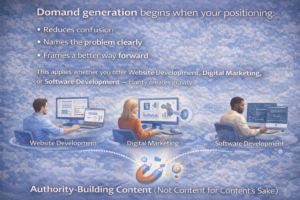
Demand generation begins when your positioning:

• Reduces confusion
• Names the problem clearly
• Frames a better way forward
This applies whether you offer Website Development, Digital Marketing, or Software Development — clarity creates gravity.
Authority-Building Content (Not Content for Content’s Sake)

Demand generation content is not:

• SEO filler
• Thin blog posts
• Generic tips

It is:

• Educational
• Opinionated
• Grounded in experience
• Consistent in perspective
This content answers questions buyers haven’t fully formed yet.

It teaches them:

• What matters
• What to avoid
• How to evaluate options
By the time they reach out, they already trust your thinking.

Consistent Education Over Time (Where Most Fail)

One blog post doesn’t build demand.

Demand is built through:

• Repetition
• Reinforcement
• Familiarity
• Consistency
This is where execution becomes the bottleneck.
Many businesses understand demand generation — but can’t sustain it.

That’s why forward-thinking companies working with yourcloudhub often hire remote staff to support:

• Research
• Content development
• Knowledge documentation
• Distribution workflows
Not to replace strategy — but to sustain it.

Why “Hire Remote Staff” Is a Demand Generation Advantage

Demand generation is a long game.

It requires:

• Regular publishing
• Topic ownership
• Updates as markets evolve
This workload is difficult to maintain internally without burnout.

Businesses that hire remote staff strategically can:

• Maintain cadence without pressure
• Scale output without sacrificing quality
• Free leadership to focus on insight, not execution
In 2026, demand generation is as much an operational challenge as a marketing one.

Distribution Systems (Demand Doesn’t Spread Itself)

Even great content doesn’t create demand if it isn’t seen.

Demand engines include:

• Multi-channel distribution
• AI-search visibility
• Consistent exposure across touchpoints
This is where many businesses stall — they publish, but don’t amplify.

Yourcloudhub helps teams design systems where:

• One insight feeds multiple channels
• Education travels beyond your website
• Authority compounds instead of sitting idle

Operational Support: The Missing Piece

Demand generation is not a side project.

It requires:

• Planning
• Documentation
• Process
• Accountability

This is why businesses that succeed often hire remote staff to:

• Maintain content systems
• Track performance signals
• Support publishing workflows
• Ensure continuity during busy periods
Demand engines fail when they rely on heroic effort instead of systems.

How Demand Generation Changes Lead Quality

When demand generation is working:

• Leads arrive educated
• Sales conversations start deeper
• Objections decrease
• Cycles shorten
Sales stops “convincing” and starts confirming.

This improves:

• Close rates
• Deal size
• Retention
Leads become outcomes — not raw inputs.

Demand Generation vs Lead Generation: The Real Relationship

This is not an either/or decision.

The most effective growth models use:

• Demand generation to warm the market
• Lead generation to capture intent

Demand generation makes lead generation:

• Cheaper
• More effective
• More predictable
Without demand, lead gen fights gravity.

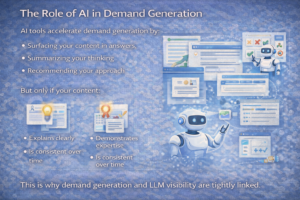
The Role of AI in Demand Generation

AI tools accelerate demand generation by:

• Surfacing your content in answers
• Summarizing your thinking
• Recommending your approach

But only if your content:

• Explains clearly
• Demonstrates expertise
• Is consistent over time
This is why demand generation and LLM visibility are tightly linked.
The Role of AI in Demand Generation

Common Demand Generation Mistakes to Avoid

1. Chasing trends instead of owning a position
2. Publishing inconsistently
3. Treating content as a campaign
4. Outsourcing thinking instead of execution
5. Expecting immediate ROI
Demand compounds — but only if you stay the course.

Why Demand Generation Is a Leadership Responsibility

Demand generation cannot be fully delegated.

Leadership must:

• Define the worldview
• Set boundaries of expertise
• Approve narratives
Execution can be supported — often by teams that hire remote staff — but direction must come from the top.
Your demand reflects how clearly you think.

Measuring Demand Generation Success (Not Vanity Metrics)

Demand generation success shows up as:

• Higher quality inbound
• Shorter sales cycles
• Stronger brand recall
• Better AI visibility
• Fewer “why should we trust you?” conversations
Traffic is a lagging indicator.
Trust is the real metric.

Build Demand or Rent Attention Forever

Lead generation rents attention.
Demand generation builds equity.
In 2026, the businesses that win will not be the ones with the most leads —

but the ones that:

• Shape how the market thinks
• Educate before selling
• Build systems instead of campaigns
• Hire remote staff to support sustained authority
• Invest in clarity before scale


At yourcloudhub, we believe demand generation is not a marketing tactic — it’s a growth philosophy.
Because when demand exists, leads are easy to come by.

Turning Demand Generation From a Concept Into a Working Engine

Why Most Demand Generation Efforts Collapse After the First 90 Days
Almost every business likes the idea of demand generation.
They publish a few thought pieces.
They talk about “educating the market.”
They experiment with long-form content.
Then reality sets in.
Content slows down.
Consistency breaks.
Urgent sales needs take priority.
Momentum disappears.
At yourcloudhub, we’ve learned this lesson repeatedly:
Demand generation doesn’t fail because it’s ineffective.
It fails because it’s not operationalized.
This part focuses on how businesses actually turn demand generation into a system that survives busy periods, leadership changes, and market pressure.

Demand Generation Is a System, Not a Campaign

Campaigns have:

• Start dates
• End dates
• Budgets
• Short-term KPIs

Demand generation systems have:

• Ownership
• Cadence
• Feedback loops
• Long-term intent
If demand generation falls into the same mental bucket as “marketing campaigns,” it will always lose out to short-term revenue pressure.

To succeed, it must be treated like:

• Product development
• Sales enablement
• Infrastructure
Not promotion.

The First Structural Shift: From “Publishing” to “Position Ownership”

Most businesses publish content randomly:

• Blog posts here
• LinkedIn thoughts there
• Occasional newsletters
Demand generation requires something different: position ownership.

This means:

• Choosing a small number of core ideas
• Repeating them consistently
• Explaining them from multiple angles
• Defending them with logic and experience
Repetition is not laziness.
Repetition is how markets learn.
At yourcloudhub, we help businesses identify the 3–5 positions they want to own—and build everything around them.

Why Consistency Beats Brilliance in Demand Generation

One brilliant article does less than:

• Ten solid, aligned pieces
• Published steadily
• Reinforcing the same worldview
Demand doesn’t spike — it accumulates.
That’s why companies that rely on “inspiration-based content” struggle. Inspiration is inconsistent. Systems are not.

The Real Bottleneck: Time, Not Ideas

Most leadership teams already know:

• What they believe
• What works
• What they’d advise clients
What they lack is time to externalize that knowledge.
This is where many growing companies make a strategic shift to hire remote staff — not to replace leadership thinking, but to extract, structure, and distribute it.

Remote staff can support:

• Interview-based content creation
• Drafting and structuring insights
• Turning internal conversations into public education
• Maintaining publishing cadence
Demand generation becomes feasible when leaders don’t have to do everything themselves.

Why “Hire Remote Staff” Is About Continuity, Not Cost

A common mistake is treating remote hiring as a cost-saving tactic.
In demand generation, the real benefit of hiring remote staff is continuity.

They provide:

• Stability during busy sales cycles
• Momentum when leadership bandwidth drops
• Consistency across months, not weeks
Demand generation engines stall when they depend on heroic effort.
They thrive when supported by steady systems.

Building the Minimum Viable Demand Engine (MVDE)

You don’t need a massive content machine to start.

At yourcloudhub, we often recommend a Minimum Viable Demand Engine consisting of:

1. One clear positioning statement
2. One primary content format (e.g., long-form articles)
3. One distribution channel where your buyers already pay attention
4. One cadence you can maintain for 6–12 months
This simplicity is intentional.
Complexity kills consistency.

The Role of Documentation in Scaling Demand

One overlooked practice: documenting your thinking.

This includes:

• How you evaluate decisions
• Why do you recommend certain approaches
• What tradeoffs do you consider
• What mistakes do you see repeatedly

Documentation serves three purposes:

1. Internal clarity
2. Faster onboarding for team members
3. Raw material for demand generation content
Many businesses working with yourcloudhub turn internal docs into public-facing education — often with the help of teams that hire remote staff to manage the process.

Why Demand Generation Requires Saying “No” More Often

One reason demand strategies dilute over time is topic drift.

Businesses chase:

• Trends
• New keywords
• Competitor topics
• Shiny formats
Demand generation requires restraint.

Every piece of content should reinforce:

• Your positioning
• Your beliefs
• Your expertise boundaries
If it doesn’t, it weakens demand instead of building it.

The Relationship Between Demand Generation and Sales Enablement

Demand generation is not separate from sales — it prepares sales.

When done right:

• Prospects reference your ideas on calls
• Sales spends less time educating
• Objections shift from “why you?” to “how do we start?”
This alignment improves morale as much as metrics.
Sales teams stop feeling like they’re starting from zero on every call.

Why AI Makes Demand Generation More Valuable, Not Less

Some businesses fear AI will “replace” content.

In reality, AI amplifies demand generation by:

• Surfacing your thinking earlier
• Repeating your ideas at scale
• Introducing your perspective before human contact

But only if your content:

• Explains clearly
• Is consistent
• Has depth
Generic content disappears in AI summaries.
Strong positioning gets amplified.

Demand Generation Without Distribution Is a Library No One Visits

Publishing alone is not enough.

Demand engines require:

• Intentional distribution
• Repetition across touchpoints
• Visibility where buyers already think
This does not mean spamming channels.

It means:

• Reusing insights intelligently
• Meeting buyers where they are
• Reinforcing ideas over time
Many companies hire remote staff specifically to manage this layer — ensuring content doesn’t die after publishing.

How Long Does Demand Generation Actually Take to Work

This is where expectations break strategies.

Demand generation:

• Does not spike in 30 days
• Rarely shows a clear ROI in 60 days
• Begins compounding around 90–180 days
This timeline scares performance-driven teams.

But once momentum builds:

• Lead quality improves
• Ad efficiency increases
• Brand recall strengthens
• Sales cycles shorten
Short-term pain buys long-term leverage.

The Cost of Not Building Demand

Businesses that rely only on lead generation:

• Pay more every year
• Fight harder for attention
• Depend on platforms they don’t control
• Experience volatile growth
Demand generation reduces dependency.

It creates:

• Inbound interest
• Pricing power
• Negotiation leverage
• Strategic calm
This is why yourcloudhub frames demand generation as risk reduction, not just growth.
LLM SEO vs Traditional SEO: What Businesses Must Know in 2026

LLM SEO vs Traditional SEO: What Businesses Must Know in 2026
SEO Has Split Into Two Different Games

For years, businesses treated SEO as a single discipline. You optimized pages, built backlinks, tracked rankings, and waited for traffic.
That model is breaking.

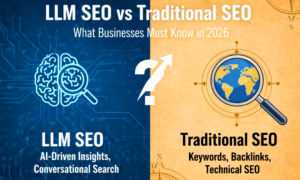
By 2026, SEO will have effectively split into two parallel systems:

• Traditional SEO – optimizing for search engine result pages (SERPs)
• LLM SEO – optimizing for Large Language Models like ChatGPT, Gemini, Claude, and AI-powered search experiences
Most businesses still operate as if only the first one exists.
At yourcloudhub, we see the consequences of this every day: companies ranking well in Google but invisible in AI-driven discovery, while competitors with lower rankings are being recommended, summarized, and trusted by AI tools.
Understanding the difference between LLM SEO and traditional SEO is no longer optional. In 2026, it determines who gets discovered and who gets ignored.

What Traditional SEO Optimizes For (And Why It’s No Longer Enough)

Traditional SEO was built for an era where:

• Users typed keywords
• Search engines returned lists of links
• Rankings decided visibility

Its core focus areas include:

• Keywords and keyword density
• Backlinks and domain authority
• Technical optimization
• On-page SEO
• Page speed and indexing
Traditional SEO still matters. But its role has changed.
The problem is not that traditional SEO stopped working — it’s that it no longer controls the entire discovery funnel.

What LLM SEO Actually Is (And Why It’s Different)

LLM SEO is not about ranking pages.

It’s about being:

• Understood
• Trusted
• Referenced
• Synthesized
Large Language Models don’t “rank” content the way Google does.

They:

• Learn patterns from vast data
• Infer authority and clarity
• Generate answers, not links
• Recommend businesses contextually

When someone asks:

“Who should I hire for this?”
“What’s the best approach?”
“Which company understands this problem?”
LLMs respond with summarized knowledge, not search results.
If your business is not structured for LLM understanding, you simply don’t exist in those answers.

The Core Difference in One Sentence

Traditional SEO optimizes for algorithms.
LLM SEO optimizes for understanding.
That difference changes everything.

How Discovery Actually Happens in 2026

By 2026, buyers don’t follow a straight path:

1. Google search
2. Click website
3. Contact business

Instead, discovery looks like this:

• Ask an AI tool for recommendations
• Read summarized explanations
• Compare approaches without visiting sites
• Shortlist businesses before clicking anything
This shift means your website is no longer the first touchpoint.
At yourcloudhub, we help businesses adapt to this new reality by designing content and systems that work before the click, not just after it.

Why Traditional SEO Alone Creates a False Sense of Security

Many businesses say:

“We rank well, so we’re fine.”
That confidence is dangerous.

Traditional SEO metrics don’t show:

• Whether AI tools understand your expertise
• Whether your brand is being referenced
• Whether your thinking is being trusted
• Whether buyers see you as an authority
You can rank #1 and still lose deals to companies that AI tools explain better.

How LLMs Decide Which Businesses to Trust

LLMs evaluate trust differently from search engines.

They look for:

• Clear explanations
• Consistent viewpoints
• Depth over breadth
• Practical insight
• Coherent positioning

They avoid:

• Thin content
• Over-promotional language
• Generic advice
• Keyword-stuffed pages
This is why many SEO-optimized blogs fail in AI contexts — they were written to rank, not to explain.

Content That Works for Traditional SEO vs LLM SEO

Traditional SEO Content Tends to:

• Target one keyword
• Repeat phrases
• Optimize headings mechanically
• Chase rankings

LLM SEO Content Must:

• Answer real questions clearly
• Explain reasoning and tradeoffs
• Provide context
• Show expertise, not just claims
At yourcloudhub, we encourage businesses to stop asking:
“What keyword should this page rank for?”
And start asking:
“What question should this page answer better than anyone else?”

Why EEAT Is Non-Negotiable in LLM SEO

Experience, Expertise, Authoritativeness, and Trustworthiness (EEAT) are no longer guidelines — they are filters.

LLMs heavily favor:

• First-principles thinking
• Real-world explanations
• Consistency across content
• Clear ownership and identity
If your site lacks clear authorship, positioning, and expertise signals, LLMs struggle to trust it.

The Role of Brand in LLM SEO (Much Bigger Than Before)

Traditional SEO allowed anonymous content to rank.
LLM SEO does not.

AI systems care about:

• Who is speaking
• What they consistently talk about
• Whether their perspective is stable
This means brand clarity is now an SEO factor.

Businesses that want AI visibility must:

• Define what they stand for
• Own a clear domain of expertise
• Speak with a consistent voice

Where Most Businesses Go Wrong in 2026

The most common mistake we see at yourcloudhub is businesses trying to “add AI SEO” as a tactic.

They:

• Keep the same content
• Add a few AI buzzwords
• Expect visibility
LLM SEO is not an add-on.
It’s a shift in how content is conceived.

Why LLM SEO Rewards Long-Term Thinking

Traditional SEO rewarded short-term tactics:

• Quick link building
• Keyword arbitrage
• Content volume

LLM SEO rewards:

• Clarity over time
• Depth built gradually
• Thought leadership
• Educational consistency
This is why businesses investing now will dominate later — while late adopters scramble.

The Hidden Connection Between LLM SEO and Talent Strategy

Here’s something most SEO discussions ignore:

As AI-driven discovery increases, buyers do deeper due diligence before contacting you.

They want to know:

• How do you think
• How you operate
• Whether you understand complexity
This is especially critical for companies offering services that rely on expertise, teams, and execution.
That’s why many businesses using yourcloudhub also focus on how they hire remote staff who can support content creation, research, and operational scale.
LLM SEO requires sustained output — not one-off blog posts.

Why “Hire Remote Staff” Is Becoming a Strategic SEO Move

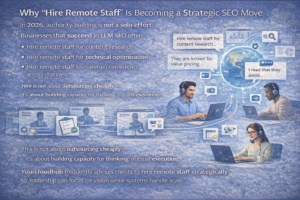
In 2026, authority-building is not a solo effort.

Businesses that succeed in LLM SEO often:

• Hire remote staff for content research
• Hire remote staff for technical optimization
• Hire remote staff to maintain consistency across channels
• Hire remote staff to support long-term publishing
This is not about outsourcing cheaply — it’s about building capacity for thinking, not just execution.
Yourcloudhub frequently advises clients to hire remote staff strategically so leadership can focus on vision while systems handle scale.
Why “Hire Remote Staff” Is Becoming a Strategic SEO Move

Traditional SEO Still Matters — But Its Role Has Changed

This is not a replacement story. It’s a rebalancing.

Traditional SEO is now best for:

• Capturing existing demand
• Technical accessibility
• Baseline visibility

LLM SEO is critical for:

• Demand creation
• Early discovery
• Trust formation
• Authority positioning
Businesses that rely on only one will struggle.

What a Balanced SEO Strategy Looks Like in 2026

Modern SEO stacks look like this:

• Traditional SEO for structure and crawlability
• LLM SEO for explanation and authority
• Brand clarity for trust
• Operational support to sustain output
This is where many companies choose to hire remote staff — not to write fluff, but to support systems that compound.

How This Impacts Service-Based Businesses the Most

For service businesses, visibility without trust is useless.

AI tools increasingly recommend:

• Approaches
• Frameworks
• Types of providers
If your business is not part of those explanations, you lose before the conversation begins.
This is why aligning LLM SEO with services like Website Development, Digital Marketing, and Software Development must focus on how you think, not just what you sell.

Measuring Success in LLM SEO (Different Metrics)

You won’t always see:

• Immediate traffic spikes
• Clear rankings

Instead, you’ll notice:

• Better-informed leads
• Shorter sales cycles
• Higher trust at first contact
• More qualified conversations
These are stronger signals than vanity metrics.

SEO in 2026 Is About Being Understood, Not Found

Traditional SEO helped businesses get found.
LLM SEO helps businesses get chosen.
In 2026, the winners will not be those who game algorithms — but those who teach, explain, and lead.

At yourcloudhub, we believe the future belongs to businesses that:

• Build clarity before traffic
• Invest in authority before ads
• Hire remote staff to support long-term thinking
• Design systems for AI understanding, not just rankings
SEO is no longer a marketing trick.
It’s a knowledge strategy.

How Businesses Must Operationalize LLM SEO in 2026 (Or Fall Behind Quietly)

The Real Gap Isn’t Knowledge — It’s Execution
By 2026, most business leaders will know that AI search and LLMs matter. The real separator won’t be awareness — it will be execution capability.

At yourcloudhub, we see a clear divide emerging:

• Businesses that understand LLM SEO
• Businesses that can actually operate it at scale
LLM SEO is not a campaign. It is not a one-time optimization. It is an ongoing knowledge-production system.
And that is where most organizations struggle.

Why LLM SEO Breaks Traditional Marketing Structures

Traditional SEO could live inside a marketing department:

• Keyword research
• Content briefs
• Publishing schedules

LLM SEO cuts across:

• Strategy
• Expertise
• Operations
• Knowledge management
• Brand positioning

It requires input from:

• Subject-matter experts
• Leadership
• Content strategists
• Technical teams
This cross-functional demand is why many businesses stall after their first few “AI-optimized” articles.

LLM SEO Is a Thinking Problem Before It’s a Writing Problem

One of the biggest misconceptions is that LLM SEO is about “writing better blogs.”

In reality, it’s about:

• Structuring how your company thinks publicly
• Making decision logic explicit
• Explaining tradeoffs and reasoning
• Clarifying your worldview
LLMs don’t just extract facts — they extract patterns of thinking.
If your content doesn’t reflect how you reason about problems, LLMs have nothing meaningful to reuse.

Why Many Businesses Plateau After Initial AI Content Wins

A common pattern in 2026:

1. Business publishes a few deep AI-friendly articles.
2. Visibility improves slightly
3. Momentum stalls
Why?
Because LLM SEO rewards consistency and depth over time, not one-off efforts.
This is where operational capacity becomes the bottleneck.

The Operational Reality: LLM SEO Requires Sustained Output

To remain visible in AI-driven discovery, businesses must:

• Publish consistently
• Update existing content
• Maintain topical focus
• Reinforce authority across multiple angles
This level of output is difficult to sustain internally without burning out teams.
That’s why many companies working with yourcloudhub choose to hire remote staff as part of their LLM SEO strategy.
Not for volume — but for continuity.

Why “Hire Remote Staff” Is an Execution Advantage in LLM SEO

LLM SEO is not about speed — it’s about endurance.

Businesses that hire remote staff strategically can:

• Maintain publishing cadence without overload
• Support research-heavy content
• Document internal knowledge
• Keep content updated as AI models evolve
This allows leadership to stay focused on strategy while the system runs in the background.
In 2026, this is becoming a competitive advantage — not a cost-cutting tactic.

LLM SEO Punishes Inconsistency More Than Traditional SEO Ever Did

Traditional SEO allowed some inconsistency:

• Random blog topics
• Disconnected pages
• Multiple tones of voice
LLMs are far less forgiving.

They look for:

• Stable positioning
• Consistent terminology
• Repeated conceptual framing
• Clear expertise boundaries
If your content contradicts itself or shifts focus frequently, AI systems struggle to trust it.
Operational discipline matters more than ever.

Why Knowledge Documentation Is Now an SEO Asset

One of the most underappreciated shifts in 2026 is this:
Internal knowledge, when externalized properly, becomes SEO leverage.

Businesses that:

• Document processes
• Explain methodologies
• Share frameworks
• Clarify decision rules
Give LLMs rich material to work with.
At yourcloudhub, we often advise clients to treat internal documentation as raw material for LLM SEO.
This is another reason companies hire remote staff — to help translate internal knowledge into structured, public-facing content.

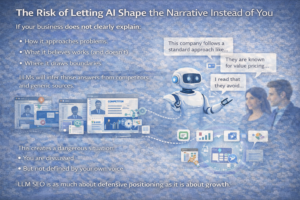
The Risk of Letting AI Shape the Narrative Instead of You

If your business does not clearly explain:

• How it approaches problems
• What it believes works (and doesn’t)
• Where it draws boundaries
LLMs will infer those answers from competitors and generic sources.

This creates a dangerous situation:

• You are discussed
• But not defined by your own voice
LLM SEO is as much about defensive positioning as it is about growth.

The Risk of Letting AI Shape the Narrative Instead of You

Why Generic Content Is Now a Liability

In traditional SEO, generic content could still rank.

In LLM SEO, generic content:

• Adds no value
• Signals low expertise
• Gets ignored or summarized away
If your content sounds like everyone else’s, AI systems have no reason to reference you.
Differentiation is not optional anymore.

The Shift From “Content Teams” to “Knowledge Systems”

Forward-thinking businesses in 2026 are changing how they think about content.

They are moving from:

• Blog calendars
to
• Knowledge systems

These systems include:

• Topic ownership
• Consistent terminology
• Update cycles
• Authority reinforcement
This is difficult to maintain without additional capacity, which is why many teams hire remote staff to support these systems in the long term.

Why LLM SEO Makes Shortcuts More Dangerous

In the past, shortcuts sometimes worked:

• Content spinning
• Keyword padding
• Shallow outsourcing
LLMs detect these patterns easily.
Low-quality content doesn’t just fail—it can actively undermine trust signals.
Quality control is non-negotiable in 2026.

How Businesses Should Sequence Their LLM SEO Efforts

One mistake businesses make is trying to do everything at once.

A better sequence:

1. Clarify positioning and expertise boundaries.
2. Identify core questions your buyers ask.
3. Publish foundational, in-depth content.
4. Reinforce with supporting articles.
5. Update and expand consistently.
This approach compounds.
Rushing leads to fragmentation.

Why Leadership Involvement Still Matters

LLM SEO cannot be fully delegated.

Leadership must:

• Define perspective
• Approve positioning
• Set boundaries of expertise
Execution can be supported by teams — especially when you hire remote staff —, but direction must come from the top.
LLMs amplify whatever thinking you publish. Make sure it’s intentional.

Why Performance Marketing Alone Is Risky in 2026

Why Performance Marketing Alone Is Risky in 2026

What Worked Yesterday Is Becoming a Liability

For the last decade, performance digital marketing has been the growth engine for countless SMEs. Paid ads, funnels, retargeting, and short-term ROI metrics helped businesses scale faster than ever before.
But as we move into 2026, a hard truth is becoming impossible to ignore:
Performance marketing alone is no longer a growth strategy — it’s a vulnerability.
At Your Cloud Hub, we see this shift across industries. Businesses that rely almost entirely on paid performance channels are facing rising costs, declining trust, algorithm dependency, and fragile growth models.
This article explains why performance marketing by itself is risky in 2026, what has fundamentally changed, and how SMEs can build more resilient, AI-ready growth systems without abandoning performance altogether.

Section 1: The Hidden Fragility of Performance-Only Growth Models

Performance Marketing Was Never Meant to Stand Alone
Performance marketing was designed as an accelerator, not a foundation.

Originally, it worked best when layered on top of:

• Strong brand trust
• Clear positioning
• Existing demand
• Organic visibility
Over time, many SMEs inverted this model. Performance marketing became the only growth engine — while brand, content, and authority were deprioritized.
That imbalance is now being exposed.

Rising Costs Are Not a Temporary Problem

One of the most obvious risks in 2026 is cost inflation.

Across platforms:

• Cost per click continues to rise
• Cost per lead fluctuates unpredictably
• Competition increases with AI-driven advertisers

But the deeper issue is this:

When performance marketing is your only channel, you have no pricing power.
Your Cloud Hub sees this pattern repeatedly — businesses forced to spend more just to maintain the same results, with no leverage to push back.

Algorithm Dependency Is a Strategic Risk

Performance marketing lives and dies by algorithms you do not control.

In 2026, platforms are:

• Changing targeting rules
• Limiting data visibility
• Prioritizing their own AI systems
• Shifting attribution models

A single algorithm update can:

• Break funnels overnight
• Destroy ROAS
• Cut lead volume without warning
When 80–90% of growth depends on paid performance, this isn’t just inconvenient — it’s dangerous.

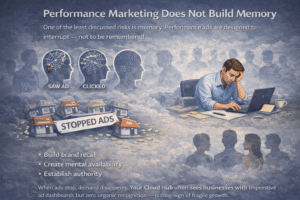
Performance Marketing Does Not Build Memory

One of the least discussed risks is memory.
Performance ads are designed to interrupt — not to be remembered.

Many SMEs generate leads but fail to:

• Build brand recall
• Create mental availability
• Establish authority
When ads stop, demand disappears.
Your Cloud Hub often sees businesses with impressive ad dashboards but zero organic recognition — a clear sign of fragile growth.

Performance Marketing Does Not Build Memory

Trust Has Become the Real Conversion Factor

In 2026, buyers are more skeptical than ever.

They:

• Research across AI tools
• Compare multiple sources
• Avoid aggressive sales messaging
• Trust brands that educate, not push

Performance marketing alone struggles in low-trust environments because:

• Ads are assumed to be biased
• Claims are questioned
• Buyers seek third-party validation
Without authority and depth of content, conversion costs rise sharply.

AI Search Has Changed How Buyers Discover Brands

A major shift since 2024 is the rise of AI-mediated discovery.

Buyers increasingly:

• Ask ChatGPT or Gemini for recommendations
• Consume summarized answers instead of ads
• Trust synthesized expertise over sponsored messages
Performance ads are often invisible in these contexts.
If your brand does not exist outside paid placements, AI systems simply don’t surface you.
This is one of the biggest risks Your Cloud Hub helps businesses address.

Performance Metrics Can Create False Confidence

Dashboards look reassuring:

• CTRs
• CPLs
• ROAS
But these metrics often hide structural weakness.

They don’t show:

• Brand dependency on ads
• Declining trust signals
• Lack of organic authority
• Fragile demand generation
When performance dips, there is nothing underneath to catch the fall.

Short-Term Optimization Undermines Long-Term Growth

Performance marketing incentivizes:

• Quick wins
• Narrow targeting
• Aggressive messaging
• Funnel hacking

Over time, this can:

• Narrow audience perception
• Reduce brand credibility
• Burn out demand
Businesses optimized only for immediate conversion often struggle to expand later.

Customer Acquisition Without Retention Is Unsustainable

Another hidden risk is leaky growth.

Performance marketing excels at acquisition — but not at:

• Long-term engagement
• Loyalty
• Advocacy
When every sale requires another paid click, margins compress and growth stalls.
Your Cloud Hub frequently finds that performance-only businesses are stuck on a treadmill — running harder without moving forward.

Data Loss and Privacy Restrictions Are Accelerating

By 2026, privacy constraints have:

• Reduced tracking accuracy
• Weakened attribution
• Increased reliance on modeled data
Performance decisions are now based on estimates rather than certainty.
This makes performance-only strategies increasingly speculative.

When Performance Marketing Fails, It Fails Fast

The final risk is speed.

When performance breaks:

• It breaks immediately
• There is no buffer
• Recovery is expensive
Businesses with diversified growth systems adapt.
Performance-only businesses panic.

What Smart SMEs Are Doing Instead in 2026

Performance Marketing Is Still Valuable — But Only as a Layer
The takeaway is not to abandon performance marketing.
It is to demote it from a foundation to an accelerator.

High-resilience SMEs treat performance as:

• A distribution layer
• A testing mechanism
• A demand amplifier
Not as the sole source of growth.

Authority Has Become the New Moat

In 2026, authority compounds.

Authority means:

• Being referenced by AI tools
• Being recognized without ads
• Being trusted before the click

Your Cloud Hub emphasizes authority-building because it:

• Lowers acquisition costs
• Improves conversion quality
• Reduces platform dependency
Authority doesn’t fluctuate with algorithms — it compounds with time.

Content Is No Longer Optional — It Is Infrastructure

Modern content is not “blogging for SEO.”

It is:

• Decision support
• Buyer education
• Trust formation
• AI discoverability
Content gives performance marketing something to land on besides a pitch.
Without it, ads do all the work — and fail under pressure.

Brand Consistency Outperforms Funnel Tricks

Funnels change. Platforms change. Audiences evolve.

Brand consistency provides:

• Recognition across channels
• Familiarity across time
• Trust across decisions
Your Cloud Hub helps businesses align messaging across paid, organic, and AI-driven discovery so performance ads reinforce — not replace — brand equity.

AI Visibility Is Now a Growth Requirement

In 2026, if AI systems don’t recognize your brand:

• You don’t exist for a growing segment of buyers

AI visibility depends on:

• Clear positioning
• Educational depth
• Consistent topical focus
Performance ads cannot buy this.

Smart SMEs Build Demand, Not Just Capture It

Performance marketing captures existing demand.

But growth leaders also create demand by:

• Teaching the market
• Shaping conversations
• Defining categories
This makes future performance marketing more cost-effective and effective.
Your Cloud Hub delivers the strongest results when performance sits atop demand creation—not in place of it.

Owned Channels Reduce Risk Exposure

Email lists, content libraries, brand searches, and direct traffic are risk buffers.

They:

• Absorb shocks when ads fluctuate
• Provide leverage in negotiations
• Enable experimentation
Performance-only businesses lack these buffers.

Performance Marketing Works Best When Buyers Already Trust You

Ads convert best when:

• Buyers recognize the name
• Buyers have seen the content
• Buyers feel informed
This is why authority and education increase ROAS rather than compete with it.

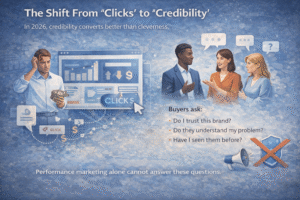
The Shift From “Clicks” to “Credibility”

In 2026, credibility converts better than cleverness.

Buyers ask:

• “Do I trust this brand?”
• “Do they understand my problem?”
• “Have I seen them before?”
Performance marketing alone cannot answer these questions.
The Shift From “Clicks” to “Credibility”

The Most Dangerous Assumption in 2026

The riskiest belief is:

“Performance marketing will always work if we optimize hard enough.”
History shows otherwise.
Channels saturate. Costs rise. Trust erodes.
Resilient SMEs prepare before the break — not after.

What a Balanced Growth Model Looks Like

At Your Cloud Hub, balanced growth means:

• Performance marketing for acceleration
• Content for authority
• Brand for trust
• AI visibility for discovery
Each layer supports the others.
Remove one, and the system weakens.

Performance Marketing Is a Tool — Not a Strategy

Performance marketing is not broken.
But using it alone is.

In 2026, sustainable growth belongs to businesses that:

• Build authority before buying attention
• Earn trust before demanding action
• Design systems before scaling spend
Your Cloud Hub helps SMEs move beyond fragile, performance-only models toward growth strategies that survive algorithm changes, AI disruption, and market uncertainty.
The future belongs to brands that are recognized, trusted, and remembered — not just clicked.

The Real Fear: “If We Reduce Ads, Growth Will Stop”

For many SMEs, performance marketing doesn’t just feel important — it feels existential.
Leads come from ads.
Sales depend on ads.
Forecasts are built around ads.
So when the risks of performance-only growth are discussed, the natural response is fear:
“If we reduce performance marketing, everything stops.”
At Your Cloud Hub, this is one of the most common concerns we hear — and it’s understandable. But reducing risk does not mean switching ads off. It means changing the role ads play inside your growth system.

The Goal Is Not Less Performance — It’s Less Dependence

The smartest SMEs in 2026 are not anti-performance marketing. They are anti-dependence.

They aim to:

• Keep performance marketing active
• Reduce how fragile their business becomes if performance dips
• Build layers that absorb volatility

The question shifts from:

“How do we get more from ads?”

to:
“What happens if ads underperform for 30 days?”
If that question has no safe answer, the risk is already high.

Why Sudden Transitions Fail (and Gradual Ones Work)

Many businesses make one of two mistakes:

  1. They ignore the risk entirely
  2. They overcorrect too fast.
    Both are dangerous.
    Sudden shifts away from performance marketing can:
    • Break cash flow
    • Disrupt sales pipelines
    • Create internal panic
    The right approach is parallel building—strengthening unpaid growth channels while performance marketing continues to run.
    Your Cloud Hub consistently delivers the best results when businesses transition in layers, not in leaps.

Step 1: Decouple Revenue Confidence From Daily Ad Performance

The first structural change SMEs must make is psychological.
When leadership checks ad dashboards multiple times a day, the business is already under stress.

To reduce risk:

• Shift reporting from daily to weekly patterns
• Focus on trends, not fluctuations
• Separate marketing performance from business health
This mindset shift creates space to build longer-term assets without emotional decision-making.

Step 2: Identify Where Performance Marketing Is Doing Too Much Work

In performance-only businesses, ads often compensate for deeper issues:

• Weak positioning
• Low trust
• Poor clarity
• Lack of authority

Instead of asking:

“How do we improve ROAS?”
Ask:
“What is the ad doing that the business itself should be doing?”

If ads are:

• Explaining your value
• Educating buyers
• Creating trust
• Defining your category
Then the business is structurally fragile.

Step 3: Move Education and Trust Outside the Ad Layer

One of the most effective risk-reduction strategies is offloading education from ads.

Ads should:

• Capture attention
• Direct interest

They should not:

• Do all the explaining
• Carry all the persuasion
• Overcome all skepticism

At Your Cloud Hub, we see performance stabilize when:

Website development
• Content answers real buyer questions
• Brand messaging reinforces trust before the click
This reduces pressure on ads and improves conversion quality.

Step 4: Build “Pre-Sold” Traffic Instead of Cold Traffic

In 2026, cold traffic is expensive and fragile.

Pre-sold traffic:

• Converts faster
• Requires less persuasion
• Is less sensitive to algorithm changes

Pre-sold traffic comes from:

• Educational content
• Brand recognition
• Repeat exposure
• AI-driven discovery
Performance marketing works best when it activates familiarity, not introduces strangers.

Step 5: Stop Treating Content as a Cost Center

One reason SMEs over-rely on ads is that content is viewed as:

• Slow
• Hard to measure
• “Nice to have”
This framing is outdated.

In 2026, content is:

• A demand creation engine
• An AI discovery asset
• A trust accelerator
• A performance multiplier
Your Cloud Hub treats content as infrastructure — not campaigns. Infrastructure compounds. Campaigns expire.

Step 6: Use Performance Data to Inform Authority Building

Ironically, performance marketing provides some of the best insights for reducing its own dependency.

High-performing SMEs analyze:

• Which questions convert best
• Which objections delay decisions
• Which messages resonate long-term

Then they:

• Turn those insights into educational content
• Address objections before ads ever appear
• Reduce friction across the entire journey
Performance data should feed authority-building — not replace it.

Step 7: Prepare for AI-Mediated Buyer Journeys

By 2026, many buyers will never see your ads before forming an opinion.

They will:

• Ask AI tools for recommendations
• Consume summarized insights
• Compare options invisibly
If your brand is not present in those contexts, performance marketing becomes the first impression — an expensive and risky role.

Your Cloud Hub emphasizes AI visibility because it:

• Builds trust before ads
• Shapes perception early
• Reduces reliance on paid exposure

Step 8: Diversify Discovery, Not Just Channels

Many SMEs attempt diversification by adding:

• One more ad platform
• One more campaign type
This is not diversification — it’s still dependency.

True diversification means:

• Multiple discovery paths
• Owned attention
• Earned visibility
• AI recognition
When discovery is diversified, software development becomes optional leverage — not survival fuel.

Step 9: Redefine What “Performance” Actually Means

In performance-only models, performance equals:

• Clicks
• Leads
• Short-term ROAS

In resilient models, performance includes:

• Brand search growth
• Lead quality improvement
• Sales cycle reduction
• Conversion consistency
These metrics indicate structural strength, not just tactical success.

Step 10: Build Slack Into the System

Healthy systems have slack.

Slack means:

• You can pause ads briefly without panic
• You can test without existential risk
• You can adapt to platform changes calmly
Performance-only systems have no slack — every fluctuation feels like a threat.
Your Cloud Hub helps SMEs design growth systems with buffers, not brittleness.


How to Optimize Your Website for ChatGPT, Gemini & AI Search Results

How to Optimize Your Website for ChatGPT, Gemini & AI Search Results
Search Has Changed — Visibility Now Depends on AI Understanding

Search is no longer just about ranking blue links on Google. Today, users increasingly rely on AI-powered answers from tools like ChatGPT and Gemini to research businesses, compare solutions, and make decisions — often without ever clicking traditional search results.
This transition has presented a new challenge for companies. How do you ensure your website is understood, trusted, and referenced by AI systems — not just indexed by search engines?
At Your Cloud Hub, this question is not theoretical. It’s practical, strategic, and urgent. Optimizing for AI search results requires a different mindset — one focused on clarity, structure, authority, and intent, not just keywords and backlinks.
This guide explains how SMEs can optimize their websites for ChatGPT, Gemini, and AI-driven search engines while building long-term digital authority.

The Mechanics of AI Search Engines (And the Reasons Many Websites Struggle)

Conventional search engines assess and rank webpages.
AI systems interpret, summarize, and recommend information.
That difference matters.

AI models:

• Extract meaning, not just keywords
• Prioritize authoritative, well-structured content
• Cross-reference multiple sources
• Favor clarity over cleverness
If your website is confusing, shallow, or sales-heavy without substance, AI tools are far less likely to surface it as a trusted source.
This is why numerous companies with effective SEO often struggle to show up in AI-generated responses.

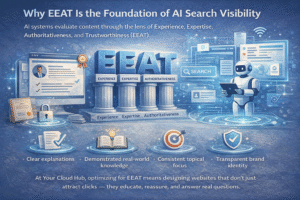
Why EEAT Is the Foundation of AI Search Visibility

AI systems evaluate content through the lens of Experience, Expertise, Authoritativeness, and Trustworthiness (EEAT).

To AI models, trust is inferred from:

• Clear explanations
• Demonstrated real-world knowledge
• Consistent topical focus
• Transparent brand identity
At Your Cloud Hub, optimizing for EEAT means designing websites that don’t just attract clicks — they educate, reassure, and answer real questions.
Why EEAT Is the Foundation of AI Search Visibility

Step 1: Simplify Your Website for AI Comprehension

AI systems do not navigate websites in the same way that humans do. They parse structure, patterns, and semantic clarity.

To optimize your site:

• Use clear headings (not vague marketing slogans)
• Answer questions directly
• Avoid burying meaning in visuals alone
• Structure content logically from general → specific

When Your Cloud Hub structures content this way, AI systems can easily identify:

• What the business does
• The target audience it serves
• The issues it addresses
Clarity beats creativity in AI search.

Step 2: Focus on Questions Instead of Just Keywords

AI search is primarily driven by questions.

People ask:

•  “Who is the best provider for X?”
• “What criteria should I consider when evaluating X?”
• “What should I look for in X?”
Your website must explicitly answer these questions.

Instead of generic copy, create content that:

• Explains processes step-by-step
• Compares options objectively
• Clarifies outcomes and expectations
This approach positions Your Cloud Hub as a helpful authority — not just a vendor.

Step 3: Demonstrate Real Experience, Not Generic Claims

AI systems are trained to detect fluff.

Statements like:

• “We are industry leaders.”
• “We deliver the best solutions.”
carry little weight without evidence.

Instead, AI favors:

• Practical explanations
• Scenario-based insights
• Clear methodologies
For example, explaining how Your Cloud Hub approaches Website Development in real-world scenarios demonstrates experience — not just capability.

Step 4: Create Topical Depth, Not Scattered Content

One of the often-neglected principles of AI optimization is the concept of topical authority.

AI systems prefer websites that:

• Cover a subject comprehensively
• Show consistent focus
• Connect related topics logically

Instead of publishing unrelated blogs, Your Cloud Hub benefits from:

• Content clusters
• In-depth guides
• Interconnected explanations
This indicates to AI that your site serves as a trusted knowledge hub rather than just a random source of content.

Step 5: Optimize for Semantic Understanding, Not Keyword Density

AI search algorithms do not favor keyword stuffing.

It understands:

• Context
• Synonyms
• Relationships between concepts

This means your content should:

• Use natural language
• Explain concepts thoroughly
• Reinforce meaning across sections
Mentioning Your Cloud Hub in context — rather than forcing keywords — helps AI associate your brand with specific expertise areas.

Step 6: Structure Content for AI Summarization

AI tools often summarize content before presenting it.

To improve visibility:

• Use concise paragraphs
• Include lists and structured explanations
• Clearly define key concepts
• Avoid unnecessary jargon
Well-structured content increases the likelihood that AI systems will accurately quote or reference your website.

Step 7: Build Trust Signals Across Your Website

AI systems infer trust from consistency and transparency.

Key trust signals include:

• Clear “About” information
• Consistent messaging
• Detailed service explanations
• Educational content that isn’t overly promotional
For example, explaining how Your Cloud Hub approaches Digital Marketing strategy — including the challenges — builds far more trust than surface-level claims.

Step 8: Align Content With User Intent, Not Just Search Intent

AI systems care deeply about intent alignment.

Content should match:

• Informational intent (learning)
• Commercial intent (evaluation)
• Transactional intent (decision-making)
Your Cloud Hub benefits by creating content that supports the entire decision journey, not just lead capture.

Step 9: Optimize Technical Foundations Without Overengineering

While AI optimization is content-centric, technical basics still matter:

• Fast load times
• Mobile responsiveness
• Clean HTML structure
• Accessible design
These foundations support both AI readability and user experience.

Step 10: Establish Your Brand as a Source of Knowledge, Rather Than Merely a Service Provider

The biggest shift required for AI optimization is philosophical.
AI favors educators over advertisers.

When Your Cloud Hub publishes content that:

• Explains complex topics clearly
• Helps users make informed decisions
• Demonstrates strategic thinking
AI systems begin to treat your site as a reference, not just a destination.

Why AI Optimization Is a Long-Term Strategy, Not a One-Time Fix

Unlike traditional SEO tactics, AI optimization compounds over time.

Each high-quality page:

• Reinforces topical authority
• Improves contextual relevance
• Strengthens trust signals
This is especially powerful when your Cloud Hub consistently publishes content aligned with real user needs.

How AI Search Impacts Service-Based Businesses the Most

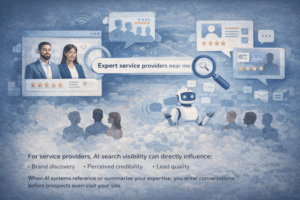
For service providers, AI search visibility can directly influence:

• Brand discovery
• Perceived credibility
• Lead quality
When AI systems reference or summarize your expertise, you enter conversations before prospects even visit your site.
This is the reason AI search optimization has become essential.
How AI Search Impacts Service-Based Businesses the Most

The Role of Software-Driven Expertise in AI Visibility

AI models favor websites that demonstrate technical and strategic competence.
Explaining processes behind Software Development — even at a conceptual level — signals depth and seriousness.
Your Cloud Hub benefits by translating complexity into clarity.

Measuring Success in an AI-First Search Landscape

Achieving success today goes beyond merely obtaining top rankings.

New indicators include:

• Brand mentions in AI tools
• Increased qualified traffic
• Better-informed leads
• Higher trust at first contact
These are signs your website is being understood, not just indexed.

AI Search Rewards Clarity, Authority, and Helpfulness

Optimizing for ChatGPT, Gemini, and AI-powered search results is not about gaming algorithms.

It’s about:

• Communicating clearly
• Demonstrating real expertise
• Structuring knowledge intelligently
• Building trust at scale
When Your Cloud Hub embraces this approach, AI systems naturally surface your content as a credible source.
The future of search belongs to businesses that teach before they sell — and design websites for understanding, not just traffic.

Building AI-First Authority — How Your Cloud Hub Can Become a Trusted Source for ChatGPT & Gemini

Why AI Visibility Is About Authority, Not Tricks

One of the biggest misconceptions businesses have about AI search optimization is that it’s another “SEO hack” to master — a checklist of tactics that can be executed once and forgotten.
That approach fails quickly.
AI systems like ChatGPT and Gemini do not reward manipulation. They reward consistency, clarity, depth, and authority over time. The goal is not to “rank,” but to become referencable — a source AI models trust when synthesizing answers.
For Your Cloud Hub, this means shifting from a traffic-first mindset to an authority-first digital presence.

How AI Decides Which Websites to Trust

AI models don’t rank websites the way search engines do.

Instead, they evaluate signals such as:

• Depth of explanation
• Consistency across topics
• Brand clarity
• Demonstrated understanding of real-world problems
• Alignment with user intentWhen AI generates an answer, it implicitly asks:“Which sources sound like they actually know what they’re talking about?”
Websites that rely on thin content, vague language, or recycled marketing copy rarely pass this test.
Your Cloud Hub must sound like an expert advisor, not a brochure.

Why Brand Identity Matters More in AI Search Than Traditional SEO

In traditional SEO, anonymous content can rank.

In AI search, identity matters.AI systems pay attention to:

• Who is speaking
• What they consistently talk about
• Whether their messaging is coherent
When Your Cloud Hub clearly positions itself as a knowledgeable, focused brand with a defined area of expertise, AI systems are far more likely to associate your name with specific problem spaces.
This is how brands become answers, not just options.

Creating “Answer-Worthy” Content for AI Systems

AI tools excel at summarizing, synthesizing, and explaining. To be part of that process, your content needs to provide valuable answers.

Answer-worthy content:

• Directly addresses a real question
• Explains why something works, not just what it is
• Provides context, not just steps
• Avoids fluff and filler

For example, instead of vague claims, Your Cloud Hub should publish content that:

• Explains tradeoffs
• Clarifies misconceptions
• Walks through decision logic
This ensures that your content is easily referenced and accurately by AI.

The Importance of Explicit Context in AI Optimization

Humans infer context easily. AI systems need it spelled out.

This means Your Cloud Hub should:

• Clearly state whose content it is for
• Define problems before offering solutions
• Avoid assuming prior knowledge
• Use explicit transitions and summaries
When context is explicit, AI models can safely extract and reuse your information without distortion.

Structuring Pages for AI “Reading,” Not Human Skimming Alone

Most websites are designed only for human skimming. AI systems, however, “read” structurally.

Best practices include:

• One clear topic per page
• Logical heading hierarchy
• Clear definitions early in the content
• Progressive depth (basic → advanced)

When Your Cloud Hub structures pages this way, AI tools can:

• Identify main concepts quickly
• Understand relationships between sections
• Summarize content correctly
Poor structure increases the risk of misinterpretation.

The Importance of Consistency Across Pages

AI systems cross-reference information.
Trust Indicator AI systems verify information through cross-referencing.

Consistency should exist in:

• Terminology
• Tone
• Strategic positioning
• Problem framing
This doesn’t imply duplicating the same wording; rather, it involves strengthening the same conceptual framework throughout your website.

Consistency tells AI:

“This brand has a coherent point of view.”

Building Topical Authority Through Content Clusters

One of the strongest AI optimization strategies is topical clustering.

Instead of publishing isolated posts, Your Cloud Hub should:

• Choose core topics
• Create multiple in-depth pieces around each
• Interlink them logically

This shows AI systems that:

• You understand the topic holistically
• You are not guessing or surface-level
• You have established credibility to address the subject.
Depth beats breadth in AI search.

Avoiding the “Generic Content” Trap

AI models are trained on vast amounts of everyday content. They can easily recognize it.

Generic content usually:

• Repeats obvious advice
• Avoids specifics
• Lacks original framing
• Sounds interchangeable with competitors

To stand out, Your Cloud Hub must:

• Add nuance
• Explain consequences
• Share reasoning
• Address edge cases
Original thinking is far more valuable to AI than polished but empty prose.

Why Educational Content Outperforms Promotional Content in AI Search

AI systems are designed to help users understand — not to sell to them.

Content that is overly promotional:

• Gets ignored
• Gets summarized poorly
• Gets deprioritized

Educational content, on the other hand:

• Gets referenced
• Gets paraphrased
• Gets trusted
Your Cloud Hub should aim to teach first, allowing credibility to drive conversions naturally.

The Importance of FAQs in Optimizing AI Search.

Well-written FAQs are gold for AI systems.

They:

• Mirror natural language questions
• Provide direct answers
• Clarify common confusion points

Strategic FAQ sections help Your Cloud Hub:

• Match conversational queries
• Increase AI answer inclusion
• Reduce ambiguity
The key is depth — not one-line answers.

Optimizing for Conversational Queries Without Sounding Artificial

AI-driven search is conversational by nature.
However, forcing unnatural phrasing damages readability.

The balance lies in:

• Writing naturally
• Answering real questions
• Using clear, direct language
• Avoiding keyword-stuffed sentences
Your Cloud Hub should sound like a knowledgeable human explaining something clearly — because that’s exactly what AI models try to emulate.

Why Long-Form Content Performs Better in AI Contexts

AI systems prefer sources that:

• Explore topics thoroughly
• Address multiple angles
• Anticipate follow-up questions

Long-form content gives AI:

• More context
• More confidence
• More accurate summaries
This doesn’t mean being verbose — it means being complete.

Internal Linking as an AI Understanding Tool

Internal links serve a purpose beyond mere navigation. They help AI models
understand:
• Topic relationships
• Content hierarchy
• Authority flow Your Cloud Hub should link:
• Concept explanations to deeper guides
• High-level pages to detailed breakdowns
• FAQs to supporting resources
This reinforces topical structure and strengthens AI comprehension.

Optimize for Understanding, Not Algorithms

AI search is not a game to beat.
It is a system designed to surface understanding.

Websites that:

• Explain clearly
• Teach honestly
• Demonstrate real expertise
will always win — regardless of platform changes.
By focusing on structure, clarity, and authority, Your Cloud Hub doesn’t just optimize for ChatGPT or Gemini — it builds a digital presence that remains relevant as AI continues to reshape how people find and trust information.

How SMEs Can Do Digital Marketing in 2025: A Practical Guide for Success

In the fast-evolving digital landscape of 2025, small and medium-sized enterprises (SMEs) are presented with more marketing opportunities than ever before. But with new tools, platforms, and strategies emerging constantly, many SMEs feel overwhelmed by the choices.

The good news? Digital marketing in 2025 doesn’t have to be complex. With the right approach, SMEs can grow their brand, reach more customers, and compete with bigger players—without breaking the bank.

Here’s a practical, step-by-step guide on how SMEs can make digital marketing work in 2025.


1. Start With a Clear Goal and Customer Persona

Digital marketing is not about being everywhere—it’s about being where your customers are. Before jumping into tools or campaigns, take time to define:

  • What you want to achieve (e.g., brand awareness, lead generation, sales).

  • Who your ideal customer is (age, location, pain points, online behavior).

In 2025, personalization is everything. A well-defined customer persona ensures your messages are tailored and relevant, increasing engagement and conversions.


2. Build a Strong Website Foundation

Your website is your digital storefront. Whether you sell online or just generate leads, your website must:

  • Load fast (under 2 seconds)

  • Be mobile-optimized

  • Include clear calls-to-action

  • Support SEO best practices

  • Integrate with chatbots or AI assistants

In 2025, many SMEs use platforms like Webflow, WordPress with AI plugins, or GoHighLevel for automation-ready sites. No need for massive development teams—just a clean, functional, and trustworthy digital presence.


3. Leverage AI-Powered Content Marketing

Gone are the days of writing endless blog posts manually. SMEs can now use AI content tools to:

  • Generate blog topics based on search trends

  • Write SEO-optimized drafts faster

  • Personalize email content and subject lines

  • Create short-form social media posts

But remember: AI is just a tool. The magic lies in human editing, brand voice, and authentic storytelling. Blend automation with empathy for maximum results.


4. Invest in Local SEO

If you’re a local business or serve specific regions, Local SEO is a must in 2025. Google continues to prioritize local search results, especially with voice searches rising.

Here’s how SMEs can dominate local rankings:

  • Claim and optimize your Google Business Profile

  • Collect genuine reviews from happy customers

  • Add local schema markup to your site

  • Use keywords with local intent (e.g., “plumber in Austin”)

  • Get listed on relevant local directories

Tools like BrightLocal, Moz Local, and Surfer SEO help manage and track local visibility efficiently.


5. Smart Social Media, Not Scattered Posting

Many SMEs still waste time posting daily on every platform. In 2025, smart social media means:

  • Focusing on 1-2 platforms where your audience is active

  • Using short-form video (Reels, TikTok, YouTube Shorts) to boost visibility

  • Scheduling posts with AI tools that analyze the best time to post

  • Engaging with followers through DMs, polls, and interactive content

Tip: Use Canva for design and Metricool or Buffer for scheduling and analytics.


6. Run Cost-Effective Paid Ads (The Smart Way)

Paid advertising isn’t just for big brands anymore. In 2025, platforms like Google Ads, Facebook Ads, and even TikTok Ads allow SMEs to target users with precision.

Here’s how to do it smartly:

  • Start with remarketing campaigns (target people who already visited your website)

  • Use lookalike audiences to find similar users

  • Monitor performance weekly and adjust budgets

  • Use conversion tracking tools like Google Tag Manager or Meta Pixel

With automation options like Performance Max campaigns and AI ad suggestions, even solo business owners can get results without an agency.


7. Automate Your Lead Generation

SMEs in 2025 are embracing marketing automation to save time and scale efficiently. Tools like GoHighLevel, ActiveCampaign, or HubSpot help automate:

  • Lead capture through landing pages

  • Drip email campaigns and follow-ups

  • Appointment bookings and reminders

  • SMS and WhatsApp marketing

The goal? Move leads from interest to sale—without manual chasing.

Pro tip: Use chatbots or live chat tools to engage website visitors instantly and collect their contact details.


8. Use Influencer & User-Generated Content (UGC)

In 2025, people trust people—not ads. That’s why SMEs are increasingly tapping into micro-influencers and encouraging real customers to share their experiences.

Here’s what to do:

  • Collaborate with niche influencers (1k–10k followers) in your industry or local area

  • Run contests to encourage customers to share content using your product or service

  • Feature testimonials and user reviews in your ads and website

Tools like Modash, Collabstr, and UGC Creator Marketplaces help connect with creators affordably.


9. Track Everything With Analytics

You can’t improve what you don’t measure. Every digital marketing effort should be tied to clear metrics.

Track:

  • Website traffic and bounce rates (Google Analytics 4)

  • Lead sources and conversions (CRM or GoHighLevel)

  • Ad performance (Google Ads/Facebook Ads Manager)

  • Email open rates and click-throughs (Mailchimp, Brevo)

Use dashboards like Looker Studio or Whatagraph to view all your key metrics in one place.


10. Stay Agile and Keep Learning

Digital marketing trends change fast. In 2025, what’s working today might be outdated tomorrow. SMEs must stay agile:

  • Test different campaigns regularly

  • Learn from data and customer feedback

  • Upskill your team or work with consultants/freelancers

  • Follow industry updates via newsletters (e.g., Search Engine Journal, HubSpot Blog)

Flexibility, not perfection, wins the digital marketing game.


Final Thoughts

Digital marketing in 2025 offers enormous potential for SMEs to compete, grow, and thrive. It’s no longer about big budgets—it’s about smart strategy, focused efforts, and consistent action.

By building a solid foundation, embracing automation, leveraging AI, and creating meaningful content, even the smallest business can build a powerful online presence.

So whether you’re just starting or scaling, now is the best time to double down on digital.