


Marketing is evolving rapidly, and businesses are increasingly turning to automation to improve efficiency and performance. Manual marketing processes often lead to delays, missed opportunities, and inconsistent communication with customers.
Marketing automation solves these challenges by allowing businesses to automate repetitive tasks while maintaining personalized interactions with their audience. From lead nurturing to campaign management, automation technologies are transforming how companies attract and engage customers.
Today, modern tools such as AI marketing automation, CRM automation, and GHL automation allow businesses to manage marketing activities more effectively. These systems help organizations streamline processes, improve customer engagement, and generate more qualified leads. Understanding the latest automation trends helps businesses stay competitive in a rapidly changing digital landscape.
The Growing Importance of Automation in Marketing
Businesses are facing increasing pressure to manage multiple marketing channels simultaneously. Companies must engage audiences through websites, email campaigns, social media platforms, and digital advertisements. Handling these activities manually can be overwhelming.
Automation allows businesses to centralize their marketing activities and manage them efficiently. With advanced business automation, companies can schedule campaigns, automate follow-ups, and analyze performance data without constant manual intervention. This shift toward automation enables teams to focus on strategic planning rather than repetitive tasks.
The Rise of AI Marketing Automation
Artificial intelligence is becoming one of the most powerful forces in marketing automation. AI technologies analyze customer behavior, predict trends, and optimize campaigns based on real-time data.
Through AI marketing automation, businesses can personalize marketing messages for different audience segments. AI tools analyze data such as browsing behavior, purchase history, and engagement patterns to determine the most relevant content for each customer. This level of personalization improves engagement and increases the likelihood of conversions. AI also helps marketers optimize campaign timing, ensuring that messages reach customers when they are most likely to respond.
CRM Automation for Customer Relationship Management
Customer relationship management systems are essential for managing interactions with prospects and clients. When combined with automation, CRM platforms become powerful tools for nurturing relationships and improving communication. CRM automation enables businesses to track every customer interaction, including emails, website visits, and previous purchases.
Automated workflows can trigger specific actions based on customer behavior. For example, when a prospect downloads a resource, the CRM system can automatically send a follow-up message or schedule a task for the sales team. By organizing customer data and automating communication, CRM automation helps businesses maintain stronger relationships with their audience.
Lead Generation Automation
Generating leads is one of the most important goals of marketing. However, capturing and managing leads manually can be inefficient. Lead generation automation simplifies this process by automatically collecting prospect information and initiating follow-up communication.
For example, when a visitor completes a form on a website, the system can automatically store the information in the CRM, send a welcome email, and assign the lead to a sales representative. Automation ensures that every potential customer receives immediate attention, which increases the likelihood of conversion. Businesses that implement lead generation automation often see improvements in both lead quality and response times.
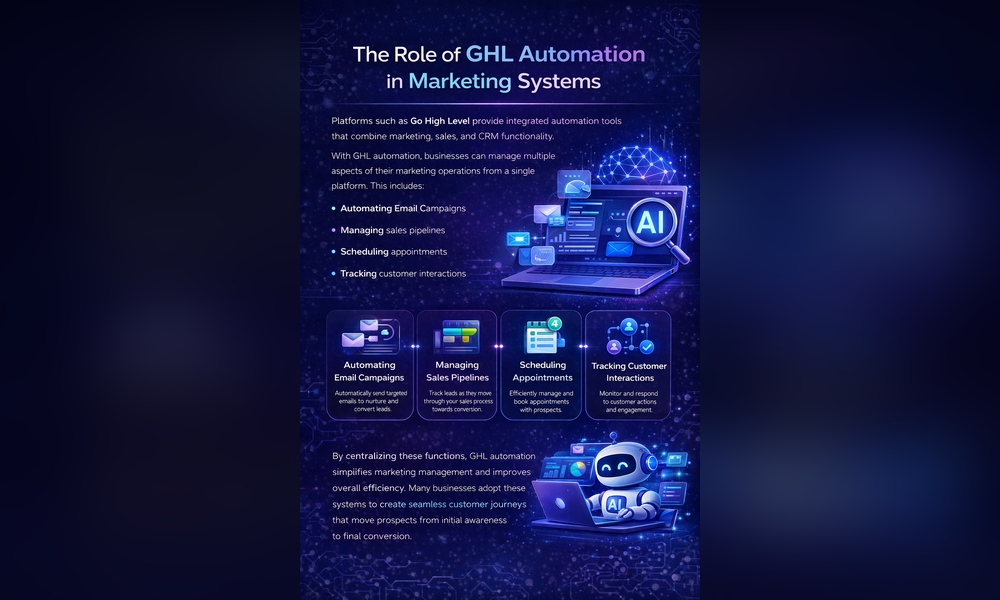
The Role of GHL Automation in Marketing Systems
Platforms such as Go High Level provide integrated automation tools that combine marketing, sales, and CRM functionality. With GHL automation, businesses can manage multiple aspects of their marketing operations from a single platform. This includes:
Automating email campaigns
Managing sales pipelines
Scheduling appointments
Tracking customer interactions
By centralizing these functions, GHL automation simplifies marketing management and improves overall efficiency. Many businesses adopt these systems to create seamless customer journeys that move prospects from initial awareness to final conversion.
Personalization Through Automated Marketing
Personalization is becoming increasingly important in modern marketing. Customers expect businesses to understand their needs and deliver relevant communication. Automation tools allow businesses to personalize messages at scale. For example, automated systems can send customized product recommendations based on previous purchases or browsing behavior.
Through AI marketing automation, personalization becomes even more advanced. AI tools analyze customer data and create tailored experiences that match individual preferences. This approach increases engagement and strengthens customer relationships.
Multi-Channel Automation Strategies
Modern marketing requires engagement across multiple channels. Customers interact with businesses through email, social media, messaging apps, and websites. Automation platforms allow businesses to coordinate these interactions seamlessly. For example, a prospect who downloads a guide may receive a follow-up email, followed by a reminder message on another channel.
With business automation, companies can deliver consistent communication across multiple platforms while maintaining a unified strategy. This coordinated approach improves customer experience and increases marketing effectiveness.
Data-Driven Decision Making
Marketing automation platforms generate large amounts of data that help businesses evaluate campaign performance. Analytics dashboards allow marketers to track metrics such as:
Email engagement rates
Lead conversion rates
Customer acquisition costs
Campaign return on investment
By analyzing this data, businesses can refine their strategies and focus on the tactics that deliver the best results. Combining analytics with CRM automation ensures that marketing decisions are based on accurate information rather than assumptions.
Automating Customer Journeys
Customer journeys consist of multiple interactions that occur over time. Automation allows businesses to guide prospects through these journeys without manual intervention. For example, a typical automated journey may include:
A welcome email after a visitor subscribes to a newsletter
Educational content delivered through a series of emails
Special offers based on customer interests
Follow-up messages encouraging conversions
These automated journeys ensure that prospects remain engaged with the brand throughout their decision-making process. Using GHL automation, businesses can design complex workflows that deliver the right message at the right time.
Improving Efficiency With Marketing Automation
One of the most significant benefits of automation is improved efficiency. Marketing teams often spend a large portion of their time on repetitive tasks such as sending emails, updating databases, and tracking campaign results.
Automation eliminates many of these tasks. By automating business processes, companies can streamline operations and reduce the workload on marketing teams. This allows employees to focus on creative strategy, content development, and customer engagement.
Preparing for the Future of Marketing Automation
Marketing automation will continue evolving as new technologies emerge. Artificial intelligence, predictive analytics, and machine learning will increasingly shape marketing strategies. Businesses that adopt these technologies early gain a competitive advantage.
By implementing systems such as AI marketing automation, CRM automation, and lead generation automation, organizations can build scalable marketing infrastructures that support long-term growth. Marketing automation has become an essential tool for modern businesses. It allows organizations to streamline operations, improve customer engagement, and generate higher-quality leads. With the rise of AI marketing automation, businesses can deliver personalized experiences that resonate with their audience. Meanwhile, systems such as CRM automation, GHL automation, and lead generation automation help organizations manage relationships and capture new opportunities. As automation technologies continue to evolve, businesses that invest in automation will be better equipped to adapt to changing market conditions and achieve sustainable growth.
Predictive Marketing With AI
One of the most important developments in modern marketing is predictive analytics. With AI marketing automation, businesses can analyze historical data to predict future customer behavior. Predictive marketing allows companies to anticipate what customers are likely to do next. For example, AI systems can identify which prospects are most likely to convert, which customers are likely to stop engaging, and which products might interest a specific audience.
By understanding these patterns, businesses can deliver the right message at the right time. Instead of reacting to customer behavior after it happens, companies can proactively guide prospects toward conversion. This predictive capability makes business automation more strategic and helps marketing teams focus on high-value opportunities.
Smarter Lead Scoring With Automation
Lead scoring is becoming more advanced with modern automation systems. Instead of manually evaluating prospects, businesses can use lead generation automation to assign scores based on specific actions. For example, actions such as downloading a guide, attending a webinar, or visiting a pricing page may indicate strong purchase intent.
Automation systems track these behaviors and automatically assign points to each lead. When a lead reaches a specific score, the system can notify the sales team that the prospect is ready for engagement. Integrating lead scoring with CRM automation ensures that marketing and sales teams work together efficiently. Sales representatives can focus on high-priority prospects, improving conversion rates, and saving time.
Automated Customer Retention Strategies
Marketing automation is not only useful for acquiring new customers. It also plays a significant role in customer retention. Automated workflows can help businesses maintain ongoing communication with existing customers. For example, businesses can send personalized messages based on customer milestones, product usage, or purchase history.
Through GHL automation, companies can create retention campaigns that include follow-up messages, product recommendations, and loyalty rewards. These automated interactions help maintain customer relationships and encourage repeat purchases. Strong retention strategies reduce customer churn and increase long-term customer value.
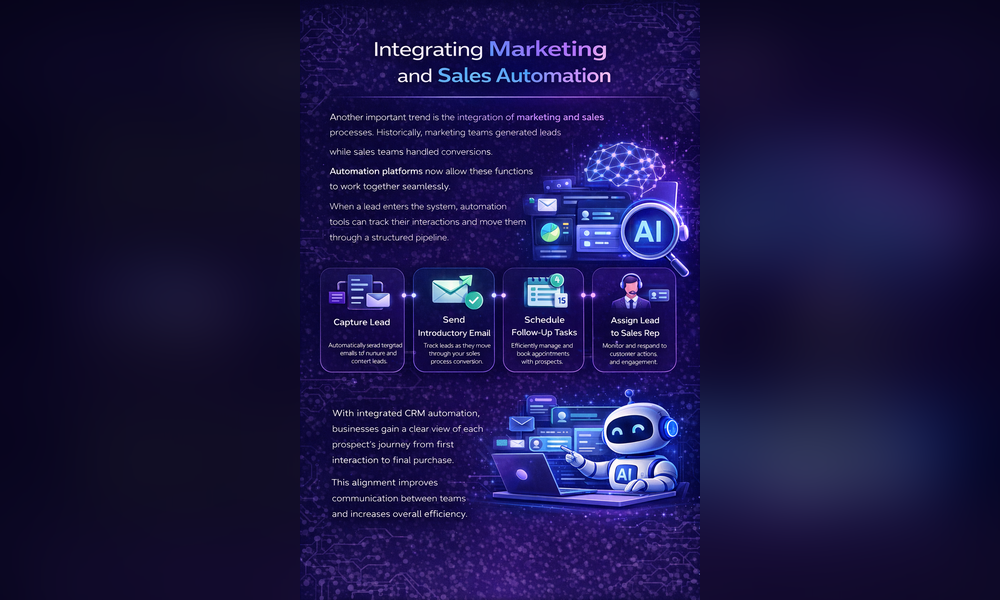
Integrating Marketing and Sales Automation
Another important trend is the integration of marketing and sales processes. Historically, marketing teams generated leads while sales teams handled conversions. Automation platforms now allow these functions to work together seamlessly. When a lead enters the system, automation tools can track their interactions and move them through a structured pipeline.
For example, after a lead fills out a contact form, the system may send an introductory email, schedule follow-up tasks, and assign the lead to a sales representative. With integrated CRM automation, businesses gain a clear view of each prospect’s journey from first interaction to final purchase. This alignment improves communication between teams and increases overall efficiency.
Real-Time Marketing Through Automation
Speed has become a critical factor in modern marketing. Customers expect quick responses and timely communication. Automation enables businesses to respond instantly to customer actions. For example, if a visitor downloads a resource, the system can immediately send a follow-up email with additional insights. If a customer abandons a shopping cart, an automated reminder can encourage them to complete the purchase. Real-time engagement through automation for businesses ensures that prospects receive relevant communication at the moment of highest interest. This responsiveness improves both engagement and conversion rates.
Data Integration Across Marketing Platforms
Modern businesses often use multiple marketing tools. These tools may include email platforms, social media management systems, CRM software, and analytics dashboards. Automation platforms help integrate these tools into a unified system. With integrated GHL automation, businesses can connect various marketing channels and ensure consistent communication across platforms. This integration allows marketing teams to track customer interactions across multiple touchpoints and deliver coordinated campaigns. The result is a more cohesive marketing strategy and improved customer experiences.
Continuous Optimization Through Analytics
Automation systems generate large amounts of performance data. Businesses can use this data to refine their strategies and improve campaign outcomes. Analytics dashboards allow marketers to evaluate metrics such as open rates, click-through rates, lead conversions, and customer engagement. By regularly analyzing this data, businesses can identify which strategies are most effective and adjust their campaigns accordingly. Combining analytics with lead generation automation helps businesses continuously improve their marketing processes.
Over time, this data-driven approach leads to stronger marketing performance and more consistent results. Marketing automation is rapidly transforming how businesses attract, engage, and retain customers. As technology continues to evolve, automation systems will become even more intelligent and capable. Trends such as AI marketing automation, advanced CRM automation, integrated GHL automation, and smarter lead generation automation are shaping the future of marketing. Businesses that adopt these technologies early will gain significant advantages in efficiency, personalization, and customer engagement.
Hyper-Personalization Through Automation
Another emerging trend in marketing automation is hyper-personalization. While traditional personalization focuses on using a customer’s name or basic demographic information, hyper-personalization goes much deeper.
With AI marketing automation, businesses can analyze large datasets that include browsing behavior, purchase history, engagement patterns, and customer preferences. This information allows companies to create highly personalized experiences for each individual customer.
For example, automated systems can recommend specific products, deliver customized email content, or present targeted offers based on a customer’s past interactions. These personalized experiences make customers feel understood and valued, thereby increasing engagement and improving conversion rates. Hyper-personalization also strengthens brand loyalty, as customers are more likely to return to businesses that consistently deliver relevant experiences.
Workflow Automation for Operational Efficiency
Marketing automation is not limited to customer communication. It also improves internal efficiency by streamlining operational workflows. By automating business processes, organizations can streamline repetitive tasks such as campaign scheduling, data entry, customer segmentation, and report generation.
For example, when a new lead enters the system, automation can instantly assign the lead to the appropriate sales representative, trigger follow-up messages, and update the CRM database. Integrating these processes with CRM automation reduces administrative work and enables teams to focus on high-value activities such as strategy development and relationship building.