

For many years, web analytics has been synonymous with dashboards, traffic reports, bounce rates, page views, and conversion tracking. Businesses have relied on analytics platforms to understand where visitors come from, how they interact with websites, and which marketing campaigns generate results. While these insights remain valuable, digital marketing has become significantly more complex. Customers interact with brands across multiple devices, search engines, social platforms, AI-powered search experiences, email campaigns, and numerous online touchpoints before making a purchase. Traditional reporting alone is no longer enough to understand these increasingly sophisticated customer journeys.
Artificial intelligence is changing the role of web analytics from a reporting tool into a decision-making system. Instead of simply displaying historical data, AI can identify hidden patterns, predict customer behavior, detect anomalies, uncover growth opportunities, and recommend strategic actions before marketers even recognize a problem. This shift allows businesses to move beyond measuring website performance and begin optimizing customer experiences in real time.
The future of analytics is no longer about collecting more data—it is about transforming data into intelligent business decisions. Organizations that successfully combine AI with web analytics gain a deeper understanding of customer intent, marketing efficiency, content performance, and long-term business growth.
At Your Cloud Hub, we believe the next generation of digital analytics will combine artificial intelligence, machine learning, predictive modeling, and business intelligence into a single, connected strategy. Whether businesses choose to hire AI developers, collaborate with machine learning experts, hire Google Analytics experts, work alongside a certified Google Analytics expert, or hire SEO consulting services, understanding how AI is transforming web analytics has become essential for remaining competitive in an increasingly data-driven marketplace.
Traditional Analytics Explains the Past—AI Helps You Prepare for the Future
One of the biggest limitations of conventional analytics is that it primarily explains what has already happened. Businesses can review website traffic, identify high-performing pages, analyze campaign performance, and measure conversions after users have completed specific actions. While this historical information is valuable, it often requires marketers to react after opportunities have already been gained or lost.
Artificial intelligence introduces a completely different approach.
Instead of focusing only on historical reports, AI continuously analyzes patterns across large volumes of behavioral data to identify trends that may influence future performance.
It recognizes subtle changes in customer engagement.
Detects emerging purchasing behavior.
Predicts which visitors are most likely to convert.
Identifies content likely to lose engagement.
Recommends improvements before performance declines.
This predictive capability transforms analytics from a passive reporting system into an active business intelligence platform.
Organizations that hire AI developers increasingly integrate machine learning into their analytics infrastructure because forecasting future behavior creates far greater strategic value than reviewing yesterday’s performance alone.
Customer Journeys Have Become Too Complex for Traditional Reporting
Today’s customers rarely follow a simple path before making a purchasing decision.
A potential customer might discover a business through an AI-generated search result, return later through organic search, read multiple blog articles, subscribe to an email newsletter, interact with social media content, attend a webinar, compare products, revisit pricing pages several times, and only then request a consultation or complete a purchase.
Traditional analytics platforms often struggle to capture the complete story behind these interactions.
Artificial intelligence helps connect these fragmented customer journeys by analyzing behavioral patterns across multiple sessions, channels, and devices.
Instead of evaluating isolated website visits, AI builds a broader understanding of customer intent and engagement.
Businesses working with hire machine learning experts are increasingly using AI models to understand which customer behaviors consistently lead to conversions and which interactions signal potential drop-offs.
This deeper level of insight helps marketing teams improve customer experiences while allocating resources more effectively across different channels.
AI Makes Web Analytics More Than Just Numbers
Raw analytics data can quickly become overwhelming.
Thousands of visitors.
Hundreds of pages.
Numerous traffic sources.
Dozens of campaigns.
Without context, dashboards often become collections of numbers rather than useful business insights.
Artificial intelligence changes this by identifying meaningful relationships within the data.
Instead of asking marketers to interpret every chart manually, AI highlights unusual patterns, prioritizes important trends, explains potential causes, and recommends actions based on observed customer behavior.
Rather than spending hours reviewing reports, businesses receive intelligent insights that support faster decision-making.
Companies choosing to hire Google Analytics expert professionals frequently combine advanced analytics implementation with AI-driven interpretation, allowing organizations to focus less on collecting reports and more on acting upon valuable insights.

AI Is Transforming Content Performance Analysis
Content marketing remains one of the most important strategies for attracting qualified visitors through search engines, AI search platforms, and digital marketing campaigns.
However, measuring content performance has become far more complicated than simply counting page views.
Businesses now want to understand:
Which articles generate qualified leads?
Which content builds trust?
Which pages influence purchasing decisions?
Which topics create long-term customer engagement?
Artificial intelligence helps answer these questions by analyzing behavioral signals far beyond traditional engagement metrics.
It identifies reading patterns.
Content depth.
Navigation behavior.
Return visits.
Conversion influence.
Audience segmentation.
Instead of evaluating articles independently, AI understands how individual pieces of content contribute to the complete customer journey.
Businesses partnering with a hire seo consultant increasingly combine AI-powered analytics with search optimization strategies, allowing them to create content based not only on current rankings but also on future customer interests and emerging search behavior.
This creates more sustainable organic growth while improving overall content strategy.
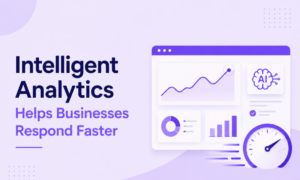
Intelligent Analytics Helps Businesses Respond Faster
Digital markets change continuously.
Customer preferences evolve.
Competitors launch new campaigns.
Search algorithms change.
Advertising costs fluctuate.
Consumer behavior shifts unexpectedly.
Waiting until monthly reports become available often means businesses respond too slowly.
Artificial intelligence enables continuous monitoring that detects important changes almost immediately.
Instead of discovering declining engagement weeks later, businesses receive early warnings that allow them to investigate problems while they remain manageable.
Likewise, positive trends can be identified quickly, allowing marketing teams to increase investment in successful campaigns before competitors react.
Organizations working alongside a certified Google Analytics expert often implement AI-assisted analytics environments that combine accurate measurement with proactive monitoring, creating significantly faster decision-making across marketing teams.
Rather than reacting to historical events, businesses become capable of responding to opportunities as they emerge.
AI Is Making Analytics Accessible to Every Business
In the past, advanced analytics often required dedicated data analysts capable of interpreting complex reports and statistical models.
Artificial intelligence is making sophisticated analysis accessible to a much broader range of organizations.
Instead of requiring specialized technical knowledge to identify trends, AI helps translate complex datasets into understandable business recommendations.
Marketing managers gain clearer insights.
Executives make faster strategic decisions.
Content teams understand audience behavior.
Sales departments identify stronger opportunities.
Business owners spend less time interpreting reports and more time acting upon meaningful information.
At Your Cloud Hub, we believe AI-powered analytics is democratizing business intelligence by helping organizations of every size make smarter decisions based on reliable data rather than assumptions.
The future of web analytics extends far beyond reporting dashboards. It is becoming an intelligent system that continuously learns, adapts, predicts, and supports business growth. Organizations that choose to hire AI developers, collaborate with hire machine learning experts, work alongside a Hire Google Analytics expert, consult a certified Google Analytics expert, and hire seo consultant professionals will be better prepared to transform website data into strategic advantages that drive measurable long-term success.
Predictive Analytics Is Becoming the New Competitive Advantage
The biggest shift in modern web analytics is the move from descriptive reporting to predictive intelligence. Businesses are no longer satisfied with understanding why traffic increased last month or why conversions declined during a particular campaign. They want to know what is likely to happen next and how they can influence future outcomes before opportunities are lost.
Artificial intelligence makes predictive analytics practical by continuously learning from historical data and identifying recurring behavioral patterns. Instead of waiting for a campaign to finish before evaluating its success, AI models estimate the likelihood of conversions, customer retention, revenue growth, and even seasonal demand while campaigns are still running.
For example, AI can recognize that visitors arriving from a particular traffic source consistently spend more time exploring service pages before becoming customers. It can identify that certain blog topics generate stronger lead quality even if they produce lower traffic numbers. It can also predict which users are likely to abandon a purchase journey and recommend actions that encourage them to continue.
These insights allow marketing teams to become proactive instead of reactive. Decisions are no longer based solely on historical reports but on intelligent forecasts that improve planning across advertising, content creation, customer engagement, and business development.
Organizations that hire AI developers are increasingly investing in predictive models because anticipating customer behavior provides a significant competitive advantage in markets where customer expectations continue evolving rapidly.
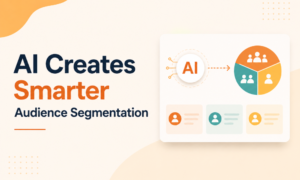
AI Creates Smarter Audience Segmentation
Traditional audience segmentation usually relies on demographic information such as age, location, device type, or referral source. While these categories remain useful, they often fail to explain why customers behave differently even when they appear similar on paper.
Artificial intelligence approaches audience segmentation from a behavioral perspective.
Instead of grouping visitors based only on demographics, AI evaluates browsing habits, content preferences, purchasing patterns, engagement frequency, session duration, navigation paths, and dozens of additional behavioral signals.
Two visitors from the same city may belong to completely different audience groups because one consistently researches educational content while the other immediately compares pricing and requests consultations.
This deeper understanding allows businesses to personalize website experiences with much greater precision.
Marketing messages become more relevant.
Landing pages become more targeted.
Product recommendations improve.
Sales teams prioritize higher-value prospects.
Businesses collaborating with hire machine learning experts often develop intelligent segmentation models that continuously evolve as customer behavior changes, ensuring marketing strategies remain effective over time instead of relying on outdated customer assumptions.
Real-Time Decision Making Is Replacing Static Monthly Reports
Many organizations still rely on weekly or monthly analytics reports to evaluate performance. Although these summaries remain useful for long-term planning, they often delay important business decisions.
Digital marketing changes far too quickly for delayed reporting.
Advertising costs fluctuate daily.
Search rankings shift frequently.
User behavior evolves continuously.
Competitor strategies change without warning.
Artificial intelligence enables businesses to monitor these changes in real time.
Instead of waiting until the end of the month to identify declining engagement, AI continuously evaluates website performance and alerts teams whenever unusual activity appears.
If traffic suddenly drops on an important landing page, marketers receive immediate notifications.
If conversion rates increase after publishing new content, businesses recognize successful strategies much sooner.
If customer engagement begins declining within a particular audience segment, AI identifies the trend before it significantly affects revenue.
Working with a Hire Google Analytics expert allows businesses to configure meaningful tracking events while combining AI-driven monitoring with accurate measurement frameworks. This ensures organizations focus on actionable insights rather than simply collecting more data.
AI Is Reshaping SEO Measurement
Search engine optimization has become considerably more complex than monitoring rankings for a handful of keywords.
Modern SEO includes traditional organic search, AI-generated search experiences, voice search, entity recognition, topical authority, user engagement signals, and content quality assessment.
Businesses need analytics capable of measuring all these evolving factors.
Artificial intelligence provides a much broader perspective by analyzing relationships between search visibility, user behavior, content engagement, and conversion performance.
Instead of asking whether a keyword improved in rankings, AI evaluates whether increased visibility attracted qualified visitors who eventually became customers.
It can identify which content topics establish authority.
Recognize gaps within existing content libraries.
Suggest emerging search opportunities.
Highlight declining search interest before rankings begin falling.
Businesses that hire seo consultant professionals increasingly combine AI-powered analytics with advanced SEO strategies to create sustainable organic growth instead of focusing only on short-term ranking improvements.
This integrated approach produces stronger long-term visibility while improving the quality of website traffic rather than simply increasing visitor numbers.
Privacy-Focused Analytics Will Shape the Future
The digital landscape continues changing as privacy regulations become stricter and third-party cookies become less reliable. Businesses can no longer depend exclusively on traditional tracking methods to understand customer behavior.
Artificial intelligence offers new approaches that rely more heavily on aggregated behavioral analysis, first-party data, contextual understanding, and predictive modeling.
Instead of tracking every individual interaction across multiple websites, AI learns from overall behavioral patterns while respecting evolving privacy expectations.
This transition encourages businesses to build stronger direct relationships with customers through their own websites, applications, CRM systems, and marketing platforms.
Organizations working with a certified Google Analytics expert often redesign measurement strategies around first-party data collection while integrating AI to compensate for reduced third-party tracking capabilities.
The result is a more sustainable analytics framework that balances business intelligence with customer privacy.
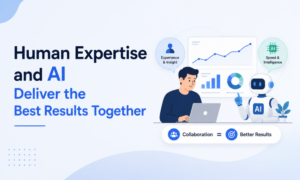
Human Expertise and AI Deliver the Best Results Together
Although artificial intelligence dramatically improves analytical capabilities, successful digital strategies still depend on experienced professionals who understand business objectives, customer psychology, and marketing strategy.
AI can process millions of data points within seconds.
It can detect patterns invisible to humans.
It can recommend actions based on historical behavior.
However, determining which opportunities align with long-term business goals still requires human judgment.
At Your Cloud Hub, we view AI as a strategic partner rather than a replacement for experienced professionals. Businesses achieve the greatest success when advanced technology works alongside skilled analysts, marketers, developers, and consultants who understand how to transform data into meaningful business growth.