


AI-Driven Personalization for Websites & Email
Digital marketing is becoming increasingly personalized, and customer expectations are evolving rapidly. Generic marketing messages and one-size-fits-all website experiences are no longer enough to capture attention or drive meaningful engagement. Modern consumers expect businesses to understand their needs, anticipate their interests, and deliver relevant experiences across every touchpoint.
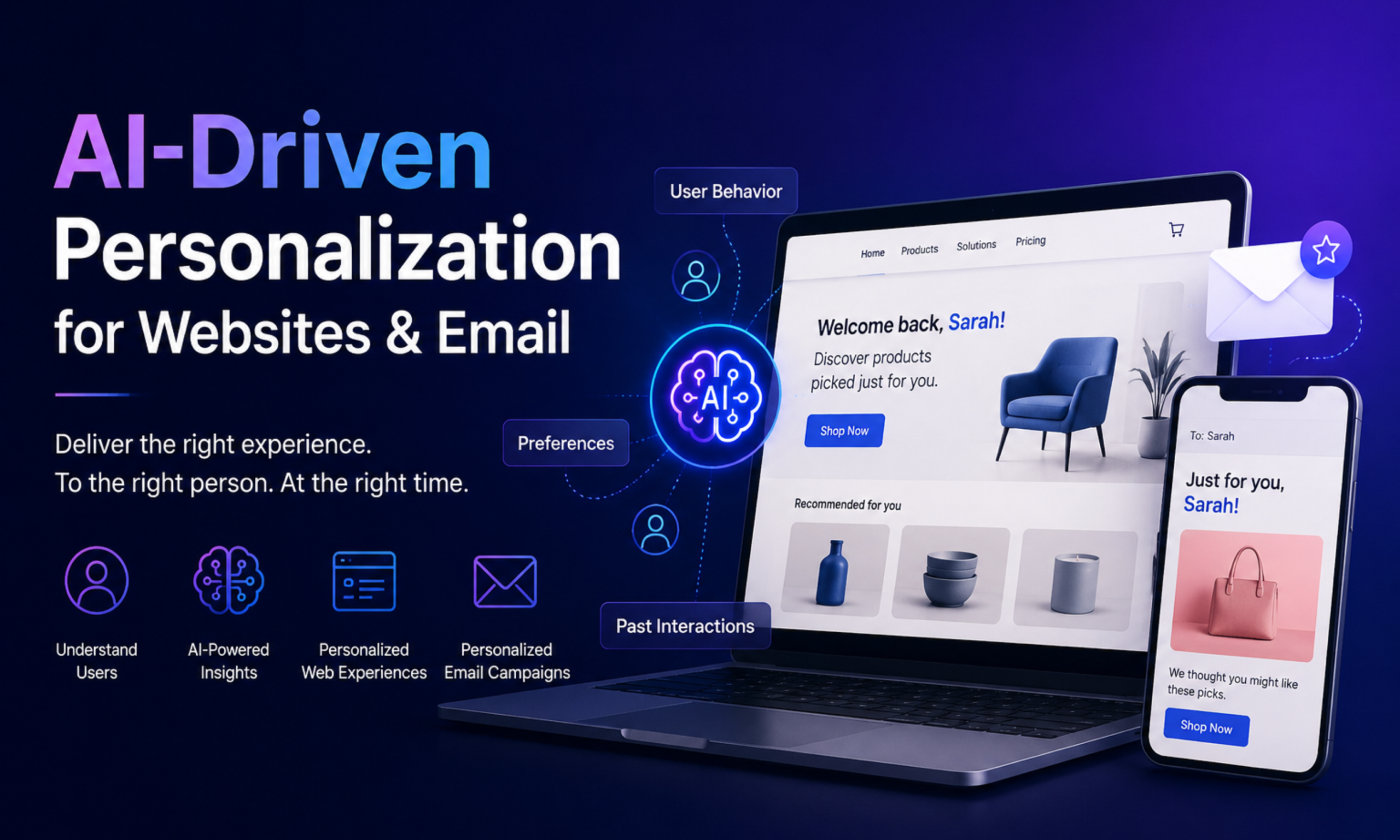
This shift has made artificial intelligence one of the most valuable technologies in modern marketing. AI-driven personalization allows businesses to analyze customer behavior, identify patterns, and deliver tailored website experiences and email communications that feel highly relevant to individual users.
At Your Cloud Hub, we believe personalization powered by artificial intelligence is no longer a luxury reserved for large enterprises. Businesses of all sizes can now leverage AI to improve customer engagement, increase conversions, and build stronger relationships.
Companies that hire AI developers and invest in intelligent personalization systems are creating more effective marketing strategies that adapt to customer behavior in real time. As digital competition intensifies, AI-driven personalization is quickly becoming a major competitive advantage.
Why Traditional Personalization Is No Longer Enough
For many years, businesses used basic personalization techniques such as inserting a customer’s first name into an email or displaying generic product recommendations based on broad audience categories.
While these approaches were effective in the past, customer expectations have become significantly more sophisticated.
Modern consumers interact with brands across multiple devices, platforms, and channels. They expect businesses to understand their preferences, previous interactions, purchasing behavior, and content interests.
Traditional personalization methods often struggle to keep up with this complexity because they rely heavily on static rules and manual segmentation.
Organizations that hire AI engineers are increasingly replacing traditional personalization systems with intelligent models that automatically analyze vast amounts of customer data.
This shift allows businesses to create dynamic experiences that evolve continuously based on real-time customer behavior.
How AI Personalizes Website Experiences
A website is often the first interaction a customer has with a business. AI-driven personalization helps ensure that this experience feels relevant from the moment a visitor arrives.
Artificial intelligence can analyze factors such as:
Browsing history
Location
Device type
Previous website visits
Content preferences
Purchase behavior
Engagement patterns
Using this information, AI can customize website content, recommendations, calls-to-action, and navigation paths based on individual user behavior.
For example, a returning visitor may see different homepage content than a first-time visitor. A prospect interested in a specific service may receive tailored recommendations designed to guide them toward conversion.
Businesses that hire AI developers frequently implement intelligent recommendation systems that improve user engagement while increasing conversion opportunities.
Personalized website experiences create stronger customer relationships because visitors feel understood rather than treated as anonymous users.
AI Improves Customer Journey Optimization
One of the biggest advantages of artificial intelligence is its ability to understand customer journeys at a deeper level.
Traditional analytics often show what users are doing, but AI helps explain why they are behaving in specific ways.
By analyzing customer interactions across multiple touchpoints, AI can identify patterns that reveal user intent, interests, and conversion readiness.
This allows businesses to create more effective customer journeys that guide visitors toward desired actions.
Organizations that work with experienced AI specialists often use predictive analytics to identify which users are most likely to convert and what type of content or offers are most likely to influence their decisions.
These insights help businesses optimize website experiences while improving overall marketing performance.
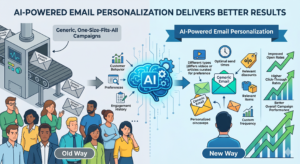
AI-Powered Email Personalization Delivers Better Results
Email marketing remains one of the highest-performing digital marketing channels, but its effectiveness depends heavily on relevance.
Generic email campaigns often struggle because they fail to address individual customer needs.
AI-powered email personalization transforms this process by creating highly targeted communication based on customer behavior, preferences, and engagement history.
Artificial intelligence can determine:
Which content do users prefer
When subscribers are most likely to open emails
What offers resonate most strongly
Which products are most relevant
How frequently should communication occur
Businesses that hire AI engineer professionals often build advanced email systems that adapt automatically to customer behavior.
This level of personalization helps improve open rates, click-through rates, engagement levels, and overall campaign performance.
Predictive Personalization Creates Smarter Marketing
One of the most powerful capabilities of AI is prediction.
Instead of reacting solely to past behavior, artificial intelligence can forecast future actions and customer needs.
Predictive personalization allows businesses to anticipate what customers may want before they actively request it.
For example, AI may identify users who are likely to purchase certain products, require additional services, or become inactive without intervention.
Companies that employ experienced AI specialists often leverage predictive models to create proactive marketing campaigns that improve customer engagement and retention.
Predictive personalization helps businesses stay one step ahead while delivering more relevant experiences.
Real-Time Personalization Increases Conversion Rates
Timing plays a critical role in digital marketing success.
Customers are more likely to engage when businesses deliver the right message at the right moment.
AI-powered systems can analyze user behavior in real time and adjust website content, offers, recommendations, and communication accordingly.
For example, if a visitor repeatedly views a particular service page, the website may automatically display a related consultation offer or case study.
Businesses that have AI developers for hire frequently implement real-time personalization systems that respond instantly to customer behavior.
This dynamic approach often leads to higher engagement and stronger conversion rates because experiences remain highly relevant throughout the customer journey.
AI Helps Businesses Create Better Customer Segments
Traditional customer segmentation often relies on basic demographic information or manual categorization.
Artificial intelligence takes segmentation to an entirely new level.
AI can identify hidden patterns within customer data and create highly detailed audience segments based on behavior, interests, purchasing habits, and engagement history.
This allows businesses to deliver more targeted marketing experiences while improving campaign efficiency.
Organizations that hire AI developers often use machine learning algorithms to continuously refine audience segments as customer behavior evolves.
More accurate segmentation leads to stronger personalization and better overall marketing performance.
Personalization Builds Trust and Customer Loyalty
Customers are more likely to engage with businesses that provide relevant and meaningful experiences.
When marketing messages, website content, and product recommendations align with customer needs, interactions feel more valuable and less intrusive.
AI-driven personalization helps businesses build stronger relationships by demonstrating a deeper understanding of customer preferences.
Companies working with experienced AI specialists often see improvements in customer satisfaction, retention, and long-term loyalty because personalization creates more positive experiences.
Trust is one of the most valuable assets a business can build, and AI helps strengthen that trust through relevance and consistency.
The Future of AI-Driven Personalization
Artificial intelligence continues evolving rapidly, and personalization capabilities are becoming increasingly sophisticated.
Future AI systems are expected to deliver even greater levels of customization through advanced predictive analytics, conversational AI, behavioral modeling, and cross-channel personalization.
Businesses that hire AI engineer professionals today are building the infrastructure needed to take advantage of these future developments.
Organizations investing in AI-driven personalization early are likely to gain significant competitive advantages as customer expectations continue rising.
The future of digital marketing will belong to businesses that can deliver highly relevant experiences at scale.
How AI Personalization Improves Lead Generation Quality
One of the biggest challenges businesses face is not generating leads but generating the right leads. Traditional marketing often casts a wide net, attracting visitors who may have little interest in the products or services being offered. This results in lower conversion rates, wasted marketing budgets, and inefficient sales processes.
AI-driven personalization helps solve this problem by ensuring that users receive content, recommendations, and offers that align with their specific interests and behaviors. Instead of presenting every visitor with the same website experience, artificial intelligence can dynamically adapt messaging based on user intent and engagement patterns.
Businesses that hire AI developers are increasingly implementing intelligent personalization systems that qualify leads before they even enter the sales process. By analyzing browsing behavior, content interactions, and engagement signals, AI can identify which visitors are most likely to convert and guide them toward relevant actions.
At Your Cloud Hub, we have seen how personalized digital experiences can dramatically improve lead quality while helping businesses focus their efforts on prospects with the highest potential value.
AI Makes Email Marketing More Human, Not Less
Many people assume that artificial intelligence makes communication feel robotic. In reality, when implemented correctly, AI often makes marketing feel more personal and human.
Traditional email campaigns typically involve sending the same message to large groups of subscribers. While segmentation can improve targeting, these campaigns often fail to account for individual preferences and behaviors.
AI-powered email systems can analyze how each subscriber interacts with content and automatically adjust communication strategies based on those interactions. This may include recommending different content, changing message frequency, optimizing send times, or personalizing offers based on previous engagement.
Organizations that hire AI engineers frequently build intelligent email systems that adapt continuously to customer behavior. Instead of forcing customers into predefined communication paths, AI allows businesses to create more natural and responsive experiences.
The result is stronger engagement, improved customer satisfaction, and higher conversion rates across email campaigns.
Behavioral Data Is the Fuel Behind AI Personalization
Artificial intelligence becomes more effective as it gains access to meaningful customer data.
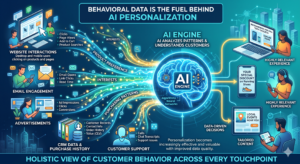
Every interaction a customer has with a website, email, advertisement, or digital platform creates valuable behavioral insights. AI systems analyze these interactions to understand customer preferences, interests, and purchasing patterns.
This information allows businesses to move beyond assumptions and make data-driven decisions about how to engage users effectively.
Companies that work with experienced AI specialists often build personalization systems that combine data from multiple sources, including websites, CRM platforms, email marketing tools, and customer support interactions.
This holistic view of customer behavior enables more accurate personalization and helps businesses create highly relevant experiences across every touchpoint.
As data quality improves, personalization becomes increasingly effective and valuable.
AI Can Personalize the Entire Customer Journey
Many businesses focus their personalization efforts only on individual marketing campaigns. However, the true power of artificial intelligence lies in its ability to personalize the entire customer journey.
From the first website visit to post-purchase engagement, AI can help ensure that every interaction feels relevant and meaningful.
For example, a visitor researching a particular service may see tailored website content, receive personalized email recommendations, and encounter highly relevant follow-up communication based on previous engagement.
Businesses that leverage AI developers for hire often build customer journey systems that adapt dynamically as customer behavior changes.
This creates a seamless experience that strengthens trust and improves the likelihood of conversion at every stage of the relationship.
Personalization is no longer limited to isolated marketing activities. It is becoming a foundational component of modern customer experience strategies.
Why Businesses Need AI Expertise to Stay Competitive
As artificial intelligence becomes more integrated into marketing technology, businesses that fail to adopt AI-driven personalization may struggle to remain competitive.
Customers increasingly expect personalized experiences because major brands have already set new standards for relevance and convenience.
Organizations that continue relying solely on traditional marketing methods risk falling behind competitors that use AI to improve engagement, optimize communication, and enhance customer experiences.
This is why many companies choose to hire AI developers and work with experienced AI specialists who understand how to design, implement, and optimize intelligent personalization systems.
At Your Cloud Hub, we believe businesses that invest in AI expertise today are building a stronger foundation for future growth. As customer expectations continue evolving, AI-driven personalization will become a critical factor influencing brand loyalty, customer retention, and long-term business success.
AI Personalization Helps Reduce Marketing Costs
One often overlooked benefit of AI-driven personalization is cost efficiency.
Traditional marketing campaigns frequently waste resources by targeting broad audiences with generic messaging. This approach often leads to lower engagement rates and higher acquisition costs.
Artificial intelligence improves efficiency by ensuring that marketing efforts focus on the right audience with the right message at the right time.
Companies that hire AI engineer professionals often discover that personalized campaigns generate stronger results while requiring fewer resources. Improved targeting leads to higher conversion rates, reduced advertising waste, and better overall return on investment.
By increasing marketing precision, AI helps businesses achieve more with the budgets they already have.
This combination of improved performance and reduced waste makes personalization one of the most valuable applications of artificial intelligence in modern marketing.
The Future of Personalization Is Predictive and Autonomous
The next generation of AI personalization will go far beyond simple recommendations and dynamic content.
Future systems will become increasingly predictive, using advanced machine learning models to anticipate customer needs before they are explicitly expressed.
These systems will be capable of identifying potential buying signals, predicting customer behavior, and automatically adjusting marketing strategies in real time.
Businesses working with experienced AI specialists are already beginning to explore predictive personalization technologies that enable more proactive engagement strategies.
Organizations that invest in these capabilities today will be better positioned to meet future customer expectations and maintain competitive advantages as digital experiences continue evolving.
The future of marketing belongs to businesses that can combine data, intelligence, and personalization into seamless customer experiences.