


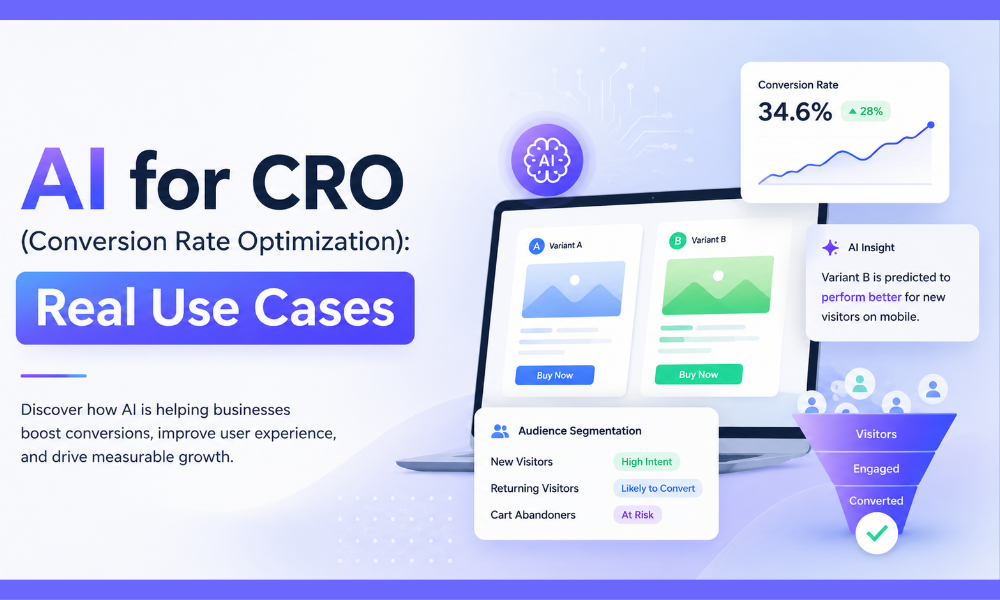
Conversion Rate Optimization is becoming one of the most important areas of digital growth for modern businesses. Driving traffic to a website is no longer enough if visitors fail to take action, engage with content, or convert into customers. Artificial intelligence is transforming the way businesses approach CRO by helping companies analyze user behavior, personalize customer experiences, automate testing, and optimize conversion strategies in real time.
Instead of relying only on assumptions and manual analysis, businesses are now using intelligent systems to improve website performance and customer journeys more efficiently. Companies that hire AI developers are increasingly building AI-powered optimization systems that improve engagement, reduce friction, and increase conversions across digital platforms.
AI-Powered Personalization Is Increasing Conversion Rates
Personalization has become one of the most effective applications of AI in conversion optimization. Modern users expect websites and digital experiences to adapt to their interests, behavior, and preferences. Generic messaging and static experiences are becoming less effective because they fail to address individual customer intent. AI systems can analyze visitor behavior in real time and dynamically adjust website content, recommendations, calls-to-action, and messaging based on user activity.
For example, returning visitors may see personalized offers, while new users may receive educational content designed to build trust. Businesses that hire AI engineer professionals often create personalization engines that improve user engagement and increase conversion potential through highly relevant experiences.
AI Improves User Behavior Analysis
Traditional CRO strategies often focus on surface-level metrics such as bounce rates, page views, and click-through rates. Artificial intelligence provides much deeper insights into customer behavior by analyzing patterns that may not be obvious through standard analytics alone. AI systems can evaluate scroll behavior, interaction timing, navigation flow, engagement patterns, and drop-off points to identify what influences user decisions.
This allows businesses to understand why visitors abandon pages, where friction occurs, and what elements encourage conversions. Organizations working with experienced AI specialists are increasingly using behavioral analysis systems to improve website design, customer journeys, and content placement strategies.
Predictive Analytics Helps Identify High-Intent Visitors
Predictive analytics is becoming a major advantage in AI-driven CRO strategies. Instead of waiting for users to convert or leave a website, AI systems can predict which visitors are most likely to take action based on behavioral signals and engagement data. This allows businesses to prioritize high-intent users and deliver targeted experiences that improve conversion opportunities.
Companies that hire AI developers for hire frequently implement predictive systems that trigger personalized recommendations, chatbot interactions, or special offers for users showing strong buying intent. Predictive optimization helps businesses maximize the value of their website traffic while improving efficiency.
AI Chatbots Improve Conversion Performance
AI-powered chatbots are becoming an essential part of modern CRO strategies. Many users leave websites because they cannot find information quickly or because they experience delays in communication. AI chatbots solve this problem by engaging visitors instantly, answering questions, and guiding users through the customer journey in real time.
Businesses that hire AI developers often integrate conversational AI systems into websites and landing pages to reduce friction and improve lead generation. Instant communication improves engagement and increases the likelihood of conversion by keeping users connected to the business.
Automated A/B Testing Accelerates Optimization
A/B testing has long been an important part of conversion optimization, but traditional testing methods can be slow and resource-intensive. AI-powered testing systems automate this process by continuously analyzing performance and testing variations of website elements such as headlines, buttons, layouts, images, and calls-to-action. Artificial intelligence can quickly identify which combinations perform best and automatically adapt pages based on user behavior.
Organizations that hire AI engineers frequently implement automated testing systems that improve optimization speed and reduce manual effort. This allows businesses to refine digital experiences continuously and respond faster to changing customer behavior.
AI Improves Product Recommendation Systems
AI-driven recommendation engines are becoming highly effective tools for improving e-commerce conversions. These systems analyze customer browsing history, engagement patterns, and purchasing behavior to recommend products or services that align with user interests. Personalized recommendations create more relevant shopping experiences and encourage users to continue engaging with the platform.
Companies working with experienced AI specialists often use recommendation systems as part of broader CRO strategies focused on increasing engagement and boosting revenue. Recommendation engines improve both customer satisfaction and conversion performance.
AI Enhances Landing Page Optimization
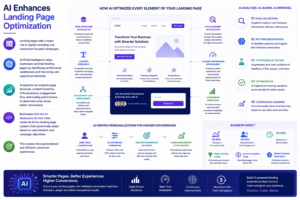
Landing pages play a major role in digital marketing and conversion-focused campaigns. Artificial intelligence helps businesses optimize landing pages by identifying performance weaknesses and improving user experience elements. AI systems can evaluate page structure, content hierarchy, CTA placement, engagement flow, and loading performance to determine what drives better conversions.
Businesses that hire AI developers for hire often create AI-driven landing page systems that dynamically adapt based on user behavior and campaign objectives. This creates more personalized and efficient conversion experiences.
AI Helps Reduce Cart Abandonment
Cart abandonment remains a significant challenge for e-commerce businesses. Artificial intelligence helps address this issue by identifying behavioral patterns that indicate hesitation or purchase intent. AI systems can trigger personalized reminders, support messages, discount offers, or product recommendations at strategic moments during the checkout process.
Organizations that hire AI developers increasingly use AI-driven retention workflows to recover abandoned purchases and improve overall sales performance. Reducing friction during checkout leads to stronger conversion rates and better customer experiences.
AI Improves Mobile Conversion Optimization
Mobile traffic continues to dominate digital interactions, making mobile optimization essential for modern businesses. AI systems help companies understand how mobile users interact differently from desktop visitors and identify usability issues that reduce engagement. This includes optimizing mobile navigation, page speed, content structure, and touch interactions.
Businesses working with experienced AI specialists often prioritize AI-powered mobile optimization strategies because mobile conversion behavior is becoming increasingly important in digital marketing performance. Improved mobile experiences lead to higher engagement and better conversion outcomes.
Real-Time Optimization Is Changing CRO Strategies
One of the most powerful advantages of AI-driven CRO is real-time adaptability. Traditional optimization strategies often rely on delayed analysis and periodic updates. AI systems continuously monitor user behavior and adjust experiences dynamically based on live data. This allows businesses to optimize customer journeys instantly instead of waiting for manual analysis cycles.
Companies that hire AI engineer professionals are increasingly building systems capable of adapting website experiences automatically to improve engagement and conversion performance in real time. Real-time optimization creates more responsive and efficient digital experiences.
AI Improves Digital Marketing Campaign Performance
Conversion optimization extends beyond websites and landing pages alone. AI is also improving the effectiveness of digital marketing campaigns by optimizing targeting, segmentation, creative performance, and campaign timing. Artificial intelligence helps businesses attract more qualified traffic and improve marketing ROI by identifying which audiences are most likely to convert.
Organizations that hire AI developers for hire often integrate AI-powered CRO systems directly into PPC, social media, and email marketing campaigns to improve overall acquisition performance. This integrated approach strengthens both marketing efficiency and conversion quality.
The Future of AI in Conversion Optimization
AI-driven CRO technology is evolving rapidly and becoming more intelligent every year. Future systems are expected to provide advanced predictive modeling, emotion-based personalization, autonomous optimization, and highly adaptive customer journey management. Businesses that adopt AI-powered conversion strategies early will gain significant competitive advantages in customer acquisition and digital engagement.
Companies working with experienced AI specialists are already preparing for this future by building scalable AI optimization frameworks that evolve alongside changing user behavior and technology trends. Artificial intelligence is transforming Conversion Rate Optimization by making digital experiences smarter, faster, and more personalized.
From predictive analytics and automated testing to chatbot engagement and dynamic personalization, AI is helping businesses improve customer experiences and increase conversions more efficiently than traditional methods. Organizations that choose to hire AI developers, collaborate with professionals who hire AI engineer experts, and work with experienced AI specialists can build intelligent CRO systems designed for scalable growth and long-term performance improvement.
AI Helps Businesses Understand Customer Intent More Accurately
One of the biggest challenges in Conversion Rate Optimization is understanding what users actually want when they visit a website. Traditional analytics tools provide surface-level metrics, but artificial intelligence can analyze deeper behavioral patterns and identify customer intent with much greater accuracy. AI systems evaluate browsing behavior, interaction timing, content engagement, and navigation flow to determine what users are looking for and how likely they are to convert.
This allows businesses to create more relevant experiences that align with customer expectations. Companies that hire AI developers are increasingly building intelligent intent-analysis systems that improve targeting, personalization, and conversion performance across digital platforms.
AI-Powered CRO Reduces Guesswork in Optimization
Traditional CRO strategies often involve testing assumptions manually and waiting for enough data before making decisions. Artificial intelligence reduces this guesswork by continuously analyzing performance and identifying optimization opportunities automatically. AI systems can quickly determine which page layouts, content structures, or messaging variations are driving better engagement and conversions.
This creates faster optimization cycles and allows businesses to improve digital experiences more efficiently. Organizations that hire AI engineers frequently implement AI-driven CRO frameworks that automate data analysis and performance optimization across websites and marketing campaigns.
Personalized Customer Journeys Increase Engagement
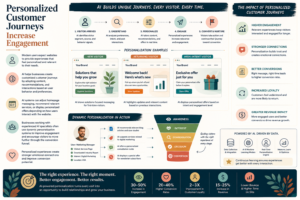
Modern users expect websites to provide experiences that feel personalized and relevant to their needs. AI helps businesses create customized customer journeys by adapting content, recommendations, and interactions based on user behavior and preferences. For example, AI systems can adjust homepage messaging, recommend relevant services, or display personalized offers depending on how users interact with the website.
Businesses working with experienced AI specialists often use dynamic personalization systems to improve engagement and encourage visitors to move further through the conversion funnel. Personalized experiences create stronger emotional connections and improve conversion potential.
AI Improves Form Optimization and Lead Capture
Long or poorly designed forms are one of the biggest causes of conversion drop-offs. Artificial intelligence helps businesses optimize lead capture forms by analyzing user interaction patterns and identifying friction points. AI systems can recommend shorter form structures, adaptive field displays, and personalized form experiences that improve completion rates.
Some AI-driven systems even adjust forms dynamically based on user behavior to reduce unnecessary complexity. Companies that hire AI developers for hire increasingly integrate intelligent form optimization into websites and landing pages to improve lead generation performance.
AI Helps Optimize Call-to-Action Performance
Calls-to-action play a major role in conversion success, but their effectiveness often depends on timing, placement, wording, and design. Artificial intelligence can analyze how users interact with CTAs and identify which variations perform best across different audience segments.
AI systems help businesses optimize button placement, messaging tone, visual emphasis, and timing to improve user response. Organizations that hire AI developers frequently use AI-powered CTA optimization systems to increase click-through rates and improve conversion efficiency across websites and campaigns.
AI Enhances Customer Segmentation Strategies
Customer segmentation is becoming more advanced with the help of artificial intelligence. Instead of relying only on demographic data, AI systems can segment users based on behavior, engagement patterns, purchase intent, and browsing activity. This allows businesses to create highly targeted experiences for different audience groups.
Businesses working with experienced AI specialists often build segmentation systems that improve personalization, targeting accuracy, and conversion performance. Smarter segmentation leads to more relevant customer experiences and stronger engagement.
AI Improves E-commerce Conversion Performance
E-commerce businesses are among the biggest adopters of AI-driven CRO strategies. Artificial intelligence helps e-commerce brands optimize product recommendations, pricing strategies, checkout experiences, and customer journeys in real time. AI systems can identify purchasing patterns, predict buying intent, and recommend actions that encourage conversions.
Companies that hire AI engineers frequently implement AI-driven ecommerce systems designed to improve cart completion rates, increase average order values, and strengthen customer retention. This level of automation creates more efficient and scalable ecommerce experiences.
AI Supports Better Content Optimization
Content plays a major role in conversion performance, and AI is helping businesses optimize content more effectively. Artificial intelligence can analyze which headlines, messaging styles, visual elements, and content structures generate stronger engagement. AI-powered systems can also identify content gaps and recommend improvements that align better with user intent.
Organizations that hire AI developers for hire often integrate content optimization tools into broader CRO systems to improve website performance and customer engagement simultaneously. This creates more data-driven content strategies that support long-term growth.
AI Helps Businesses Adapt Faster to User Behavior Changes
Customer behavior changes constantly due to trends, technology shifts, and evolving expectations. Traditional optimization strategies often struggle to adapt quickly enough to these changes. AI-powered CRO systems continuously monitor user behavior and adjust experiences dynamically based on real-time data.
This adaptability allows businesses to respond faster to changes in customer preferences and digital interaction patterns. Companies that hire AI developers are increasingly investing in adaptive optimization systems that evolve alongside changing market conditions and user expectations.