


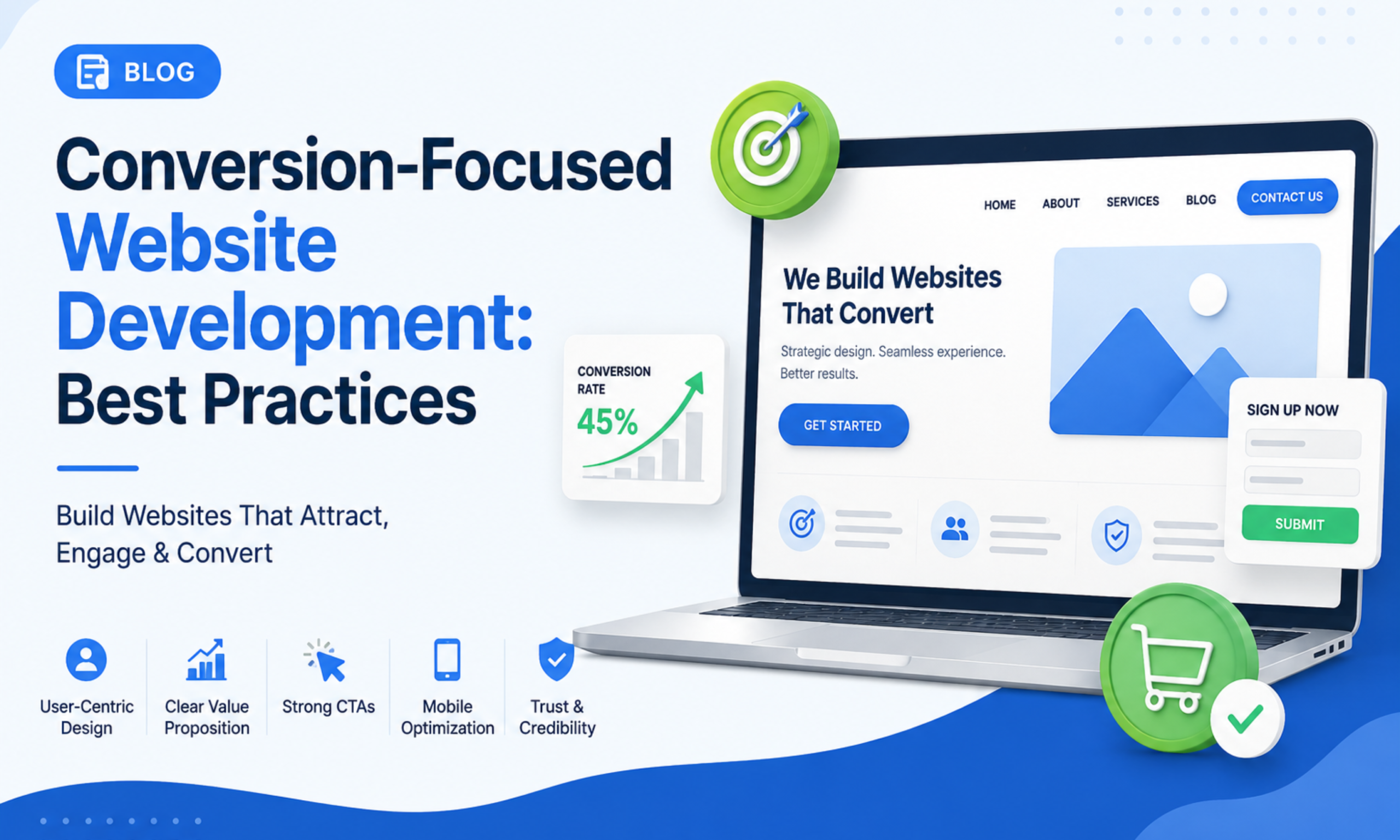
A visually attractive website may create a strong first impression, but if visitors leave without taking action, the website is failing to achieve its primary objective. Conversion-focused website development is the process of designing and building websites that guide users toward meaningful actions such as filling out a form, requesting a consultation, making a purchase, or contacting a business.
As customer expectations continue evolving, businesses are increasingly choosing to hire web designer professionals who understand both design and conversion psychology. A successful website combines user experience, performance, messaging, and strategic design principles to maximize business results.
Whether a company decides to hire website designer experts, work with a freelance website designer, or outsource web design projects entirely, the goal remains the same: creating a website that turns traffic into measurable business growth.
Understanding User Intent Before Designing the Website
One of the most important foundations of conversion-focused website development is understanding why visitors arrive on the website in the first place. Every user has a specific goal, question, challenge, or need that motivates their visit. Some visitors may be researching information, while others may be comparing providers or actively looking to purchase a service.
A website that fails to address these needs quickly often loses potential customers within seconds.
Businesses that hire web design professionals in India frequently begin projects with extensive audience research to understand customer behavior, pain points, and decision-making patterns.
When website content, design, and navigation align with user intent, visitors can move through the customer journey more naturally. This increases engagement, improves trust, and significantly enhances conversion potential.
Understanding the customer should always come before choosing colors, layouts, or design elements.
Clear Messaging Drives Better Conversions
One of the biggest reasons websites fail to convert is unclear messaging.
Visitors should immediately understand what a business offers, who it serves, and why it is different from competitors. If users must spend time figuring out what a company does, they often leave before exploring further.
Conversion-focused websites prioritize clarity above all else.
The homepage should communicate value quickly and confidently. Headlines should address customer needs directly, while supporting content should explain the benefits in simple, persuasive language.
Businesses that hire website designer professionals often see significant improvements in conversion rates because experienced designers understand how messaging and visual presentation work together.
A website should answer key customer questions immediately while guiding visitors toward the next step in the buying journey.
Website Speed Directly Impacts Conversion Rates
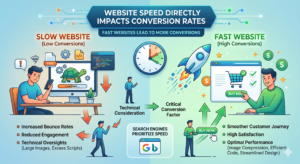
Page speed is no longer just a technical consideration. It is a critical conversion factor. Modern users expect websites to load quickly across all devices. Delays of even a few seconds can increase bounce rates and reduce engagement significantly. Search engines also prioritize fast-loading websites because speed contributes to overall user experience.
Companies that outsource web design projects often overlook performance optimization in favor of visual complexity. However, websites overloaded with large images, excessive animations, and unnecessary scripts frequently struggle to convert visitors effectively.
A conversion-focused website balances design quality with performance optimization. Fast websites improve user satisfaction, increase session duration, and create a smoother customer journey that supports stronger conversion outcomes.
Mobile-First Development Is Essential
Mobile traffic now accounts for a significant percentage of online activity across most industries. Despite this reality, many websites are still designed primarily for desktop users. A conversion-focused website must deliver an exceptional mobile experience because customers increasingly browse, research, and engage with businesses through smartphones and tablets.
Businesses that hire web designers in India often prioritize mobile-first development strategies to ensure consistent experiences across all devices.
Mobile optimization involves more than responsive design. It requires intuitive navigation, fast loading speeds, easy-to-read content, and streamlined forms that function seamlessly on smaller screens.
When mobile users encounter friction, conversions decline quickly.
A strong mobile experience is no longer optional. It is essential for modern website success.
Strategic Calls-to-Action Guide User Behavior
Every conversion-focused website should have a clear objective.
Whether the goal is generating leads, booking consultations, or driving purchases, visitors need guidance throughout the customer journey.
Calls-to-action play a crucial role in this process. Effective CTAs help users understand exactly what action they should take next.
Businesses that hire web designer experts often improve conversion performance by strategically placing calls-to-action throughout the website rather than relying on a single contact button. Strong CTAs use clear language, create urgency where appropriate, and align with customer intent. A website should never leave visitors wondering what to do next. The easier it is for users to take action, the higher the likelihood of conversion.
Trust Signals Increase Customer Confidence
Trust is one of the most important factors influencing online conversions.
Before submitting personal information or making purchasing decisions, users want reassurance that they are dealing with a credible business.
Conversion-focused websites incorporate trust signals throughout the user journey. These may include customer testimonials, reviews, case studies, certifications, awards, security badges, and social proof.
Businesses that choose to outsource website design projects often discover that trust-building elements significantly influence conversion rates.
Visitors are more likely to engage when they feel confident in the business’s expertise and reliability. Trust reduces hesitation and helps move prospects closer to action.
Website Structure Should Support Decision-Making
Many websites fail because they overwhelm visitors with too much information. A conversion-focused website presents information in a logical sequence that supports customer decision-making.
Content should be organized strategically so users can easily understand benefits, explore solutions, evaluate credibility, and take action.
Businesses that work with a freelance website designer experienced in conversion optimization often create cleaner user journeys that reduce friction and improve engagement.
The goal is to guide visitors through a structured experience rather than forcing them to search for answers independently. A well-organized website makes decision-making easier and improves conversion performance.
Content Must Support Both SEO and Conversions
Many businesses mistakenly treat SEO and conversion optimization as separate disciplines. In reality, they work best together.
SEO attracts visitors, while conversion-focused content helps turn those visitors into customers.
Businesses that hire website designer professionals often integrate SEO considerations into the development process from the beginning. This includes optimizing content structure, improving readability, supporting search intent, and creating clear user pathways.
A successful website attracts qualified traffic while simultaneously encouraging meaningful engagement. The most effective websites are designed for both search engines and human users.
Why Data-Driven Design Decisions Lead to Better Conversion Rates
One of the biggest mistakes businesses make during website development is relying entirely on assumptions. Many companies choose layouts, colors, content placement, and user journeys based on personal preferences rather than actual user behavior. While visual appeal is important, conversion-focused website development requires decisions that are supported by data rather than opinions.
Modern websites generate valuable insights about how visitors interact with pages, where they spend time, what content they engage with, and where they leave the website. These insights help businesses understand what is working and what needs improvement. Companies that hire web designer professionals with experience in conversion optimization often use analytics tools, heatmaps, user recordings, and conversion tracking to guide design decisions throughout the development process.
Data-driven design allows businesses to continuously refine their websites based on real user behavior. Instead of guessing what visitors want, organizations can make informed adjustments that improve engagement and increase conversion rates. In an increasingly competitive digital environment, businesses that use data to optimize website performance often achieve significantly stronger results than those relying solely on design trends or subjective preferences.
Landing Pages Should Be Built for Specific Conversion Goals
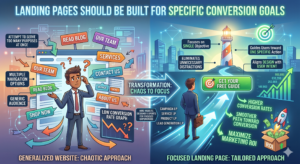
Many websites struggle to convert because they attempt to serve too many purposes at once. A visitor arriving from a paid advertisement has different expectations than someone reading a blog article or exploring a company’s service offerings. This is why dedicated landing pages play such an important role in conversion-focused website development.
A well-designed landing page focuses on a single objective and eliminates unnecessary distractions. Rather than presenting multiple navigation options and competing messages, the page guides users toward one specific action. Businesses that hire website designer experts often create specialized landing pages for campaigns, services, products, and lead generation initiatives because focused experiences typically produce higher conversion rates.
When businesses outsource web design, one of the most valuable investments they can make is developing custom landing pages tailored to different audience segments and marketing channels. By aligning messaging, design, and calls-to-action with user intent, landing pages help create a smoother path toward conversion while maximizing marketing return on investment.
The Role of Visual Hierarchy in Website Conversions
Visual hierarchy is one of the most powerful yet often overlooked aspects of website development. Every page communicates information, but not all information should receive equal attention. Visitors naturally scan content rather than reading every word, which means websites must guide attention strategically.
Effective visual hierarchy uses layout, spacing, typography, imagery, and design structure to direct users toward the most important information first. Businesses that work with a freelance website designer experienced in conversion optimization understand that the placement of headlines, value propositions, testimonials, and calls-to-action can significantly influence user behavior.
A website should make it easy for visitors to understand what the business offers, why it matters, and what action they should take next. When visual hierarchy is poorly executed, users often become confused or overwhelmed. When implemented correctly, it creates a seamless experience that encourages engagement and supports higher conversion rates.
Ongoing Optimization Is Essential for Long-Term Success
Many businesses treat website development as a one-time project. Once the website launches, they move on to other priorities and rarely revisit performance metrics. However, conversion-focused websites require continuous optimization to remain effective.
Customer expectations change, market conditions evolve, competitors improve their offerings, and user behavior shifts over time. A website that performs well today may not deliver the same results six months or a year from now. Businesses that hire web designers in India professionals for ongoing support often achieve stronger long-term performance because they continuously test, analyze, and improve key website elements.
Ongoing optimization may involve refining content, updating calls-to-action, improving page speed, enhancing mobile experiences, or testing new conversion strategies. The most successful websites are not static assets. They are continuously evolving platforms designed to adapt to changing customer needs and business objectives.
Why Conversion-Focused Development Creates a Competitive Advantage
In many industries, businesses offer similar products, services, and pricing structures. As a result, customer experience often becomes one of the most important differentiators. A conversion-focused website helps businesses stand out by making it easier for visitors to find information, build trust, and take action.
Companies that pursue a website design outsource strategy often discover that investing in conversion-focused development delivers benefits that extend far beyond aesthetics. Higher conversion rates mean more leads, more inquiries, stronger sales opportunities, and better returns from existing marketing efforts.
At the same time, improved user experiences contribute to stronger brand perception and customer satisfaction. Visitors are more likely to engage with businesses that make interactions simple, intuitive, and valuable.
As digital competition continues to increase, businesses that prioritize conversion-focused website development will be better positioned to attract customers, generate revenue, and achieve sustainable growth. A website should not simply look professional—it should actively contribute to business success by transforming visitors into loyal customers.
Why Investing in Professional Website Development Delivers Long-Term ROI
Many businesses view website development as a one-time expense rather than a long-term investment. This mindset often leads to decisions based solely on cost rather than business impact. However, a conversion-focused website has the potential to generate leads, increase sales opportunities, strengthen brand credibility, and support marketing efforts for years to come.
When companies choose to hire web designer professionals with experience in conversion optimization, they are investing in a digital asset that actively contributes to revenue generation. Every improvement in user experience, page performance, content structure, and conversion strategy can directly influence business growth. Even small increases in conversion rates can produce significant financial returns over time, especially for businesses investing in SEO, paid advertising, and content marketing.
Many organizations also choose to hire a web designer in India because it allows them to access experienced design and development talent while maintaining cost efficiency. Whether working with an agency, a freelance website designer, or deciding to outsource web design entirely, the focus should always remain on creating measurable business results rather than simply launching a visually appealing website.
A professionally developed website continues working around the clock. It answers customer questions, captures leads, builds trust, and supports sales processes even when team members are unavailable. This makes the website one of the most valuable assets within a company’s digital ecosystem.