


Search is changing as AI-powered tools become another way people discover information online. Traditional search engines such as Google crawl websites, process pages, and evaluate many signals to determine where content may appear in search results. AI crawlers and AI-powered retrieval systems can approach web content differently because their purpose may be to understand information, identify useful passages, connect concepts, and support direct answers to user questions. This does not mean traditional SEO is no longer important. Instead, businesses need to think beyond rankings and keywords and focus more on how clearly their website communicates information.
Google Crawls Pages, While AI Focuses on Understanding Information
Google uses sophisticated systems to crawl, index, and evaluate webpages. It discovers content through links, sitemaps, and other accessible sources before processing the information available on a page. AI systems may also retrieve web content, but they can place stronger emphasis on understanding what the information means. Rather than only checking whether a page matches a query, an AI system may try to identify concepts, entities, relationships, and passages that help answer a specific question. This makes clarity and context increasingly important for websites.
Keywords Are No Longer the Entire Picture
Keywords remain useful because they help communicate the subject of a page. However, repeating the same phrase throughout an article does not demonstrate genuine expertise. AI systems can analyze language in a more contextual way and may recognize related concepts and supporting information. A strong page should therefore explain the topic thoroughly rather than focusing only on inserting a keyword multiple times. When content answers related questions and provides useful context, it becomes easier for both users and machines to understand what the page is actually about.
AI Can Understand Content in Smaller Sections
A traditional search result typically directs users to an entire webpage. AI-powered systems may identify and use a smaller section of that page when responding to a specific question. This makes content organization particularly important. Each heading should introduce a clear topic, and each paragraph should communicate a meaningful idea. When content is well structured, individual sections are easier to understand without relying too heavily on unrelated information elsewhere on the page. Businesses should write content so that important explanations remain clear even when a system evaluates only a portion of the article.
Context Helps AI Interpret Your Website
AI systems can use surrounding information to understand the meaning of a topic. For example, a page about cybersecurity becomes more informative when it explains risks, protection methods, monitoring, business impact, and common vulnerabilities. This broader context helps establish the depth of the topic. The same principle applies to every industry. A useful page should not simply define a service or technology. It should explain how it works, why it matters, where it is used, and what challenges it can address. Context helps transform isolated information into meaningful knowledge.
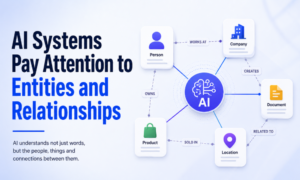
AI Systems Pay Attention to Entities and Relationships
Modern AI can process information about entities such as businesses, technologies, people, products, and services. It can also identify relationships between those entities. A website should therefore present a connected picture of the organization behind it. The homepage, service pages, articles, case studies, and author information should work together rather than appearing as disconnected pieces of content. When a business clearly explains who it is, what it does, and what expertise it offers, machines have more context for understanding the website as a whole.
Website Structure Still Plays a Major Role
A technically accessible website is important for both traditional search engines and AI systems. Important pages should be easy to discover through logical navigation and internal links. Content should not be unnecessarily hidden behind complicated technical barriers. A well-organized website also makes it easier to understand how different topics connect. Strong internal linking can guide visitors from general information to more detailed resources while also helping establish topical relationships across the site. AI-focused optimization should therefore build on solid technical and structural foundations rather than replacing them.
AI Looks for Answers, Not Just Matching Pages
Traditional search often presents users with several pages that may answer their query. AI-powered experiences may attempt to identify the answer directly. This creates a different content challenge for businesses. A page should clearly answer important questions instead of forcing readers to search through long sections of introductory text. Direct explanations should appear naturally within the content, followed by additional details where needed. This approach can make information more useful for readers while also improving the clarity of individual sections for AI-powered systems.
Clear Writing Makes Information Easier to Process
Complex topics do not require complicated writing. Technical content can still be accurate while remaining understandable. AI systems process language, relationships, and context, so unnecessarily vague or complicated explanations can reduce clarity. Businesses should explain important concepts in a straightforward way and define specialized terminology when necessary. Clear writing also improves the user experience because visitors can quickly understand whether the information is relevant to their needs.
AI May Retrieve Specific Passages From Your Content
Many AI systems use retrieval processes to identify information that may be relevant before generating a response. A particular paragraph or section may be selected because it directly addresses a user’s question. This means vague references can create problems. A sentence should make sense within its immediate context and clearly identify what it is discussing. Businesses do not need to repeat the same topic in every paragraph, but they should avoid writing sections that depend completely on information located far away on the page.
Fresh and Accurate Information Is Becoming More Valuable
Some user questions require current information, especially in industries where technology, regulations, pricing, and trends change quickly. AI-powered search experiences may need to determine whether available information is still relevant. Businesses should regularly review important pages and update them when meaningful changes occur. Updating content should involve improving accuracy and usefulness rather than simply changing a date. A well-maintained website creates a stronger information resource for both users and automated systems.
Expertise and Authorship Provide Important Context
As AI-generated content becomes more common, demonstrating real expertise can become increasingly valuable. Businesses should clearly communicate who is responsible for important information when appropriate. Author profiles, company experience, technical resources, and practical examples can help establish credibility. Organizations working with AI specialists can create content that reflects genuine knowledge and practical experience rather than relying on generic explanations. The goal is to demonstrate expertise through useful information, not simply claim authority.

Technical Accessibility Cannot Be Ignored.
AI-focused content strategies still depend on technical accessibility. Important content needs to be available for systems that are permitted and able to access it. Logical page structures, accessible navigation, clear internal links, and reliable website performance continue to matter. Businesses should also consider how critical information is delivered and avoid making essential content unnecessarily difficult to process. A technically strong website creates a better foundation for all forms of digital discovery.
AI Search Values Information Consistency
A website can lose clarity when important information conflicts across different pages. For example, service descriptions, company details, and product information should remain consistent wherever possible. AI systems can encounter information from multiple locations and attempt to understand how those details fit together. Clear and consistent information reduces ambiguity. Businesses should periodically review important pages to ensure their digital presence accurately reflects their current services and capabilities.
Content Depth Matters More Than Word Count
A longer article is not automatically more useful. Content should be long enough to explain the topic properly but should not repeat ideas simply to reach a specific word count. AI systems can benefit from content that covers a subject with meaningful depth, including definitions, applications, limitations, and related concepts. Every section should contribute useful information. Businesses should focus on completeness and relevance rather than producing lengthy articles filled with repetitive language.
Structured Data Can Add Additional Context
Schema markup can provide machine-readable information about elements such as organizations, articles, services, and products. While structured data does not guarantee AI visibility or search rankings, it can help reduce ambiguity when implemented accurately. The markup should always reflect the visible content of the page. Businesses should view schema as a supporting technical layer rather than a shortcut. Strong content and a clear website structure should always come first.
AI and Google Share Important Foundations
It would be a mistake to create completely separate strategies for Google and AI systems. Many of the fundamentals overlap. Both benefit from accessible websites, useful content, logical structure, clear topics, and accurate information. The difference is that AI-powered systems may focus more heavily on understanding meaning and extracting useful information for a specific conversational request. Businesses should therefore improve the overall quality of their websites instead of trying to optimize for one platform alone.
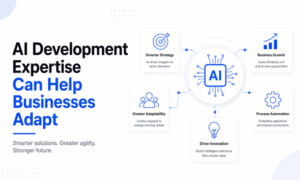
AI Development Expertise Can Help Businesses Adapt
Some organizations are not only preparing their websites for AI search but also building their own AI-powered tools. These may include intelligent search systems, automated customer support, recommendation engines, document analysis platforms, and business automation tools. Companies that hire AI developers can access technical expertise for building these types of applications. Successful AI projects require more than choosing a model because data quality, architecture, testing, and maintenance all influence the final result.
AI Systems Require Strong Technical Planning
Building an AI-powered application involves decisions about infrastructure, data processing, integrations, security, and performance. Businesses that hire AI engineer professionals can receive support in designing systems that connect AI capabilities with real operational requirements. The focus should remain on solving a defined business problem rather than implementing AI simply because it is a growing technology. A carefully planned AI solution is more likely to provide practical long-term value.
Flexible AI Talent Supports Specialized Projects
Not every company needs to build a large in-house AI department. Businesses may work with AI developers for hire when they need specialized skills for a particular project or stage of development. This can be useful for organizations testing an AI concept, developing a prototype, or expanding an existing application. The right technical support can help businesses move from an idea toward a practical implementation while maintaining focus on data quality and measurable outcomes.
Machine Learning Brings Another Layer of Intelligence
Machine learning can support applications that identify patterns, make predictions, classify information, and improve systems based on data. Businesses that hire machine learning experts may need support with areas such as model development, data preparation, evaluation, and production deployment. Machine learning projects should be connected to a practical business objective because successful implementation depends on having appropriate data and a clear understanding of the desired outcome.
Specialized Development Supports Long-Term AI Projects
As AI projects become more advanced, ongoing technical support may be necessary for maintaining models, improving performance, and adapting systems to changing requirements. Businesses may choose to hire machine learning developer talent when they need hands-on expertise for building and maintaining machine learning applications. Long-term success depends on continuous evaluation rather than assuming an AI system will remain effective forever without updates or monitoring.

Preparing Your Website for the Future of Search
The best preparation for AI-driven search is to create a website built around useful information. Pages should clearly explain their subject, headings should organize topics logically, and related content should connect naturally. Important information should be accurate and easy to access. Businesses should also avoid relying on outdated SEO tactics such as excessive keyword repetition or content created solely to fill a page. A website that genuinely helps users is more likely to remain valuable as search technologies continue to evolve.
AI Systems Can Interpret Topical Connections
AI-powered systems are increasingly capable of recognizing when multiple pages contribute to the understanding of a larger topic. This makes topical organization more important than publishing isolated articles with no connection to one another. For example, a website discussing artificial intelligence can connect introductory content with articles about machine learning, AI development, automation, data engineering, and practical business applications. These internal connections help visitors explore a subject in greater depth while creating a clearer knowledge structure across the website. Instead of treating every blog as an independent page, businesses should think about how individual pieces of content contribute to a broader area of expertise.
User Intent Matters in AI-Driven Discovery
AI systems are designed to understand natural language questions, which means user intent can play an important role in how information is retrieved. Two people may use different words while looking for the same answer. A traditional keyword-focused approach may treat these queries separately, while AI can potentially recognize the underlying similarity between them. Businesses should therefore create content around real user needs. Understanding whether someone wants information, comparisons, solutions, or technical guidance can help create pages that answer the actual purpose behind the search rather than simply targeting a phrase.
Original Insights Can Make Content More Valuable
As more websites use AI tools to create content, the internet is becoming filled with articles that explain the same topics in similar ways. Original perspectives can help businesses create more meaningful resources. Real examples, practical experiences, unique observations, and expert explanations can add value that generic content often lacks. AI systems may be able to summarize commonly available information, but businesses can differentiate their websites by contributing knowledge based on actual experience. Content should therefore go beyond rewriting existing ideas and aim to provide useful insights for the intended audience.