


Why Traffic Alone Is Not Enough
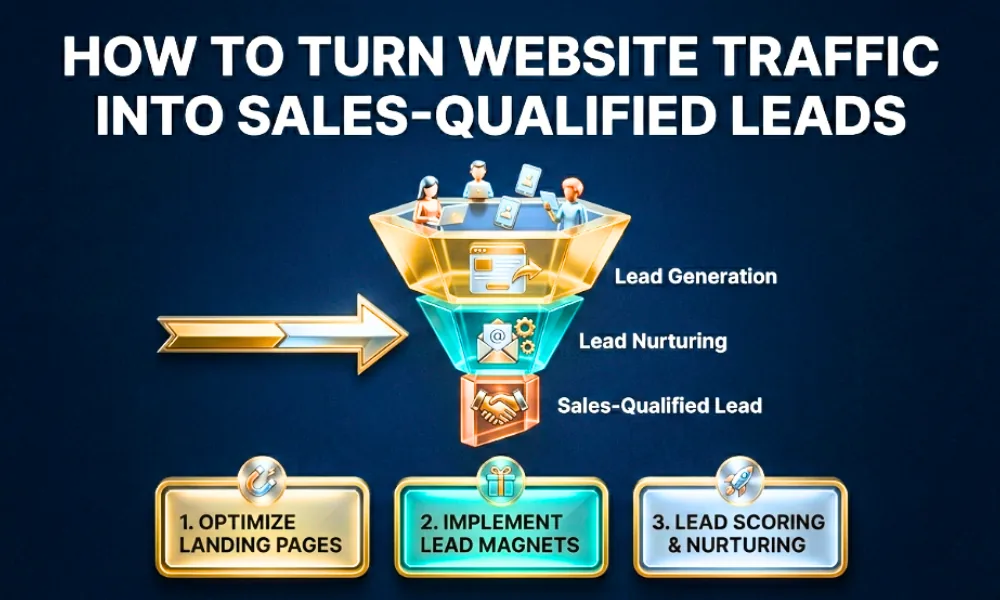
Many businesses invest heavily in digital marketing to increase website traffic. While attracting visitors is important, traffic alone does not guarantee revenue. The real objective is turning visitors into sales-qualified leads who are ready to engage with your business.
This is where strategy becomes essential. Businesses often focus only on ranking and visibility, but without a structured system to capture and nurture visitors, most traffic leaves without taking action.
At Your Cloud Hub, we help businesses transform website traffic into meaningful opportunities through strategic optimization, structured funnels, and conversion-focused digital systems. Many companies also hire SEO consultants to refine their traffic strategy and ensure visitors align with their target audience.
Understanding Sales-Qualified Leads
A sales-qualified lead is a prospect who has shown clear interest in a product or service and is ready for direct engagement with a sales team.
Unlike casual visitors, these leads demonstrate intent through actions such as:
Requesting a consultation
Booking a demo
Downloading detailed resources
Contacting the business directly
Turning traffic into these leads requires a structured approach.
Many businesses that struggle with conversions often realize they need expert guidance, which is why they start hiring SEO experts to align their traffic strategy with their lead-generation goals.
The Gap Between Traffic and Conversions
One of the biggest challenges businesses face is the gap between website visits and actual leads.
Visitors arrive on the website but leave without taking any action.
This gap can occur due to several reasons:
Unclear messaging
Poor user experience
Lack of strong calls to action
Irrelevant traffic sources
Closing this gap requires both technical and strategic improvements.
Businesses often hire Google SEO experts to analyze user behavior and optimize their websites for better engagement.
Attracting the Right Type of Traffic
Not all traffic is valuable.
A website may attract thousands of visitors who have no real interest in the services offered.
The focus should be on attracting the right audience.
This is where the search strategy becomes critical.
By targeting intent-driven keywords and relevant search queries, businesses can attract visitors actively seeking solutions.
Many companies choose to hire SEO experts in India because they offer expertise in identifying high-intent keywords and optimizing content accordingly.
Creating High-Intent Landing Pages
Once the right visitors arrive on the website, landing pages must guide them toward action.
High-performing landing pages typically include:
Clear value propositions
Focused messaging
Simple layouts
Strong calls to action
A well-designed landing page answers three key questions immediately:
What problem do you solve
How do you solve it
What should the visitor do next
Optimizing landing pages is a key step in turning traffic into sales-qualified leads.
Using Lead Magnets to Capture Interest
Not every visitor is ready to buy immediately.
However, many are willing to exchange contact information for valuable resources.
Lead magnets help capture this interest.
Examples include:
Industry guides
Whitepapers
Free consultations
Webinars
These resources provide value while allowing businesses to capture contact details.
Once a visitor becomes a lead, nurturing systems can guide them toward becoming a sales-qualified prospect.
Building Trust Through Content
Trust is a key factor in converting visitors into leads.
Visitors need evidence that a business understands their challenges and can provide solutions.
This can be achieved through content such as:
Case studies
Expert insights
Success stories
Industry analysis
Businesses that consistently publish helpful content often see higher engagement and conversion rates.
Many organizations choose to hire SEO virtual assistants to manage content updates and regularly optimize articles.
Designing Clear Calls to Action
Visitors should never be left wondering what to do next.
Every page should guide users toward a specific action.
Effective calls to action include:
Schedule a consultation
Request a demo
Download a guide
Contact our team
Clear calls to action remove friction and encourage engagement.
Improving User Experience
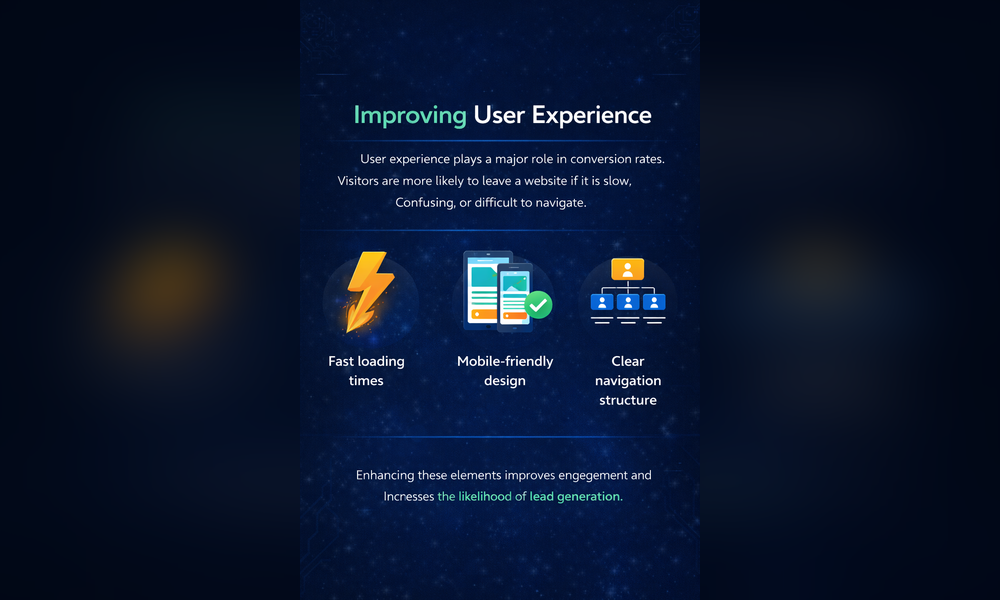
User experience plays a major role in conversion rates.
Visitors are more likely to leave a website if it is slow, confusing, or difficult to navigate.
Key improvements include:
Fast loading times
Mobile-friendly design
Clear navigation structure
Enhancing these elements improves engagement and increases the likelihood of lead generation.
Implementing Lead Nurturing Systems
Many visitors need time before making a decision.
Lead nurturing helps guide these prospects toward becoming sales-qualified leads.
Nurturing may include:
Email sequences
Educational content
Follow-up messages
This process builds trust and gradually moves prospects closer to conversion.
Tracking Visitor Behavior
Understanding visitor behavior helps businesses refine their strategy.
Analytics tools reveal insights such as:
Which pages attract the most engagement
Where visitors drop off
Which content drives conversions
These insights allow businesses to improve their conversion pathways.
Companies often hire SEO consultants to analyze this data and optimize performance.
Aligning Marketing With Sales
For traffic to convert into sales-qualified leads, marketing and sales teams must work together.
Marketing attracts visitors and generates leads.
Sales teams engage with prospects and close deals.
Alignment ensures that leads generated by marketing align with the sales team’s expectations.
This coordination improves conversion rates.
The Role of SEO Experts in Lead Generation
SEO professionals play a key role in building traffic strategies that produce qualified leads.
Instead of focusing only on rankings, experts focus on attracting visitors who are likely to convert.
Businesses often:
Hire SEO consultant professionals for strategic planning
Begin hiring SEO expert teams for technical optimization
Choose to hire Google SEO experts for search visibility
Hire SEO virtual assistant professionals to manage content and updates
Work with agencies that hire SEO expert India teams for scalable support
These specialists help businesses transform traffic into revenue opportunities.
Continuous Optimization for Better Results
Converting traffic into leads is not a one-time effort.
Websites must evolve continuously.
Businesses should regularly review:
Conversion performance
Content relevance
User experience
Continuous optimization ensures that the website remains effective as market conditions change. Website traffic alone does not guarantee business growth. Without a structured system to capture and nurture visitors, most opportunities disappear. Turning traffic into sales-qualified leads requires strategic alignment between SEO, user experience, and conversion design.
At Your Cloud Hub, we help businesses implement systems that attract the right audience and guide them toward meaningful engagement.
Advanced Conversion Systems, Lead Qualification, and Scalable Growth Frameworks
Attracting website traffic is only the first stage of digital growth. The real challenge begins once visitors land on your website. If those visitors leave without taking action, the traffic has little business value.
Turning traffic into qualified opportunities requires a structured system that captures attention, builds trust, and guides prospects toward engagement.
Businesses that succeed in this area combine strong SEO foundations with conversion-focused website design and intelligent lead qualification processes.
Many companies reach this stage and realize that internal teams lack the specialized expertise required. As a result, they often hire SEO consultants to redesign their digital strategy to focus on qualified lead generation rather than just traffic growth.
Designing Conversion-Focused Website Architecture
Website structure plays a critical role in turning visitors into leads.
Many websites are designed primarily for information rather than conversion.
A conversion-focused website architecture guides visitors through a clear journey.
Instead of presenting scattered information, pages should lead users step by step toward taking action.
For example, a visitor might move through the following journey:
A blog article introduces a problem.
A detailed guide explains possible solutions.
A service page offers a consultation.
This structured pathway improves the likelihood that visitors become sales-qualified leads.
Businesses that struggle with website structure often begin hiring SEO experts who understand both search optimization and conversion design.
Qualifying Leads Before They Reach Sales
Not every visitor is ready to speak with a sales team.
Some are still researching. Others may not match the target audience.
Effective lead qualification helps identify which visitors are serious prospects.
Qualification methods may include:
Detailed contact forms
Consultation request questionnaires
Product demo registrations
These processes allow businesses to gather information about the prospect’s needs before initiating direct sales conversations.
Companies that want to refine their qualification process often hire Google SEO experts who can align search intent with lead qualification strategies.
Building Topic Authority to Attract High-Intent Visitors
Search engines increasingly prioritize authoritative websites.
Authority is built through depth of knowledge and consistent publication of content.
Instead of publishing isolated articles, businesses should build topic clusters around key subjects.
For example, a company offering marketing services might create content covering:
SEO strategies
Website optimization
Lead generation systems
Analytics and performance tracking
When these topics are connected strategically, the website becomes a trusted resource.
This authority attracts high-intent visitors who are more likely to convert.
Businesses frequently hire SEO experts in India to manage large-scale content strategies and maintain topic consistency.
Using Lead Magnets Strategically
Lead magnets play a crucial role in capturing visitors who are not yet ready to purchase.
Instead of leaving the website empty-handed, visitors exchange contact information for valuable resources.
Examples of lead magnets include:
Industry research reports
Strategic frameworks
Case studies
Templates or guides
These resources attract prospects who are genuinely interested in the subject.
Once captured, leads can be nurtured until they become sales-qualified.
Managing these lead-capture systems often requires consistent updates, which is why businesses hire SEO virtual assistants to maintain landing pages and optimize content assets.
Implementing Multi-Step Conversion Paths
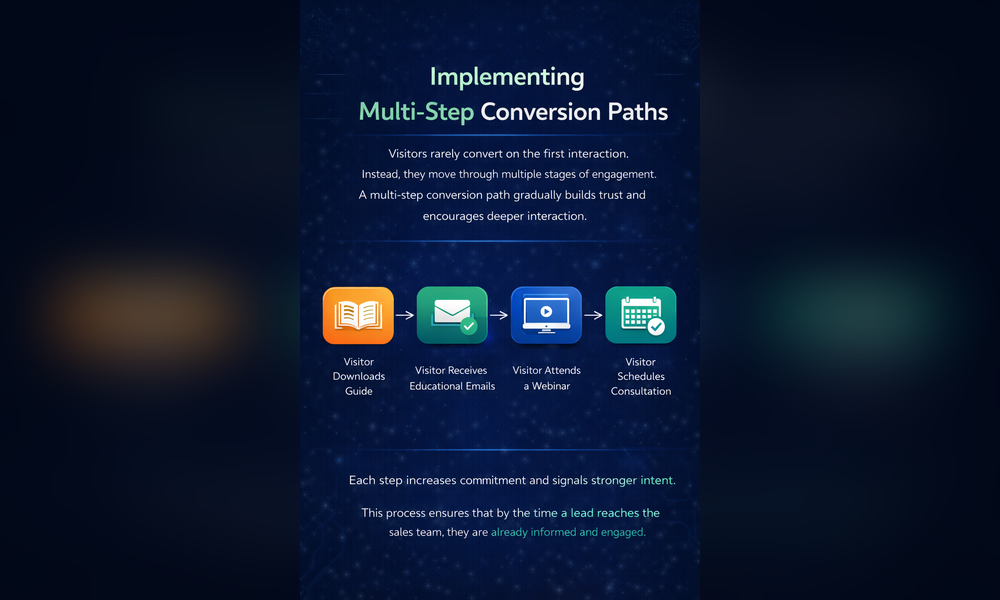
Visitors rarely convert on the first interaction.
Instead, they move through multiple stages of engagement.
A multi-step conversion path gradually builds trust and encourages deeper interaction.
For example:
A visitor downloads a guide.
The visitor receives educational emails.
The visitor attends a webinar.
The visitor schedules a consultation.
Each step increases commitment and signals stronger intent.
This process ensures that by the time a lead reaches the sales team, they are already informed and engaged.
Using Behavioral Data to Identify Qualified Leads
Modern analytics tools provide valuable insights into visitor behavior.
Businesses can track signals such as:
Time spent on key pages
Content downloads
Repeat website visits\Interaction with pricing pages
These signals indicate increasing interest.
Leads demonstrating these behaviors can be prioritized for direct outreach.
SEO professionals who specialize in conversion optimization often help businesses implement behavioral tracking systems.
For this reason, companies frequently hire SEO consultants to interpret behavioral data and refine engagement strategies.
Creating Trust Through Social Proof
Visitors are more likely to become leads when they see evidence of success.
Social proof strengthens credibility and reduces hesitation.
Examples include:
Client testimonials
Case studies
Industry awards
Media mentions
These elements demonstrate that the business has delivered results for others.
Including social proof throughout the website significantly increases conversion rates.
Optimizing Content for Decision-Making
Content should not only inform visitors but also guide them toward decisions.
Many websites publish educational articles but fail to connect that content with services.
Effective content bridges the gap between information and action.
For example:
An article discussing SEO strategies may naturally introduce the benefits of professional optimization services.
This approach helps readers understand how the business can solve their challenges.
Businesses seeking this level of strategic content often begin hiring SEO experts who specialize in conversion-focused writing.
Building Lead Nurturing Systems
Once leads enter the system, nurturing becomes essential.
Not every lead converts immediately.
Nurturing keeps the business top of mind while building trust over time.
Effective nurturing may include:
Educational email sequences
Industry insights
Product demonstrations
Case study presentations
These communications gradually move leads toward becoming sales-ready.
Integrating CRM and Marketing Systems
Lead generation works best when marketing and CRM systems are integrated.
When visitors submit forms or download resources, their information should automatically be entered into the CRM system.
This allows businesses to track:
Lead engagement
Communication history
Conversion readiness
Automation ensures that no lead is overlooked.
Businesses that scale their operations often hire SEO virtual assistant professionals to maintain CRM integrations and monitor lead flow.
Using Retargeting to Reconnect With Visitors
Many visitors leave a website without taking action.
Retargeting campaigns allow businesses to reconnect with these visitors.
For example:
A visitor who reads a blog article may later see a targeted ad promoting a related service.
Retargeting keeps the brand visible and encourages return visits.
This strategy significantly improves the chances of converting traffic into leads.
Measuring Conversion Success
To continuously improve results, businesses must track performance metrics.
Important metrics include:
Visitor-to-lead conversion rate
Lead-to-customer conversion rate
Average time to conversion
Revenue generated from organic traffic
These insights reveal which strategies are working and where improvements are needed.
SEO specialists often analyze these metrics to refine digital strategies.
This is why many companies hire Google SEO experts who combine technical SEO knowledge with performance analysis.
Scaling Lead Generation Systems
Once a website successfully converts visitors into leads, the next step is scaling.
Scaling involves increasing traffic while maintaining strong conversion rates.
This requires consistent optimization of:
Content quality
Landing page performance
Lead capture systems
Nurturing workflows
Businesses that build scalable systems can generate a predictable flow of leads over time.