


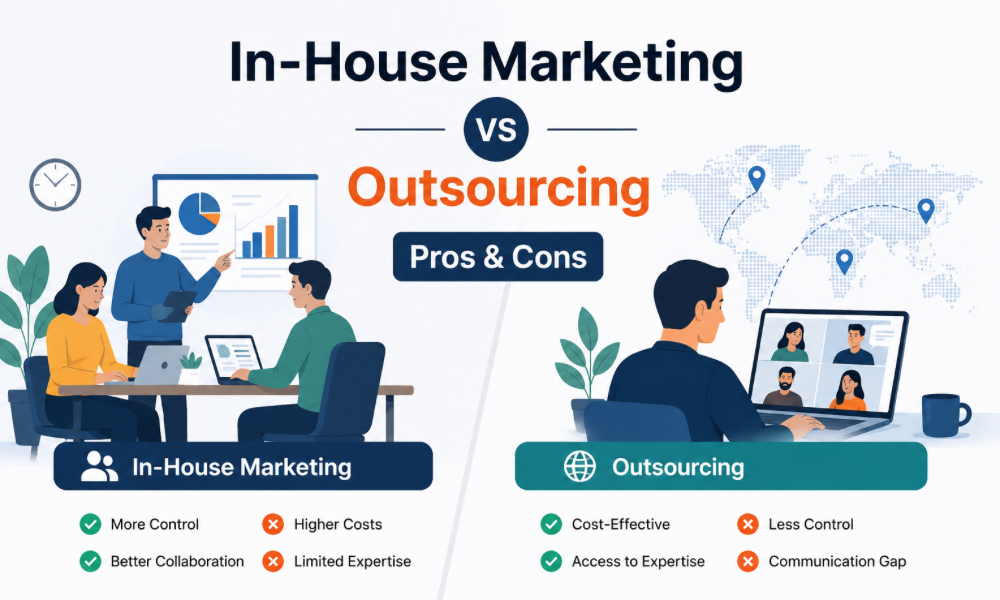
Marketing has become too important for most businesses to treat as an occasional task. Customers discover companies through search engines, social platforms, content, email, paid advertising, reviews, and increasingly complex digital journeys. The challenge is deciding who should manage all of this work.
Some businesses prefer to build an internal marketing department staffed with full-time employees. Others choose external specialists who can provide expertise when it is needed. There is also a middle ground in which a company retains strategic leadership internally while outsourcing selected activities such as SEO, content, analytics, or campaign execution.
There is no universal answer. The right model depends on the company’s size, budget, goals, industry, internal capabilities, and growth stage.
For some organizations, an internal team provides the control and familiarity they need. For others, outsourcing creates access to specialists without the expense of building an entire department. Your Cloud Hub helps businesses think about this decision from a practical perspective: what capabilities do you need, how quickly do you need them, and which structure gives your marketing the best chance of producing consistent results?
What Does In-House Marketing Actually Mean?
An in-house marketing model means the company employs marketing professionals directly. The team may include strategists, writers, SEO professionals, designers, paid media specialists, social media managers, and marketing coordinators.
The biggest attraction is proximity. Internal employees work closely with leadership and generally develop a deep understanding of the company’s products, customers, culture, and internal processes.
An internal team can also react quickly to changes within the organization. When a product changes or a new service launches, employees are already familiar with the context.
However, building a complete marketing department can become expensive. A business may need several specialists to cover all areas effectively, and finding experienced professionals for every discipline is not always easy.
What Does Marketing Outsourcing Involve?
Outsourcing means working with external professionals, agencies, consultants, freelancers, or specialized teams to manage some or all marketing responsibilities.
The arrangement can be highly flexible.
A company might outsource its entire digital marketing operation or only bring in outside support for specific activities. For example, an organization may keep brand strategy internally while outsourcing technical SEO, content production, or campaign management.
Businesses may also outsource content marketing when they need a consistent publishing operation but do not want to build a full-time editorial team.
This model allows companies to access specialized skills without necessarily hiring permanent employees for every role.
The Biggest Advantage of an In-House Team: Business Knowledge
Internal employees naturally become familiar with the company.
They attend meetings, interact with different departments, learn about products, hear customer feedback, and understand internal priorities. Over time, this knowledge can become extremely valuable.
An internal marketer may understand subtle differences between customer segments that an external provider would need months to discover.
This familiarity can make campaign development easier because the marketing team already understands the company’s language and positioning.
For businesses with complex products or highly specialized audiences, this can be a significant advantage.
The Biggest Advantage of Outsourcing: Specialized Expertise
An external marketing partner may work across multiple industries, websites, campaigns, and platforms. That exposure can provide access to specialized knowledge that would be difficult to maintain internally.
For example, a company may need advanced SEO knowledge but not enough SEO work to justify hiring a full-time specialist.
Instead of building an entire department around that requirement, the business can hire SEO consultant support for strategic planning, technical analysis, content recommendations, and ongoing optimization.
This can provide specialist expertise while allowing the company to keep its permanent team focused on core responsibilities.

In-House Marketing Gives You More Direct Control
Businesses often choose internal teams because they want direct control over priorities, communication, workflows, and deadlines.
An internal employee can generally be redirected quickly when business priorities change. Management can also establish processes that align closely with company culture.
This level of control can be particularly valuable when marketing is closely connected to sales, product development, customer service, and operations.
However, control also comes with responsibility. The company must provide management, training, software, resources, performance reviews, and professional development.
Outsourcing Can Reduce the Pressure of Hiring
Recruiting specialized marketing professionals can take considerable time.
A business may need to advertise a position, review candidates, conduct interviews, assess portfolios, negotiate compensation, and wait for the person to become available.
There is also the possibility that the selected employee may not be the right long-term fit.
Outsourcing can shorten that process by providing access to professionals who already possess relevant skills.
This can be especially useful for smaller businesses that need marketing expertise but are not ready to establish a large internal department.
In-House Teams Can Become Too Generalist
A small internal team may be expected to do everything.
One marketer might manage SEO, email campaigns, social media, content, analytics, paid advertising, and website updates.
That sounds efficient until the workload increases.
Marketing disciplines have become increasingly specialized. Technical SEO requires different knowledge from paid search. Content strategy is different from conversion optimization. Analytics requires another set of skills.
Trying to make one person responsible for every area can eventually reduce quality.
A business may hire search engine optimizer professionals when search performance becomes important rather than expecting a general marketing employee to master every technical aspect of SEO.
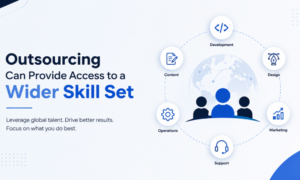
Outsourcing Can Provide Access to a Wider Skill Set
External providers can offer access to multiple specialists under one relationship.
A company might work with professionals who specialize in SEO, content, analytics, paid campaigns, design, and conversion optimization.
This can be useful when marketing requirements change frequently.
Instead of hiring another employee whenever a new capability is needed, the business can expand the scope of its external partnership.
The important consideration is whether the provider actually has the expertise it claims to offer. Outsourcing only creates an advantage when the external team can deliver meaningful strategic and executional value.
Cost Is More Complicated Than Salary
Comparing in-house and outsourced marketing purely through monthly cost can be misleading.
An employee’s salary is only one part of the total cost. Businesses may also provide benefits, equipment, software, training, office resources, management time, recruitment costs, and professional development.
Outsourcing has its own costs, which can vary depending on the scope of work and level of expertise required.
The better comparison is total cost against expected capability.
A lower-cost arrangement is not necessarily better if it produces weak marketing results. Likewise, a premium external partner may be worthwhile if it provides specialized expertise and generates measurable business value.
In-House Marketing Can Build Long-Term Institutional Knowledge
When employees stay with a company for several years, they accumulate knowledge.
They remember which campaigns worked, which customers responded to certain messages, which product launches encountered difficulties, and which strategies failed.
This historical knowledge can become an important competitive advantage.
The challenge is retention. If key employees leave, some of that knowledge can disappear with them.
Businesses should therefore document processes, strategies, campaign results, customer insights, and important decisions regardless of whether marketing is handled internally or externally.
Outsourcing Can Bring a Fresh Perspective
Internal teams can become accustomed to seeing the company in a particular way.
External professionals approach the business with fewer assumptions. They may notice confusing messaging, missed SEO opportunities, weak conversion paths, or content gaps that employees no longer see.
This outside perspective can be particularly useful during periods of growth or repositioning.
A company that has been operating with the same marketing strategy for years may benefit from an external review before deciding what to change.
The Hiring Model Should Match the Business Stage
A startup, growing small business, and established enterprise may need very different marketing structures.
Early-stage companies often need flexibility. They may not have enough predictable demand to justify building a large internal department.
As the business grows, hiring internal marketing leadership may make sense because marketing becomes more deeply connected with product development, sales, and company strategy.
Larger organizations may ultimately use a hybrid structure, combining internal leadership with external specialists.
There is no requirement to choose one model permanently.
When In-House Marketing Makes More Sense
An internal team may be a strong option when the company has consistent marketing demand, sufficient budget, and a need for daily collaboration across departments.
It can also make sense when the company’s products are highly specialized and require deep institutional knowledge.
If marketing is central to the business and requires constant interaction with sales, product, operations, and leadership, having experienced internal professionals can create strong advantages.
The key is making sure the team has enough specialists to handle the workload rather than expecting a few people to cover every discipline.
When Outsourcing Makes More Sense
Outsourcing can be particularly useful when the company needs specialized expertise quickly, has limited internal resources, or wants to scale marketing without significantly increasing permanent headcount.
It can also be valuable when the business needs temporary expertise for a specific initiative.
For example, a company may need an SEO audit, a website migration strategy, a content campaign, or a technical analytics project without requiring a permanent employee for that particular function.
In such cases, external support can provide a practical balance between expertise and flexibility.
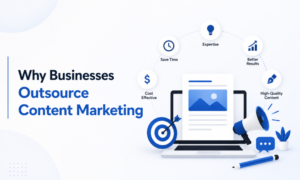
Why Businesses Outsource Content Marketing
Content marketing is a good example of an area where outsourcing can provide operational flexibility.
Consistent content requires research, planning, writing, editing, optimization, publishing, updating, and performance analysis.
An internal team may have excellent subject-matter knowledge but lack the time to maintain a consistent publishing schedule.
When businesses outsource content marketing, they can create a structured production process while keeping strategic direction internally.
The best arrangement still requires internal input. External writers need access to company knowledge, customer insights, brand guidelines, and subject-matter expertise to produce content that feels authentic.
SEO Often Benefits From Specialized Support
SEO is another area where specialist knowledge can make a meaningful difference.
Search visibility involves technical website health, content quality, search intent, internal linking, site architecture, authority, analytics, and ongoing changes in search behavior.
A generalist marketer may understand the fundamentals but may not have the depth required for complex SEO problems.
Businesses can hire SEO consultant professionals for strategic guidance while keeping content and implementation internally.
Alternatively, an organization may hire search engine optimizer support for ongoing SEO execution.
The right choice depends on how much work the business has and how much expertise already exists internally.
The Case for Hiring an SEO Expert in India
For companies looking to expand their marketing capabilities while maintaining flexibility, international outsourcing can provide access to broader talent pools.
Businesses may choose to hire SEO expert India professionals when they need experienced SEO support across technical optimization, content strategy, keyword research, reporting, and ongoing improvements.
However, geography should never be the only selection criterion.
Businesses should evaluate communication, expertise, portfolio quality, understanding of the target market, reporting processes, and ability to work within existing workflows.
The best external partner should feel like an extension of the marketing team rather than a disconnected vendor.
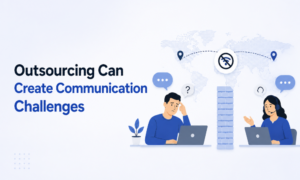
Outsourcing Can Create Communication Challenges
External partnerships are not automatically easier.
Communication can become difficult when expectations are unclear, project ownership is poorly defined, or feedback takes too long.
Businesses may also become frustrated if an external provider does not understand the brand or industry.
These problems can be reduced through clear documentation, regular meetings, defined responsibilities, shared project management systems, and agreed performance indicators.
Outsourcing works best when both sides understand exactly what success looks like.
Internal Teams Can Also Face Communication Problems
In-house does not automatically mean efficient.
Internal departments can have competing priorities. Marketing may want a new landing page while development is focused on another project. Sales may request immediate campaign changes while leadership wants long-term brand development.
Without clear processes, internal teams can experience many of the same communication challenges associated with outsourcing.
The real issue is not whether the people are employees or external partners. It is whether responsibilities and expectations are clear.
A Hybrid Model Can Offer the Best of Both
Many businesses do not need to choose between completely internal and completely outsourced marketing.
A hybrid model can combine internal leadership with external expertise.
For example, a marketing manager may own strategy, brand direction, and coordination while external specialists handle SEO, content, paid campaigns, analytics, or technical projects.
This approach provides internal ownership without requiring the company to hire a full department.
It can also make scaling easier because external support can increase or decrease according to business requirements.
How to Decide Which Marketing Model Fits
Start by identifying what your business actually needs.
If you need daily marketing collaboration, internal ownership may be important. If you need specialized expertise for a particular discipline, outsourcing may be more efficient.
Consider the volume of work, required skill level, available budget, management capacity, desired speed, and long-term strategy.
Then determine which activities are core enough to keep internally and which can reasonably be handled by external specialists.
This approach is usually more effective than choosing outsourcing or in-house hiring simply because another business uses that model.
Measure Outcomes Instead of Team Size
A large marketing department does not automatically produce better results.
Likewise, a small outsourced team can sometimes outperform a larger internal department if it has stronger expertise and a clearer strategy.
Businesses should evaluate marketing based on meaningful outcomes.
Are qualified leads increasing? Is organic visibility improving? Are conversion rates becoming stronger? Is customer acquisition becoming more efficient? Is the company building a stronger digital presence?
These questions matter far more than the number of people sitting inside or outside the organization.
The Right Partner Should Understand Your Business
If you choose to outsource, avoid selecting a provider solely because it offers the lowest price.
Marketing requires context.
A strong external partner should understand your customers, competitors, positioning, goals, existing marketing activity, and internal limitations.
They should also be able to explain why they recommend a particular strategy rather than simply presenting a list of tasks.
This is particularly important when working with an external hire SEO consultant or content team because recommendations can affect many parts of the broader marketing strategy.