


Modern businesses are operating in an environment where speed, efficiency, and customer engagement determine long-term success. Companies are expected to manage lead generation, customer communication, follow-up campaigns, sales processes, and retention strategies simultaneously while also controlling operational costs. As businesses scale, handling these activities manually becomes increasingly difficult and time-consuming.
This is why marketing automation has become one of the most valuable investments for modern organizations. Businesses are now using intelligent workflows to automate repetitive tasks, streamline communication, and improve operational performance across marketing and sales teams.
Advanced AI marketing automation systems are helping businesses reduce manual workload while improving customer experiences and campaign efficiency. At the same time, companies investing in scalable automation for business are creating systems that allow them to grow faster without dramatically increasing staffing requirements or operational complexity.
Automation is no longer just a productivity tool. It is becoming the operational foundation for scalable digital growth.
Automated Lead Capture Helps Businesses Respond Faster
Lead generation remains one of the most important growth drivers for modern businesses, but generating leads alone is not enough to produce consistent results. Businesses also need systems capable of organizing, qualifying, and responding to leads immediately. Manual lead handling often creates delays that negatively affect conversion performance. Potential customers may lose interest or choose competitors if follow-up communication is slow or inconsistent.
With advanced lead generation automation, businesses can instantly capture customer information from websites, landing pages, advertisements, and social media campaigns. Once a lead enters the system, automation workflows can immediately assign contacts to CRM pipelines, trigger follow-up communication, notify sales teams, and begin nurturing sequences automatically.
This creates a much faster and more organized customer acquisition process. Businesses using structured lead automation systems frequently improve conversion rates because prospects receive immediate engagement and consistent communication from the very beginning of the customer journey.
CRM Automation Creates Better Customer Management Systems
Managing customer relationships manually becomes increasingly difficult as businesses grow. Disorganized contact records, inconsistent follow-ups, and poor pipeline visibility can quickly reduce operational efficiency and customer satisfaction. Modern CRM Automation systems help businesses centralize customer information and automate repetitive CRM tasks that would otherwise require constant manual management.
Automation workflows can organize leads automatically, apply tags, update pipeline stages, schedule reminders, and trigger communication based on customer behavior and engagement activity.
This level of organization improves visibility across the entire customer lifecycle while helping businesses maintain more accurate and scalable customer management systems. Companies investing in CRM automation often experience stronger internal organization, faster customer response times, and smoother communication workflows across marketing and sales departments.
AI Marketing Automation Improves Personalization at Scale
Customer expectations are changing rapidly. Modern consumers expect businesses to deliver personalized experiences that reflect their interests, behavior, and engagement history. Generic marketing campaigns are becoming less effective because users are increasingly drawn toward brands that provide relevant and customized communication.
Advanced AI marketing automation systems analyze customer behavior, engagement patterns, and interaction history to personalize communication automatically. Artificial intelligence can adjust email content, recommend products or services, personalize follow-up messages, and optimize customer journeys in real time based on user activity.
This level of personalization helps businesses improve engagement while reducing the manual effort required to manage customer communication at scale. Businesses using AI-powered marketing workflows often experience higher engagement rates, stronger customer retention, and improved conversion performance because communication feels more relevant and valuable to individual users.
Automated Email Workflows Save Time and Improve Consistency
Email marketing remains one of the most effective digital marketing channels, but manually managing campaigns can quickly consume valuable operational resources. Businesses often struggle to maintain consistent communication because sending emails manually requires ongoing attention and administrative work.
Marketing automation solves this challenge by allowing businesses to create email workflows that operate automatically based on customer actions and engagement behavior. These workflows may include welcome sequences, lead nurturing campaigns, appointment reminders, abandoned cart follow-ups, customer onboarding communication, and re-engagement campaigns.
With structured automation for business, organizations can maintain continuous customer communication without relying heavily on manual intervention. Automated email workflows not only save time but also improve consistency across customer interactions. This consistency strengthens customer trust while helping businesses maintain professional communication standards at scale.
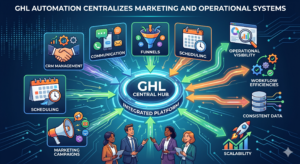
GHL Automation Centralizes Marketing and Operational Systems
One of the biggest operational challenges for growing businesses is managing multiple disconnected software tools for CRM management, communication, funnels, scheduling, and marketing campaigns. This fragmentation often creates workflow inefficiencies, inconsistent data management, and operational complexity.
Advanced GHL Automation systems solve this problem by centralizing business operations into one integrated platform. Businesses can manage customer pipelines, communication workflows, lead nurturing systems, appointment scheduling, marketing campaigns, and reporting dashboards from a single ecosystem.
This level of centralization improves operational visibility while reducing the inefficiencies caused by disconnected software platforms. Companies using integrated GHL automation systems often experience stronger workflow organization, faster customer response times, and improved scalability because all operational processes work together within one connected environment.
Automation Reduces Operational Costs and Improves Efficiency
One of the most important benefits of marketing automation is cost reduction. Manual workflows often require additional staffing, repetitive administrative management, and significant time investment. As businesses scale, operational costs increase rapidly if systems remain heavily dependent on manual processes.
Automation helps businesses streamline repetitive tasks and improve workflow efficiency without dramatically increasing operational expenses. With advanced CRM Automation and AI-powered marketing systems, businesses can manage larger customer volumes, more campaigns, and more communication channels while maintaining lean operational structures.
This allows organizations to allocate resources more strategically and focus more on growth-focused activities rather than repetitive administrative work. Businesses investing in scalable automation systems frequently achieve stronger profitability because automation improves productivity while reducing unnecessary operational overhead.
Automated Appointment Scheduling Improves Productivity
Scheduling appointments manually can create delays, missed meetings, and communication inconsistencies that negatively affect customer experiences. Marketing automation workflows simplify this process by allowing customers to schedule appointments automatically through integrated booking systems. Businesses can automate confirmations, reminders, calendar synchronization, follow-up communication, and appointment tracking without requiring constant administrative oversight.
Companies using advanced GHL Automation frequently integrate appointment systems directly into CRM workflows and lead nurturing sequences to create seamless customer journeys. Automated scheduling not only improves operational efficiency but also enhances customer convenience by reducing friction during the booking process.
AI Marketing Automation Improves Decision-Making
Artificial intelligence is not only improving automation execution but also transforming how businesses analyze performance and make strategic decisions. Advanced AI marketing automation systems can evaluate customer behavior, campaign engagement, conversion patterns, and marketing performance in real time.
This allows businesses to identify trends, optimize campaigns faster, and improve targeting accuracy based on actual customer data. AI-powered systems can also improve audience segmentation, lead scoring, content recommendations, and customer journey optimization automatically.
Businesses using AI-driven analytics often make smarter marketing decisions because automation systems provide deeper operational insights and predictive performance analysis. This level of intelligence improves both marketing efficiency and long-term business scalability.
Marketing Automation Strengthens Customer Retention
Automation is not only useful for generating new leads. It also plays a major role in improving customer retention and long-term engagement. Businesses can create automated workflows that continue engaging customers after the initial purchase through educational content, follow-up campaigns, loyalty communication, feedback requests, and renewal reminders. With advanced CRM Automation, businesses can maintain ongoing customer relationships without requiring continuous manual outreach.
Consistent post-sale communication helps improve customer satisfaction, strengthen loyalty, and increase customer lifetime value. Businesses using structured retention automation systems often create more sustainable long-term growth because they focus not only on acquisition but also on maintaining strong customer relationships over time.
The Future of Marketing Automation Is AI-Driven and Scalable
Marketing automation technology is evolving rapidly, and artificial intelligence is becoming increasingly integrated into business operations. Future automation systems are expected to become more predictive, adaptive, and intelligent through AI-powered personalization, predictive analytics, behavioral segmentation, and autonomous workflow optimization. Businesses investing in advanced AI marketing automation today are building future-ready infrastructures designed to adapt alongside changing customer expectations and digital trends.
Organizations implementing scalable automation for business are positioning themselves for stronger operational efficiency, faster growth, and improved competitive advantages in the evolving digital marketplace. Automation is becoming far more than a productivity solution. It is becoming the core infrastructure of modern digital business operations. Marketing automation workflows are transforming how businesses manage customer communication, lead generation, operational efficiency, and long-term growth.
From advanced lead generation automation and scalable CRM Automation systems to intelligent AI marketing automation and centralized GHL Automation workflows, businesses now have access to powerful tools capable of improving productivity while reducing operational costs. Companies investing in strategic automation for business are creating scalable operational ecosystems that improve customer experiences, streamline workflows, and support sustainable growth.
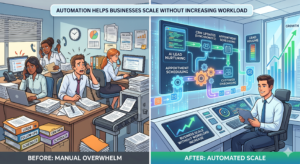
Automation Helps Businesses Scale Without Increasing Workload
One of the biggest challenges growing businesses face is managing increased customer activity without overwhelming internal teams. As lead volume, communication demands, and marketing campaigns grow, manual workflows quickly become difficult to maintain. Marketing automation allows businesses to scale operations without dramatically increasing staffing requirements or operational complexity.
With advanced automation for business, companies can automate repetitive processes such as lead nurturing, follow-up communication, CRM updates, customer onboarding, and appointment scheduling. This creates a more efficient operational structure where teams can focus on strategic growth instead of repetitive administrative tasks.
Businesses using scalable AI marketing automation systems often grow faster because automation allows them to handle larger customer volumes while maintaining strong communication and operational consistency.
Lead Generation Automation Improves Sales Efficiency
Generating leads is only one part of the customer acquisition process. Businesses also need systems capable of organizing and qualifying leads effectively so sales teams can focus on the highest-value opportunities. Manual lead handling often creates delays and inconsistent communication that negatively affect conversion performance.
With structured lead generation automation, businesses can automatically capture inbound leads, assign CRM stages, trigger follow-up workflows, and notify sales representatives instantly. Automation workflows also help businesses prioritize leads based on engagement activity and behavioral signals.
This improves sales efficiency because teams spend less time managing administrative tasks and more time focusing on qualified prospects and customer relationships. Businesses implementing advanced lead automation systems frequently improve both conversion rates and operational productivity simultaneously.
CRM Automation Creates Better Customer Journeys
Customer experience is becoming one of the most important competitive advantages in modern business environments. Disorganized communication and delayed responses often create frustration for customers and reduce trust during the buyer journey. Advanced CRM Automation systems help businesses create structured customer journeys that deliver timely communication and organized engagement across every stage of the sales process.
Automation workflows can trigger personalized follow-ups, onboarding sequences, appointment reminders, and customer retention campaigns automatically based on user behavior and engagement activity.
This creates smoother and more professional customer experiences while reducing the manual workload required to manage customer interactions consistently. Businesses using intelligent CRM systems often improve both customer satisfaction and long-term retention because communication remains timely and organized.
AI Marketing Automation Improves Campaign Performance
Artificial intelligence is transforming digital marketing by helping businesses optimize campaigns more intelligently and efficiently. Traditional marketing often relied heavily on assumptions and manual performance analysis. Modern AI marketing automation systems analyze customer behavior, campaign engagement, and conversion trends automatically in real time. This allows businesses to improve audience targeting, personalize messaging, optimize campaign timing, and adjust marketing strategies based on actual performance data.
AI-powered automation also improves customer segmentation by identifying patterns that may not be obvious through traditional analytics alone. Businesses using AI-driven marketing systems frequently reduce wasted ad spend while improving campaign efficiency and customer engagement quality.
GHL Automation Centralizes Business Operations
One of the biggest operational challenges businesses face is managing multiple disconnected software tools. Many companies rely on separate platforms for CRM management, email marketing, SMS communication, funnels, scheduling, and reporting. This fragmentation often creates workflow inefficiencies and communication inconsistencies.
Advanced GHL Automation systems help businesses centralize these operations into one connected ecosystem. Businesses can manage customer communication, lead nurturing, appointment scheduling, pipeline organization, and marketing campaigns from a single platform.
This improves operational visibility while reducing the complexity associated with disconnected software systems. Companies using centralized automation systems often experience better workflow consistency, faster customer response times, and improved scalability as their operations grow.
Automation Improves Team Productivity
Marketing and sales teams often spend too much time handling repetitive tasks that do not directly contribute to strategic growth. Administrative work, such as updating CRM records, scheduling follow-ups, organizing leads, and manually sending communications, can consume valuable operational resources. Automation helps businesses eliminate much of this repetitive workload.
With advanced automation for business, workflows can handle these tasks automatically while maintaining accuracy and consistency. This allows teams to focus more on customer relationships, creative strategy, campaign optimization, and business development. Businesses implementing scalable automation systems often experience stronger productivity because employees spend more time on high-value activities rather than operational maintenance.