

Artificial intelligence has evolved far beyond simple chatbots and rule-based automation. Today’s AI systems are expected to understand natural language, retrieve accurate information, personalize responses, and support complex business decisions in real time. While large language models have become incredibly powerful, they still face one important challenge—they cannot always access the latest or most relevant business information when responding to users.
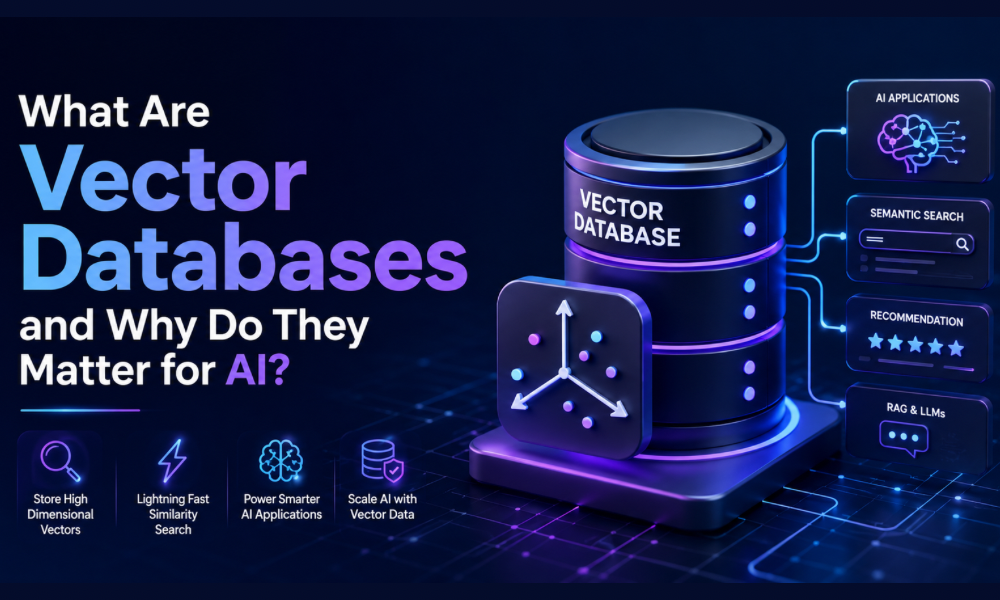
This is where vector databases have become one of the most important technologies in modern AI development. Instead of storing information as in traditional databases, which rely on exact keywords or structured records, vector databases organize information based on meaning and context. This allows AI systems to retrieve information that is semantically similar rather than simply matching exact words. As a result, AI applications become significantly more accurate, context-aware, and capable of delivering intelligent responses.
From enterprise search engines and AI-powered customer support to recommendation systems and Retrieval-Augmented Generation (RAG), vector databases have become a core component of modern artificial intelligence architectures. They enable AI models to work with constantly changing business information without requiring complete retraining every time new data becomes available.
At Your Cloud Hub, we help organizations understand that successful AI implementation depends on much more than selecting a powerful language model. Building intelligent systems often requires the right data architecture, scalable infrastructure, and experienced professionals. Whether businesses choose to hire an AI engineer, collaborate with experienced AI specialists, work with AI developers for hire, hire machine learning experts, or expand their team by hiring a machine learning developer, understanding technologies like vector databases is becoming increasingly important for long-term AI success.
Why Traditional Databases Struggle With Modern AI
For decades, traditional databases have powered business applications by storing structured information such as customer records, inventory, financial transactions, and employee data. They perform exceptionally well when users know exactly what they are searching for. If someone searches using a customer ID, product code, or specific keyword, traditional databases can retrieve the correct information quickly and accurately.
Artificial intelligence, however, works differently.
People rarely communicate using perfect keywords.
Customers ask questions in different ways.
Employees describe problems using natural language.
Documents often contain similar meanings expressed with completely different words.
Traditional databases struggle with these situations because they focus on exact matches instead of understanding context.
Vector databases solve this limitation by allowing AI systems to search based on meaning rather than on identical text. This creates a much more natural experience where users can ask questions conversationally while AI retrieves the most relevant information regardless of the exact wording used.
Organizations that hire AI engineer professionals are increasingly adopting vector databases because they significantly improve the quality of AI-powered search and knowledge retrieval.
Understanding Vector Databases in Simple Terms
Although the name may sound technical, the concept behind vector databases is surprisingly easy to understand.
Imagine walking into a large library without knowing the exact title of the book you need. Instead of searching alphabetically, imagine asking a librarian about the topic you are interested in. Even if you cannot remember the exact title, the librarian understands the meaning of your request and recommends the most relevant books.
Vector databases work in a similar way.
Instead of storing information only by keywords, they convert text, images, documents, and other data into mathematical representations called vectors. These vectors capture the meaning and relationships between different pieces of information.
When someone asks a question, the AI searches for vectors with similar meanings rather than identical words.
This allows businesses to create AI systems that understand context much more effectively.
Companies working with experienced AI specialists frequently use vector databases to build intelligent search systems, internal knowledge assistants, and AI applications capable of understanding conversational language rather than rigid keyword searches.
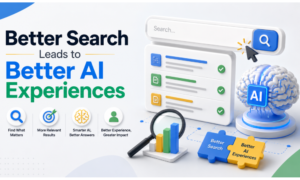
Better Search Leads to Better AI Experiences
One of the biggest reasons businesses invest in artificial intelligence is to help users find information faster.
Unfortunately, traditional search often requires users to know exactly what they are looking for.
A slight wording difference can produce completely different results.
Vector databases remove much of this frustration.
Instead of searching for exact phrases, users simply describe what they need.
The AI identifies information with similar meaning and delivers more relevant answers.
Whether employees are searching internal documentation or customers are looking for product information, this semantic understanding creates a far better user experience.
Businesses choosing AI developers for hire often prioritize vector databases because improving information retrieval immediately enhances the quality of AI assistants, chatbots, and enterprise knowledge platforms.
Vector Databases Are the Foundation of Modern RAG Systems
One of the fastest-growing applications of artificial intelligence today is Retrieval-Augmented Generation, commonly known as RAG.
Rather than expecting AI models to remember everything they learned during training, RAG allows them to retrieve current information from trusted business sources before generating responses.
Vector databases make this possible.
When a question is asked, the AI searches the vector database for the most relevant documents, retrieves that information, and uses it to generate an accurate, context-aware answer.
Without vector databases, modern RAG systems would struggle to retrieve relevant information efficiently.
Businesses that hire machine learning experts increasingly incorporate vector databases into enterprise AI architectures because they improve accuracy while reducing outdated or incorrect responses.
Instead of relying solely on historical training data, AI continuously works with current business knowledge.
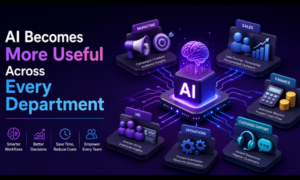
AI Becomes More Useful Across Every Department
The benefits of vector databases extend far beyond customer support.
Human resources teams can search company policies using natural language.
Sales teams can instantly locate product information and customer case studies.
Legal departments can retrieve relevant contract clauses without manually reviewing hundreds of pages.
Technical teams can search documentation using conversational questions.
Executives can access business knowledge much faster when making strategic decisions.
Organizations that hire machine learning developer professionals often implement vector databases because they improve productivity across multiple departments simultaneously.
Rather than creating separate search systems for every team, businesses build one intelligent knowledge platform capable of supporting the entire organization.
This improves collaboration while reducing time spent searching for information.
Why Vector Databases Support Scalable AI
As organizations continue generating documents, reports, customer conversations, training materials, and operational data, their information grows exponentially.
Traditional search systems often become increasingly difficult to manage as knowledge expands.
Vector databases are designed to scale alongside business growth.
New documents can be added continuously.
Existing knowledge can be updated.
AI applications immediately benefit from newly available information without requiring extensive retraining.
This flexibility makes vector databases particularly valuable for enterprises adopting artificial intelligence across multiple business functions.
Businesses that hire AI engineers, collaborate with experienced AI specialists, choose AI developers for hire, invest to hire machine learning experts, or work with a hire machine learning developer gain access to professionals capable of designing scalable AI architectures that remain effective as organizational knowledge continues expanding.
Building Smarter AI Starts With Smarter Data
Many businesses initially focus on selecting the latest AI model, believing that model performance alone determines project success. In reality, the quality of information available to that model is often even more important. An advanced language model cannot provide reliable answers if it cannot access the right business knowledge at the right time.
Vector databases solve this challenge by giving AI fast and intelligent access to information based on meaning instead of exact keywords. This makes AI systems more accurate, more useful, and far better suited for real-world business applications.
At Your Cloud Hub, we believe technologies like vector databases will continue shaping the future of enterprise AI. Organizations that understand how to combine intelligent data retrieval with experienced technical expertise will be better positioned to build AI solutions that improve productivity, strengthen customer experiences, support better decision-making, and create lasting competitive advantages.
As businesses continue investing in artificial intelligence, those that choose to hire an AI engineer, collaborate with AI specialists, work with AI developers for hire, hire machine learning experts, or hire machine learning developer professionals will be better equipped to unlock the full potential of vector databases and build AI systems designed for the future.
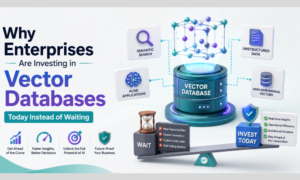
Why Enterprises Are Investing in Vector Databases Today Instead of Waiting
Artificial intelligence is moving at an incredible pace, and businesses that once viewed AI as an experimental technology are now making it a core part of their long-term strategy. Customer expectations have changed dramatically. Employees expect faster access to information, leadership teams want better insights for decision-making, and customers increasingly expect personalized experiences regardless of the communication channel they choose. Meeting these expectations requires AI systems that can understand context and retrieve accurate information instantly. This is one of the biggest reasons enterprises are investing in vector databases today rather than postponing adoption.
Unlike traditional systems that often struggle with unstructured data, vector databases allow organizations to work with documents, emails, PDFs, customer conversations, product manuals, training materials, and countless other knowledge sources without forcing everything into rigid database structures. This flexibility allows businesses to unlock the value of information that has often remained hidden for years. Companies that hire AI engineer professionals frequently discover that implementing a vector database improves multiple AI initiatives simultaneously because it creates a central knowledge layer that can support chatbots, internal assistants, recommendation engines, and intelligent search applications. At Your Cloud Hub, we encourage organizations to think of vector databases not as another database technology but as a foundation that makes modern AI significantly more practical and scalable.
Better Data Retrieval Creates Better Business Decisions
Every business decision depends on having access to the right information at the right time. Whether a sales representative is preparing for an important client meeting, a support team is resolving a customer issue, or an executive is evaluating business performance, accurate information directly influences the quality of decisions being made.
Traditional search systems often require employees to know exactly where information is stored or which keywords were used when documents were created. This process can become frustrating as organizations grow and information becomes scattered across multiple platforms. Vector databases simplify this challenge by allowing users to search naturally without worrying about exact wording or document locations.
Businesses working with experienced AI specialists are increasingly building AI-powered knowledge systems that retrieve information based on meaning rather than keyword matching. Employees simply ask questions in plain language, and the AI retrieves the most relevant content regardless of how the original document was written. This dramatically reduces time spent searching while helping teams make faster and more informed decisions across every department.
Building Intelligent Applications Requires More Than Powerful AI Models
There is a common misconception that the quality of an AI application depends entirely on the language model behind it. While advanced models play an important role, they represent only one part of a much larger ecosystem. An intelligent AI solution also requires high-quality data, efficient retrieval systems, scalable infrastructure, secure architecture, and thoughtful integration with existing business applications.
Vector databases help connect these different components by ensuring AI always has access to relevant information during every interaction. Whether developing customer support assistants, enterprise search platforms, document analysis systems, or internal knowledge tools, businesses need reliable methods for retrieving contextual information before generating responses.
Organizations that choose AI developers for hire often recognize that successful AI projects depend on strong technical architecture rather than simply selecting the latest language model. By combining vector databases with modern AI frameworks, businesses create solutions that are not only intelligent but also practical enough for everyday business operations.
Preparing for the Future of Enterprise AI
Artificial intelligence will continue evolving, but one trend has become increasingly clear: future AI systems will rely heavily on external knowledge rather than depending entirely on information learned during model training. As organizations generate more documents, customer interactions, operational data, and business insights, retrieving this information efficiently will become even more important than storing it.
Companies investing today to hire machine learning experts understand that scalable AI is built on strong data foundations. Likewise, businesses that hire machine learning developer professionals are preparing for a future where AI continuously interacts with internal knowledge, business applications, and real-time information instead of functioning as an isolated technology.
At Your Cloud Hub, we believe vector databases will become one of the defining technologies behind enterprise artificial intelligence over the next decade. Businesses that invest early in intelligent knowledge architecture, experienced AI talent, and scalable retrieval systems will be better positioned to deliver smarter customer experiences, improve operational efficiency, and build AI solutions that continue creating value as their organizations grow. Rather than simply helping AI answer questions, vector databases enable businesses to transform information into a strategic asset that supports innovation, collaboration, and long-term competitive advantage.